The goal of Shoppers Advocate is to provide consumers with helpful information about a variety of products and services. Some articles use affiliates, or work with affiliates, such as Perfect Smile.
The goal of Shoppers Advocate is to provide consumers with helpful information about a variety of products and services. Some articles use affiliates, or work with affiliates, such as AGA.
The goal of Shoppers Advocate is to provide consumers with helpful information about a variety of products and services. We are affiliated with Skin Research Institute, Amazon Associates Program, and SRI Labs (DBA of Skin Research Institute LLC).
The goal of Shoppers Advocate is to provide consumers with helpful information about a variety of products and services. We are affiliated with Cyber Forge LLC and Amazon Associates Program.
The goal of Shoppers Advocate is to provide consumers with helpful information about a variety of products and services. Some articles use affiliates, or work with affiliates, such as Apakula Gaming.
The goal of Shoppers Advocate is to provide consumers with helpful information about a variety of products and services. Some articles use affiliates, or work with affiliates, such as Perfect Smile.
The goal of Shoppers Advocate is to provide consumers with helpful information about a variety of products and services. Some articles use affiliates, or work with affiliates, such as Apakula Gaming.
The goal of Shoppers Advocate is to provide consumers with helpful information about a variety of products and services. Some articles use affiliates, or work with affiliates, such as AGA.
The goal of Shoppers Advocate is to provide consumers with helpful information about a variety of products and services. We are affiliated with Skin Research Institute, Amazon Associates Program, and SRI Labs (DBA of Skin Research Institute LLC).
The goal of Shoppers Advocate is to provide consumers with helpful information about a variety of products and services. We are affiliated with Cyber Forge LLC and Amazon Associates Program.
At Shoppers Advocate, we’re dedicated to delivering trustworthy insights on a diverse range of products. We are affiliated with Skin Research Institute, Amazon Associates Program, and SRI Labs (DBA of Skin Research Institute LLC). Each product we review undergoes rigorous testing to ensure you get the most accurate information.
The goal of Shoppers Advocate is to provide consumers with helpful information about a variety of products and services. Some articles use affiliates, or work with affiliates, such as Perfect Smile.
The goal of Shoppers Advocate is to provide consumers with helpful information about a variety of products and services. We are affiliated with Skin Research Institute and Amazon Associates Program.
At Shoppers Advocate, we’re dedicated to delivering trustworthy insights on a diverse range of products. We are affiliated with Amazon Associates and Skin Research Institute. Each product we review undergoes rigorous testing to ensure you get the most accurate information.
The goal of Shoppers Advocate is to provide consumers with helpful information about a variety of products and services. Some articles use affiliates, or work with affiliates, such as Apakula Gaming.
Advertising Disclosure
Skin Research Institute has a financial connection to products sold via links on our website such as our top choices.
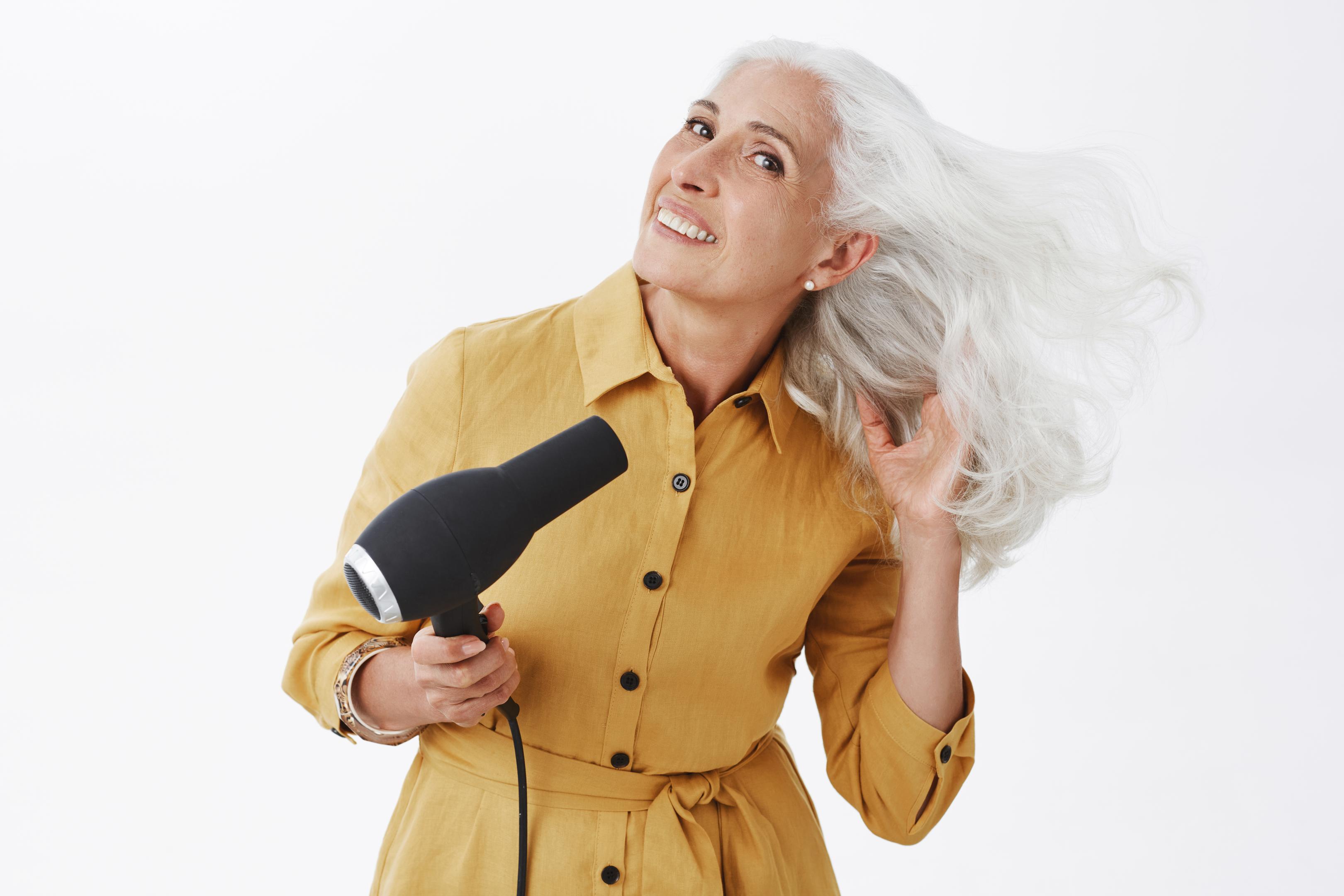
Silver hair that looks bright on Monday can look dull and yellow by Friday, even when nothing about your routine seems to have changed. For many people, part of the reason is the hair dryer.
Gray hair has little or no melanin, the pigment that would normally hide small changes in color. So when buildup, hard-water minerals, and sun exposure start to discolor the hair fiber, there’s nothing to mask it. Heat speeds up the process. In lab testing, temperatures as low as 81°C (178°F) made gray hair yellower, and a dryer held about 2 inches from your head can heat the hair surface well past that.
Most of this is preventable. This guide covers how to prep gray hair, choose the right heat setting, blow dry gray hair step by step, finish it, and fix the most common problems, with each step backed by cosmetic science and dermatology research
Quick Answer
🔑 Most Important Step: Keep the hair dryer about 6 inches (15 cm) away and moving. Held closer, it can heat hair past the 81°C (178°F) shown to turn gray hair yellower in lab testing.
🚫 Won’t Fix: Yellowing from UV or heat damage inside the hair fiber, which doesn’t wash out and only fades as new hair grows in.
✅ In Short: Clean hair, lower heat, and distance prevent most yellowing. Clarify every few weeks, and use purple shampoo only when yellow tones appear.
Why Does Gray Hair Turn Yellow When You Blow-Dry It?
Gray hair turns yellow because it has no melanin to hide changes in the hair fiber. Most yellowing starts with UV exposure, hard-water minerals, pollution, chlorine, and product buildup. Heat adds to it. Lab studies show that heat on its own can make white and gray hair yellower, and hotter tools cause more of it.
Why Gray Hair Shows Discoloration First
Melanin is the pigment that gives hair its color, and it also masks small color changes in the hair fiber. Gray and white strands have little or no melanin, so damage to the keratin underneath shows up as visible discoloration. Researchers studying gray hair point to this directly: because white hair lacks melanin, the effects of degradation are easier to see.
What Causes Gray Hair to Yellow
UV exposure: sunlight breaks down proteins in the hair fiber over time. The damage builds up, so hair that gets a lot of sun yellows faster.
Smoke and pollution: airborne particles stick to the hair shaft and dull its tone.
Chlorine: pool water can discolor light-colored hair, gray included.
Product buildup: heavy oils, silicones, and styling residue coat the hair and trap the pollutants listed above.
Where Heat Comes In
Heat is a proven cause of yellowing in its own right. In a 1998 study published in the Journal of Cosmetic Science, curling irons set between 130°C and 170°C (266–338°F) damaged several hair types and turned white and naturally off-white hair yellow. The researchers linked this to the breakdown of tryptophan, an amino acid in keratin.
The temperature doesn’t have to be extreme. A 2014 study in the Journal of Photochemistry and Photobiology B found that heat treatment at 81°C (about 178°F) made both types of gray hair it tested yellower. That’s far below the setting of a typical flat iron.
So a blow dryer doesn’t have to scorch hair to add yellow tones. Repeated, concentrated heat adds to discoloration that other causes have already started. That’s why the prep, heat settings, and technique in the sections below matter more for gray hair than for pigmented hair.
Yellowing vs. Brassiness
Yellowing is when natural gray or white hair takes on a yellow cast from heat, UV, minerals, or buildup. Brassiness is when orange or gold tones appear in color-treated or lightened hair as the toner fades and the warm pigment underneath shows through.
Less protective cuticle layers
Hair strands are protected by overlapping layers of the hair cuticle — think of it like roof shingles. Coarse hair can have up to 10-12 layers while fine hair often has as few as 5-7. Fewer layers mean less of a buffer between the heat source and the inner cortex, so damage accumulates faster with the same amount of styling.
Lower heat tolerance before protein damage
Hair is roughly 90% keratin, a protein that holds its shape through a stable internal structure. That structure starts to break down — a process called denaturation — at sustained heat exposure. Because fine strands have less mass to absorb and dissipate that heat, they reach damaging temperatures faster and at lower dryer settings than thicker hair would.
More vulnerability to mechanical stress
Fine hair has less tensile strength per strand, meaning it takes less force to stretch or snap it. Brushing, tension from styling tools, and friction from towels or fabric all pull on hair — and fine hair reaches its breaking point sooner. This is why fine hair often shows breakage as short, wispy flyaways rather than clean split ends.
Faster moisture loss
Fine hair’s thinner shaft holds less internal moisture to begin with, so it dries out faster under heat — leaving it more prone to static, frizz, and a rough texture that’s harder to smooth down, even with the same products that work on thicker hair.
More visible damage over time
Because there’s less hair mass to “hide” damage, breakage and thinning show up more visibly and sooner on fine hair than on thick hair, where the same amount of damage might go unnoticed for longer. This is part of why fine hair can look thinner over time even without actual hair loss — it’s cumulative styling damage becoming visible strand by strand.
How Should You Prep Gray Hair Before Blow-Drying?
Prep gray hair by removing buildup and minerals first, then cutting down how much heat it will need. Clarify every few weeks, use a chelating shampoo monthly if you have hard water, and use purple shampoo only when yellow tones show. Blot instead of rubbing, let hair partially air-dry, and apply a heat protectant before the dryer goes on.
1. Start With Clean Hair
Buildup holds on to the pollutants and residue that make gray hair look dull and yellow, so any heat you apply goes onto a dirty surface. A clarifying shampoo every two to three weeks removes product residue without overdrying hair the way daily use can.
2. Use a Chelating Shampoo If You Have Hard Water
Hard water, well water, and pool water leave behind minerals that a regular or clarifying shampoo won’t fully remove. A chelating shampoo binds to those minerals so they rinse out. This matters for gray hair because metals do more than tint it. Procter & Gamble researchers found that copper absorbed from tap water speeds up UV damage to hair, and that chelating ingredients in shampoo and conditioner lower copper levels. Once a month is enough for most people.
3. Use Purple Shampoo Only When Yellow Appears
Purple shampoo cancels out yellow tones, but it treats the symptom, not the cause. Stylists recommend saving it for when yellow tones actually show up instead of using it daily. Gray hair can be porous and picks up pigment quickly, so overuse can leave a violet cast.
4. Blot Instead of Rubbing
Wet hair breaks more easily, and rubbing it with a towel roughs up the cuticle. A rough cuticle reflects less light, which makes gray hair look duller. The American Academy of Dermatology recommends wrapping hair in a towel to absorb water instead of rubbing. A microfiber towel or cotton T-shirt causes less friction than terry cloth.
5. Let Hair Partially Air-Dry First
The less water left in your hair, the less time it spends under heat. The AAD advises letting hair partially air-dry before styling and cutting back on how often you blow-dry. Lab research supports waiting: in a Journal of Cosmetic Science study, heat applied to wet hair caused much more structural damage than the same heat applied to dry hair.
6. Apply a Heat Protectant to Damp Hair
Use a heat protectant every time, and combine it with low or medium heat, which is what the AAD recommends. Heat protectants form a film on the hair. In lab testing, polymer pretreatments lowered the temperature the hair itself reached and gave the hair’s protein about 50% protection at 205°C.
7. Skip Heavy Oils Before Heat
Save rich oils and butters for after styling, or for days you don’t use heat. Anything you apply before blow-drying stays on the hair while it’s heated, and on gray hair, leftover residue is one of the main causes of yellowing.
Gray Hair Prep at a Glance
Step
How often
Why it matters for gray hair
Clarifying shampoo
Every 2–3 weeks
Removes product buildup
Chelating shampoo
Monthly (hard/well/pool water)
Removes yellowing minerals like copper
Purple shampoo
Only when yellow shows
Cancels yellow; overuse tints
Blot, don't rub
Every wash
Keeps the cuticle smooth and shiny
Partial air-dry
Every blow-dry
Less time under heat
Heat protectant
Every blow-dry
Film barrier against heat
What Heat Setting Is Best for Gray Hair?
Use low to medium heat on gray hair, and keep the dryer about 6 inches (15 cm) away and moving. Distance matters as much as the setting. In lab testing, the dryer that warmed hair to about 47°C at 15 cm heated it to 95°C at 5 cm. That’s higher than the temperature shown to turn gray hair yellow.
Why Distance Matters as Much as the Heat Setting
The heat setting on your hair dryer is not the temperature your hair actually reaches. That depends on how close the nozzle is. A 2011 study in the Annals of Dermatology measured the temperature at the hair’s surface from three distances:
Hair Dryer Distance
Temperature at the Hair Surface
15 cm (about 6 in)
47°C (117°F)
10 cm (about 4 in)
61°C (142°F)
5 cm (about 2 in)
95°C (203°F)
The researchers found that the hair surface took more damage as the temperature went up. Hair dried at 95°C showed a color change after just 10 treatments.
This matters most for gray hair. Separate research found that heat at 81°C was enough to make gray hair yellower. Holding a dryer about 2 inches from your hair pushes it past that point, even on a setting that doesn’t feel very hot.
How to Blow-Dry Gray Hair Step by Step
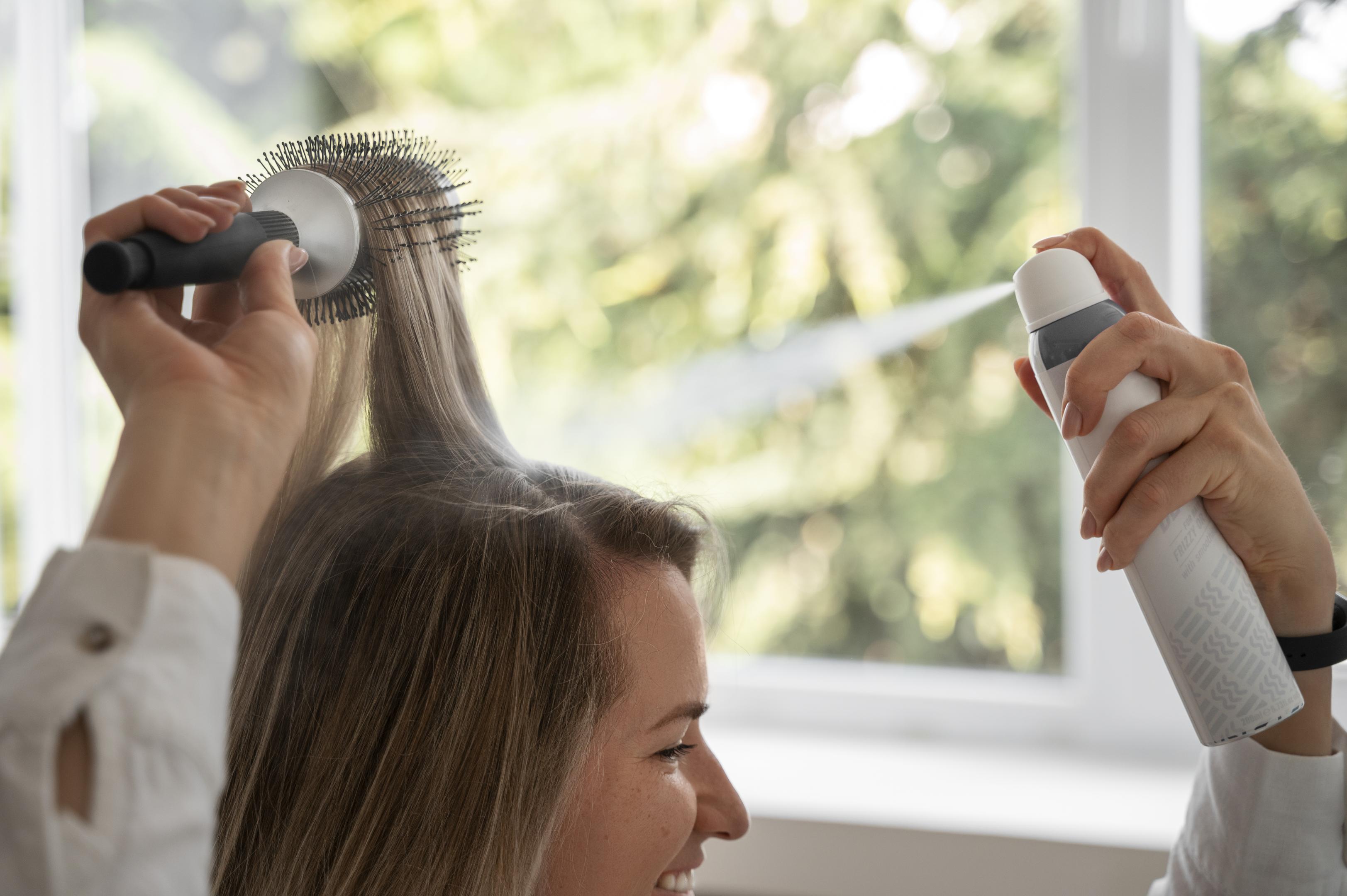
To blow-dry gray hair without adding yellow tones or frizz, work in sections, keep the dryer about 6 inches away and moving, and point the airflow from roots to ends. Dry the roots first for lift, lower the heat as hair gets drier, and finish each section with a cool blast to set the style and add shine.
Step 1: Detangle Gently Before You Start
Use a wide-tooth comb on damp hair, starting at the ends and working up. Wet hair breaks easily, and the American Academy of Dermatology lists brushing wet hair as a common habit that damages it. Gray hair is often drier and coarser, so it tangles and snaps more easily.
Step 2: Section Your Hair
Clip hair into 4–6 sections, smaller if your hair is thick. Drying one section at a time means each area gets enough airflow to dry quickly. Without sections, you end up going over the same strands again and again while the hair underneath stays wet.
Step 3: Dry the Roots First
Point the airflow at the roots while lifting them with your fingers or a brush, or flip your head upside down for the first few minutes. Roots hold the most water and set the volume, and gray hair that’s also thinning tends to fall flat when the roots are dried last.
Step 4: Keep the Dryer 6 Inches Away and Moving
This is the most important step for gray hair. In an Annals of Dermatology study, a dryer held 15 cm (about 6 inches) away and kept moving caused less damage than letting hair air-dry, while holding it 5 cm away raised the hair surface to 95°C. Never hold the dryer still over one spot.
Step 5: Point the Airflow From Roots to Ends
Attach the concentrator nozzle and angle it down the hair shaft. Airflow in this direction smooths the cuticle. Blowing upward or across the hair lifts it, which causes frizz. On gray hair, a smooth cuticle reflects more light, so silver looks brighter and less dull.
Step 6: Lower the Heat as Hair Dries
Rough-dry on medium heat until hair is about 70–80% dry, then switch to low for the final pass and any brush styling. Hair that’s nearly dry heats up faster, so this is when overheating is most likely.
Step 7: Set Each Section With the Cool Shot
Once a section is dry, hit it with cool air for 5–10 seconds before moving on. Cool air sets the style and seals the cuticle. It’s also the only point in the process when your hair isn’t under heat.
Step 8: Finish With a Light, Clear Product
If you want shine or frizz control, use a small amount of a lightweight serum or a UV-protecting spray. Avoid heavy oils and tinted products, since any residue left on gray hair can make it look dull or yellow.
How to Use Hair Dryer Settings and Attachments on Gray Hair
The right settings and attachments make it easier to keep heat low and controlled on gray hair. Use an automatic heat mode if your hair dryer has one, and choose the attachment that suits your hair type and style.
If Your Hair Dryer Has a Smart or Automatic Heat Mode
A smart hair dryer adjusts its own heat, usually with sensors, so the temperature doesn’t spike while you dry. If yours has an automatic or care mode, use it for most of the drying time. It reduces sudden heat spikes when you drift too close or stay on one section too long, but keep the hair dryer about 6 inches away anyway, because the temperature at your hair depends on distance as well as the setting. If your hair dryer remembers your last setting, save low or medium so you don’t start on high by accident.
Concentrator Nozzle: For Smooth, Shiny Styles
A concentrator focuses heat into a smaller area, so it’s the attachment where distance matters most. Keep it about 6 inches away and angled down the hair shaft.
Diffuser: For Curly or Textured Gray Hair
Use a diffuser on low heat and low speed. Cup sections of curls into the bowl and hold them still for a few seconds. This is the one time holding the hair dryer still is fine, because the diffuser spreads low heat over a wide area instead of concentrating it.
Round Brush: For Volume and Smoothing
Use a round brush with boar or mixed bristles to lift roots and smooth the lengths. Keep the hair dryer moving along the brush instead of holding it over one spot.
What About Ionic Technology?
Many hair dryers advertise negative ions to reduce frizz and drying time. Most of the evidence comes from manufacturers rather than independent studies, so treat it as a bonus, not the main reason to choose a hair dryer.
Common Gray Hair Blow-Drying Problems (and How to Fix Them)
Most blow-drying problems with gray hair have three causes: buildup or minerals (yellow tones), a lifted cuticle (frizz), and drying in the wrong order (flat roots). Each one can be fixed by changing one or two steps in your routine. Your dryer doesn’t need to change.
Problem
Likely Cause
Quick Fix
Yellow tones
Buildup, hard-water minerals, UV, or heat held too close
Clarify, chelate monthly, keep the hair dryer 6 inches away
Frizz
Towel rubbing, airflow aimed the wrong way, over-drying
Blot, point the nozzle down, finish on low
Flat roots
Roots dried last or lying flat
Dry roots first, lift, cool shot at the base
Why Does My Gray Hair Still Look Yellow After Blow-Drying?
Check what’s on your hair first, then check your heat. Buildup and minerals cause most yellowing, so start with a clarifying shampoo every two to three weeks. If you have hard or well water, add a chelating shampoo once a month. Research has found that copper absorbed from tap water speeds up UV damage to hair, and that chelating ingredients reduce how much copper hair takes up.
If your hair is clean and still yellowing, your dryer is probably too close. In lab testing, heat at 81°C made gray hair yellower, and a separate study found that a dryer held 5 cm (about 2 inches) away raised the hair surface to 95°C. Keep the dryer about 6 inches away and moving. Use purple shampoo only as a short-term fix while you deal with the cause, not as your everyday shampoo.
Why Is My Gray Hair Frizzy After Blow-Drying?
Frizzy hair means the cuticle, the hair’s outer layer, is lifted. The usual causes are rubbing wet hair with a towel, aiming the dryer up or across the hair instead of down it, and drying on high heat until every last bit of moisture is gone.
To fix it, blot your hair with a towel instead of rubbing it. Point the concentrator nozzle from roots to ends, switch to low heat for the last 20–30% of drying, and finish each section with the cool shot. If frizz remains, smooth a drop of lightweight, clear serum over the ends.
Why Are My Roots Flat After Blow-Drying?
Roots go flat when they’re dried last or dried lying against your scalp. Dry them first: lift them with your fingers or a round brush while you aim the airflow at the base, or flip your head upside down for the first few minutes. Set the lift with a blast of cool air before you move on to the lengths. Keep heavy creams and oils off the roots, since they weigh down fine or thin hair.
The Bottom Line
Gray hair yellows more easily than pigmented hair because it has no melanin to hide changes in the hair fiber, and blow-drying can add to that when the heat is too high or too close. Most yellowing, though, starts with what’s on your hair: product buildup, hard-water minerals, and UV exposure. That’s why your hair care routine matters as much as the tool.
Keep your hair clean with regular clarifying, remove minerals with a chelating shampoo if you have hard water, and dry on low to medium heat with the hair dryer about 6 inches away and moving. Yellowing that’s already inside the hair fiber won’t wash out, but these habits stop you from adding more, and your silver will stay brighter as new hair grows in.
Frequently Asked Questions
Is Air-Drying Better Than Using Heat?
Not entirely. The same study found that blow-drying causes more surface damage than air-drying. However, drying from 15 cm with the dryer moving caused less overall damage than letting hair dry naturally. Hair that air-dried was the only group with damage to the cell membrane complex, the layer that holds the hair’s cuticle cells together.
The practical approach is to let hair air-dry for a short time, then finish with controlled heat. Long hours of wet hair and close, high heat both cause damage.
Is it bad to blow-dry gray hair?
No, as long as you control the heat. Blow-drying on low to medium heat, with the dryer about 6 inches away and kept moving, is safe for gray hair. Close, high heat is the problem. In one study, a dryer held 15 cm away and kept moving caused less damage than letting hair air-dry.
Is air-drying better than blow-drying for gray hair?
Not entirely. A 2011 study in the Annals of Dermatology found that blow-drying causes more surface damage, but hair left to air-dry was the only group with damage to the cell membrane complex, the layer that holds the cuticle together. The best approach is a short air-dry followed by controlled heat.
How often can I blow-dry gray hair?
As little as your style allows. The American Academy of Dermatology recommends cutting back on how many times a week you blow-dry to limit damage. On days you do use heat, the steps in this guide matter more than how often you blow-dry.
Why is gray hair harder to style than my natural color was?
Gray hair often has a different texture as well as a different color. Board-certified dermatologist Dr. Iris Rubin has noted that gray hair tends to be drier and wirier, so it needs more moisture to stay smooth. That texture is also why gray hair frizzes and tangles more easily when you blow-dry it. A rinse-out deep conditioner can add moisture without leaving the residue that heavy leave-in oils do.
How often should I use purple shampoo on gray hair?
Only when yellow tones actually appear, usually once a week at most. Purple shampoo hides yellow but doesn’t remove its causes, and gray hair can pick up a violet tint if you use it too often. For most washes, use a hydrating shampoo, and save purple shampoo for when you need it.
Can a heat protectant prevent gray hair from yellowing?
It adds heat protection but won’t prevent yellowing on its own. In lab testing, polymer-based protectants lowered how hot hair got under heat, which limits one cause of yellowing. They don’t remove buildup, minerals, or UV damage, so they work best as part of a full routine.
Can yellowed gray hair go back to white or silver?
It depends on the cause. Yellowing from buildup and minerals is on the surface, so clarifying and chelating shampoos can remove much of it. Yellowing from heat or UV damage is a chemical change inside the hair fiber, so it won’t wash out. It fades as new hair grows in and damaged hair is trimmed away.
Why does my gray hair look yellow only in certain lighting?
Warm indoor lighting brings out any slight yellow cast, while daylight shows hair’s true tone. Check your hair color near a window in natural light before you change your routine. If it looks bright there, the yellow you see indoors is probably just the lighting.
Learn how to blow-dry gray hair without yellowing. Get the right heat settings, prep steps, and mistakes to avoid for brighter silver hair.
Tria David is a content writer, SEO specialist, and digital strategist dedicated to helping shoppers make informed, confident decisions. She creates research-driven buying guides, product comparisons, and practical resources that simplify complex information and provide real value to readers. With experience across diverse industries — including legal, technology, home improvement, health and more — Tria combines data-backed SEO strategy with a reader-first approach, so her content not only ranks well but truly helps consumers navigate their choices.