Advertising Disclosure
Blavor Solar Power Bank Review: Is It Worth It? (Real Results)

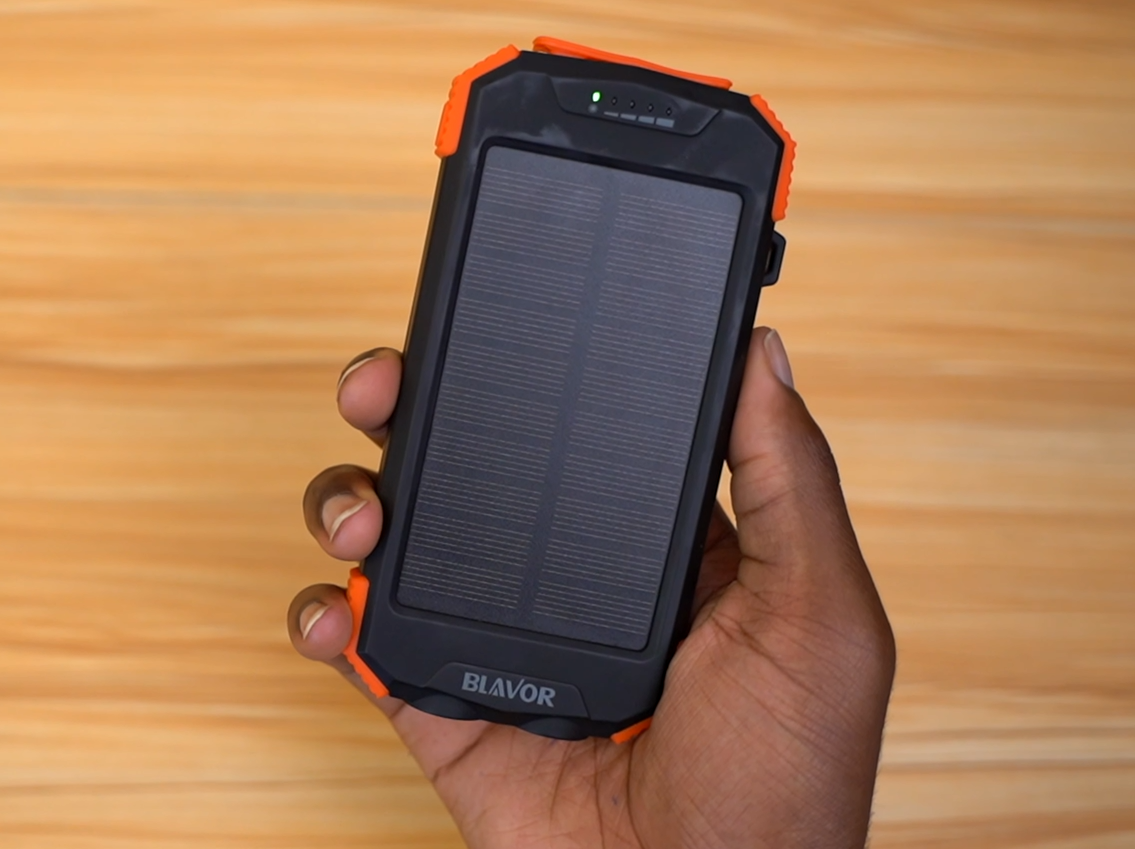
Dead phone. No outlet in sight. We’ve all been there — and it’s exactly why a solar power bank sounds like such a smart idea.
The Blavor solar power bank caught our attention as an affordable, compact backup charger that runs on sunlight. But one question kept nagging at us: does it actually work in real life, or does it just sound good on the box?
So we got one and put it to the test. What we found might surprise you in both directions.
This review breaks down exactly what the Blavor does well, where it falls short, and what you need to know before deciding if it’s worth your money.
⚡ Quick Verdict
Best for: Camping, travel, emergency backup
Not ideal for: Fast daily charging
Verdict: Worth it as a backup power source, but not as your main charger
👉 Bottom line: The Blavor 10,000mAh is a rugged, well-built tool that earns its spot in your backpack. While the solar panel is far too slow to be your primary power source, it’s useful as a backup in emergencies.
How We Tested This
We put the Blavor through a series of real-world “stress tests” to see if it lives up to the marketing:
Charging Speed Test: We compared the built-in cables against a high-quality external USB-C cord using a digital power tester.
Multi-Device Test: We charged a smartphone and an iPad simultaneously to see how the power output was shared.
Solar Charging Test: We timed the charging speed in direct, midday sunlight starting from a dead (0%) battery.
Durability Test: We performed a drop test onto a hard surface to check the ruggedized shell.
BLAVOR mini Solar Power Bank PN-W05: Key Features
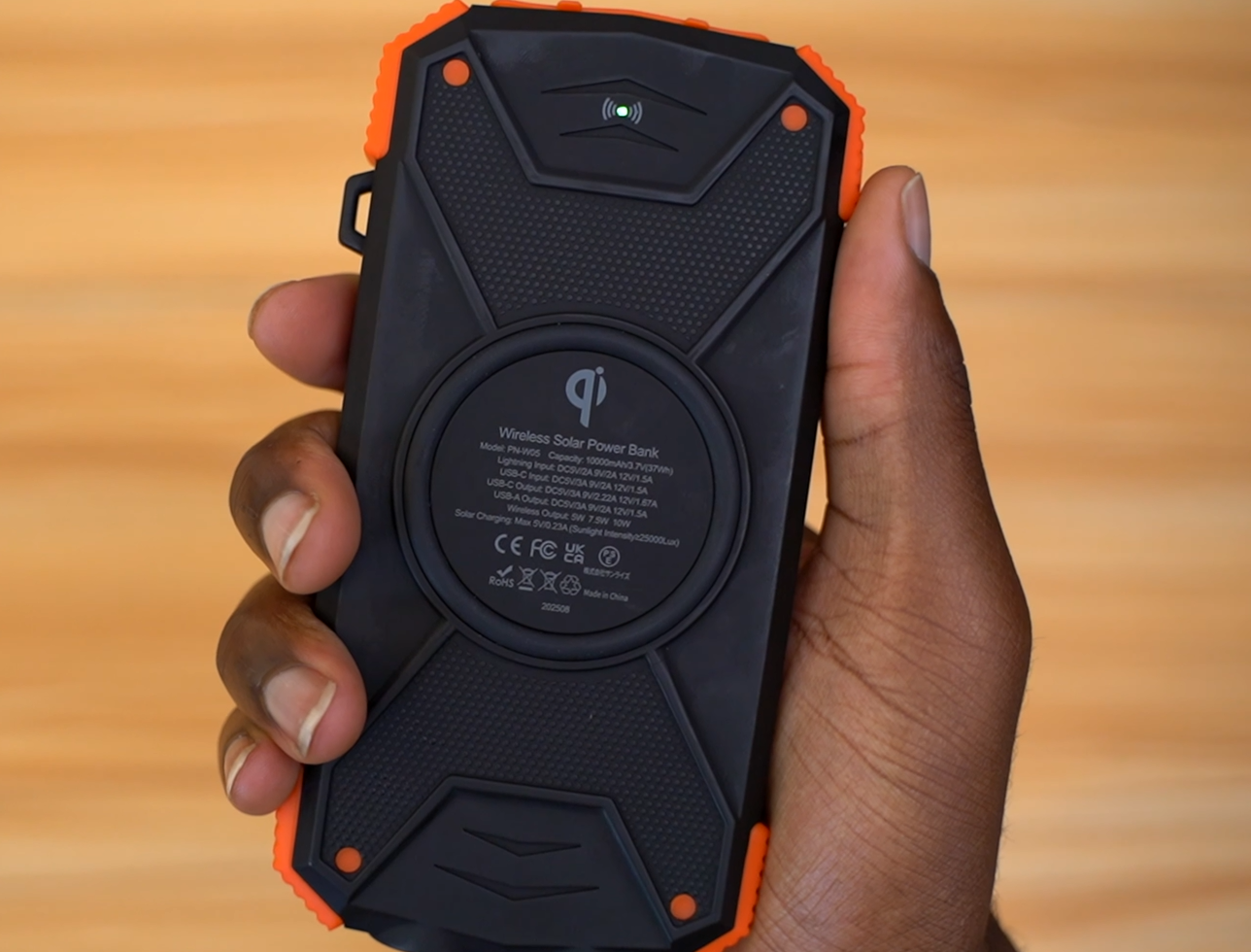
The BLAVOR Solar Power Bank PN-W05 is a compact, portable solar charger power bank designed for everyday use, travel, and outdoor adventures. It combines a reliable 10,000 mAh battery, Portable Wireless Charger, 20W Fast Charging External Battery Pack with USB C for Cell Phones, Solar Panel Charger with Dual Flashlight for Camping.
It is especially useful for people who are frequently on the go, as it can charge multiple devices in different ways while maintaining a portable and travel-friendly size. Whether you’re commuting, traveling, or dealing with emergency power situations, this solar charger power bank is built to keep your devices running when you need them most.
This model stands out because it offers:
⚡ 20W USB-C Fast Charging
Charges smartphones much faster than standard chargers. BLAVOR claims it can charge an iPhone 15 up to 65% in about 30 minutes under ideal conditions.
🔋 Qi-Certified Wireless Charging
Charge compatible phones using the portable wireless charger by simply placing them on the power bank—no cables needed. Ideal for quick, convenient charging while traveling or on the go.
🔌 Charge Up to 3 Devices at Once
Power multiple devices (cell phones, iPads) simultaneously using USB ports and wireless charging together.
🔄 Dual Input & Output Charging
Flexible charging options let you recharge the solar power bank and power your devices using different ports depending on what’s available.
☀️ Solar Panel Charging (Emergency Backup)
Features a solar charger so you can recharge using sunlight. But it’s best used as an emergency backup since it’s much slower than USB charging.
🔋 10,000mAh High-Efficiency Battery
Provides multiple charges for most smartphones. BLAVOR claims it can charge an iPhone 14 Pro about 2.2 times, an iPhone 8 about 3.6 times, and an iPad air once on a full charge.
🛡️ Rugged, Shockproof Build
Made with durable materials plus protective rubber edges for better resistance against drops and impact.
💧 IPX5 Waterproof, Dustproof and Shockproof
Protected against dust, light rain and water splashes, making it suitable for outdoor use.
🎒 Compact & Travel-Friendly Design
Lightweight and easy to carry, making it convenient for travel, commuting, and outdoor activities.
🔦 Outdoor Survival Features
Includes a bright dual flashlight with long-range visibility (up to 164 ft) and a built-in compass carabiner for camping and emergencies.
Performance Test Results
We tested the BLAVOR solar power bank in real-world conditions to see how it performs beyond the advertised features. The goal was to evaluate its charging speed, versatility, and overall reliability when used with everyday devices.
Solar Charging Test (Reality Check)
When you see a solar panel on a portable battery, the dream is “infinite power.” However, our field test served as a significant reality check. We started with a completely depleted battery (0%) and placed the Blavor unit in direct sunlight for a controlled two-hour window.
The Results
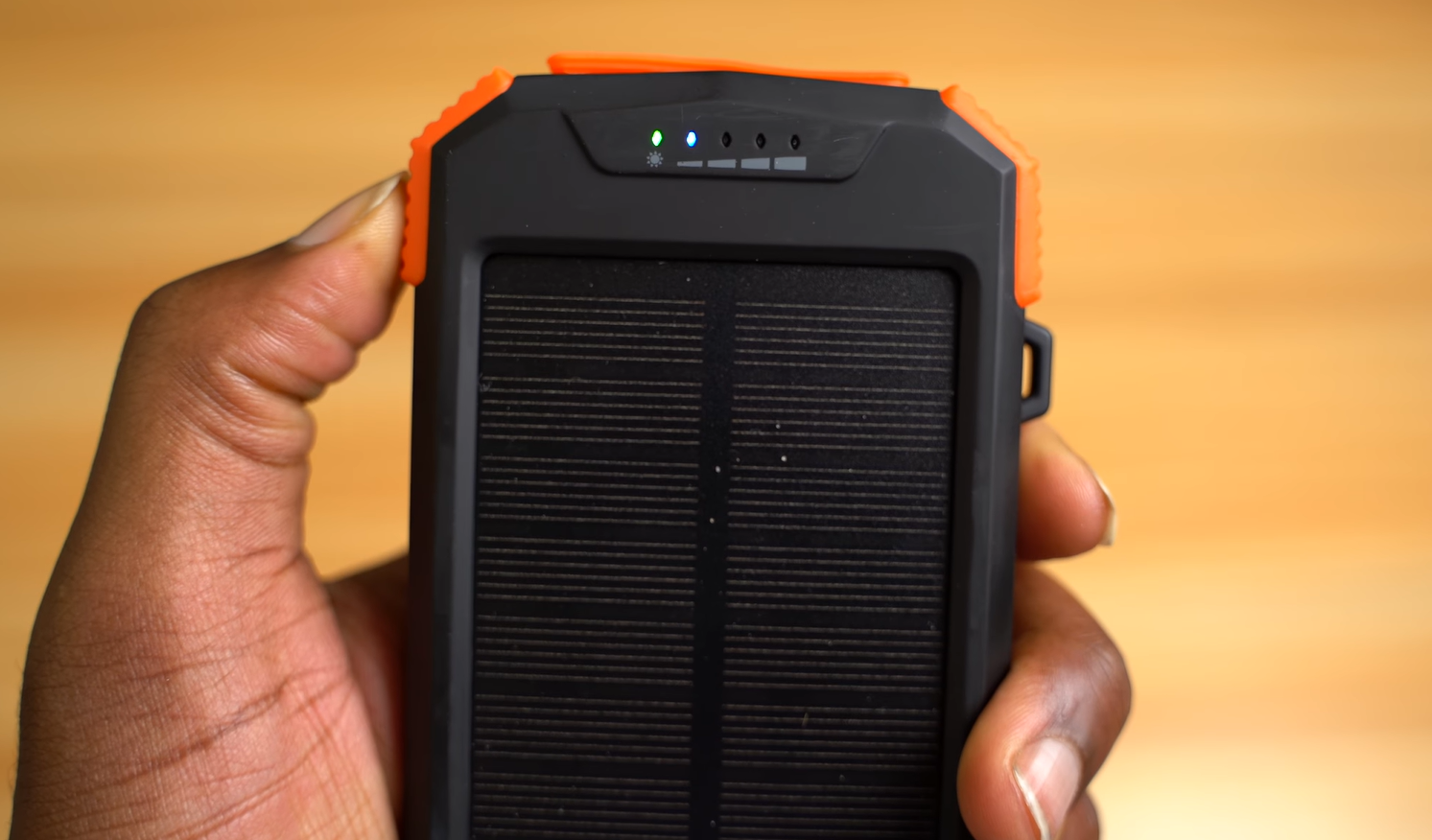
After 2 hours of soaking up the sun, the LED indicator jumped to one bar, which represents roughly 25% of the 10,000mAh capacity.
Breaking Down the Math
While a 25% gain in two hours sounds impressive for a small solar panel, it’s important to note how solar charging works on these devices:
The “Emergency Only” Rule: The surface area of a single solar panel is quite small. To reach a full 100% charge using only the sun, you would likely need 20 to 30 hours of perfect, unobstructed sunlight.
Heat Sensitivity: Lithium batteries don’t love heat. If you’re hiking in 90°F+ weather, the charging speed may actually slow down to protect the internal circuitry.
⚖️ The Verdict
The Blavor’s solar panel is a fantastic safety net, not a primary fuel source. It is perfect for “topping off” your battery while it hangs on your backpack during a hike, or providing enough emergency juice to make a 911 call if you’re stranded.
Pro Tip: Always wall-charge this unit to 100% before you head into the woods. Think of the solar panel as your “Plan B,” not your “Plan A.”
Charging Speed Test
To see how much power this unit actually delivers, we used a USB Digital Power Tester to measure the real-time wattage. We wanted to see if the convenience of the built-in cables came at a cost to performance.
Test 1: Using the Built-in USB-C Cable
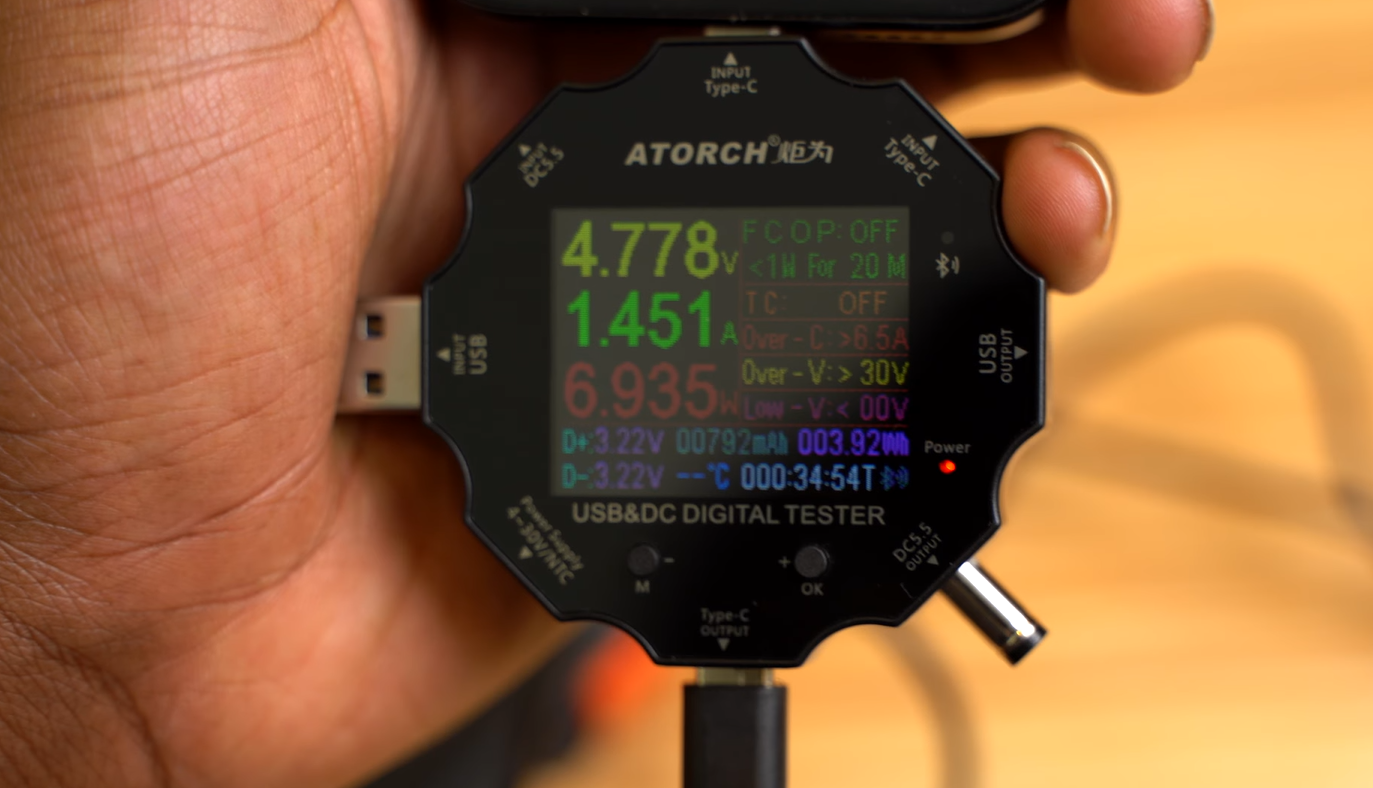
Output: Fluctuated between 6W and 7W.
Result: My phone battery increased by 3% in 3 minutes.
The Verdict: This is a “standard” charging speed. It’s fine for overnight charging, but if you’re in a hurry, it feels sluggish.
Test 2: Using a High-Quality External USB-C Cable
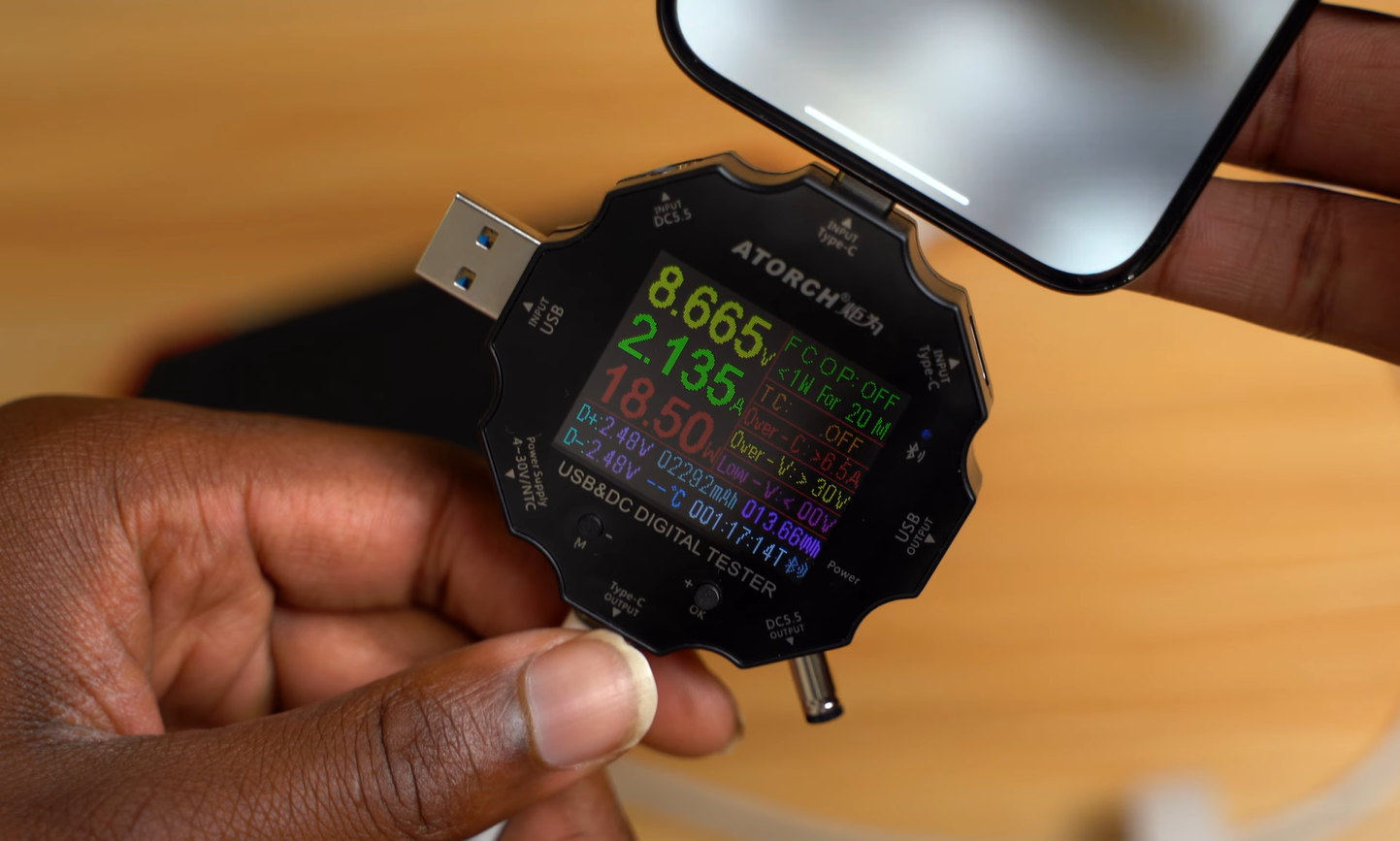
We suspected the built-in cable might be a bottleneck, so we ran the same test using my own high-speed USB-C cable plugged into the unit’s output port.
Output: Stabilized at 8V / 2A, delivering a solid 18W.
Result: My phone battery jumped by 5% in just 3 minutes.
The Verdict: By simply switching to my own cable, I nearly tripled the charging speed.
🔍 Why This Matters
Many users assume the built-in cables are optimized for the device, but our testing proves otherwise. The built-in cable appears to be limited to “standard” charging speeds.
To unlock the Fast Charging (18W PD) capabilities of the Blavor, you must use the dedicated USB-C output port with a high-quality external cable.
Pro Tip: Keep the built-in cables as a “backup” for when you forget your cord, but for daily use, carry a separate 20W-rated USB-C cable to get your phone back to 50% in half the time.
Multi Device Test
Most power banks brag about “High-Speed Charging,” but the real test is what happens when you plug in more than one device. We wanted to see if we could handle a “heavy lift” by charging a smartphone and an iPad simultaneously.
Single Device (Phone Only): Using the USB-C PD port, the solar charger power bank performed excellently, peaking at a solid 17 Watts. This is fast enough to get most modern phones from 0% to 50% in about 30 minutes.
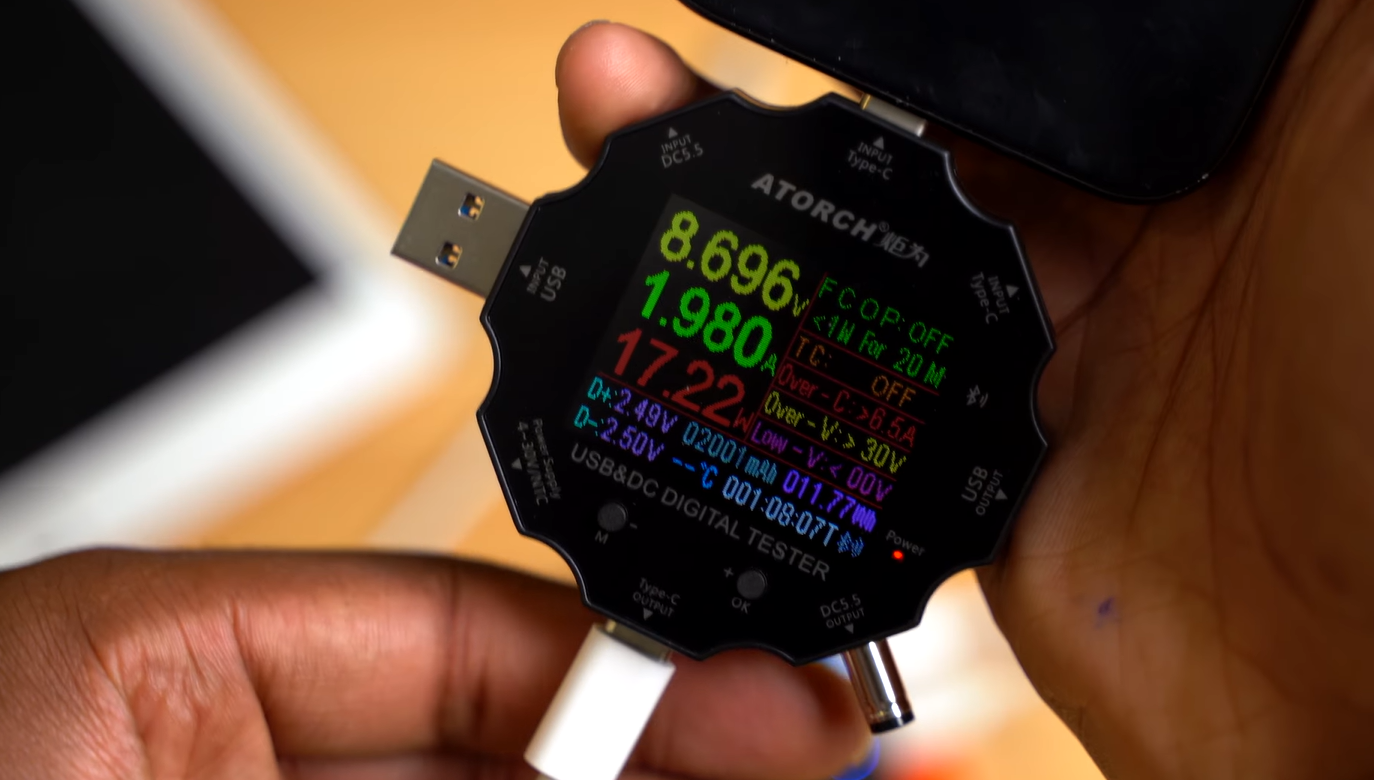
Dual Devices (Phone + iPad): As soon as the iPad was connected, the power dropped instantly. The output plummeted from 17W down to just 7 Watts shared between both devices.
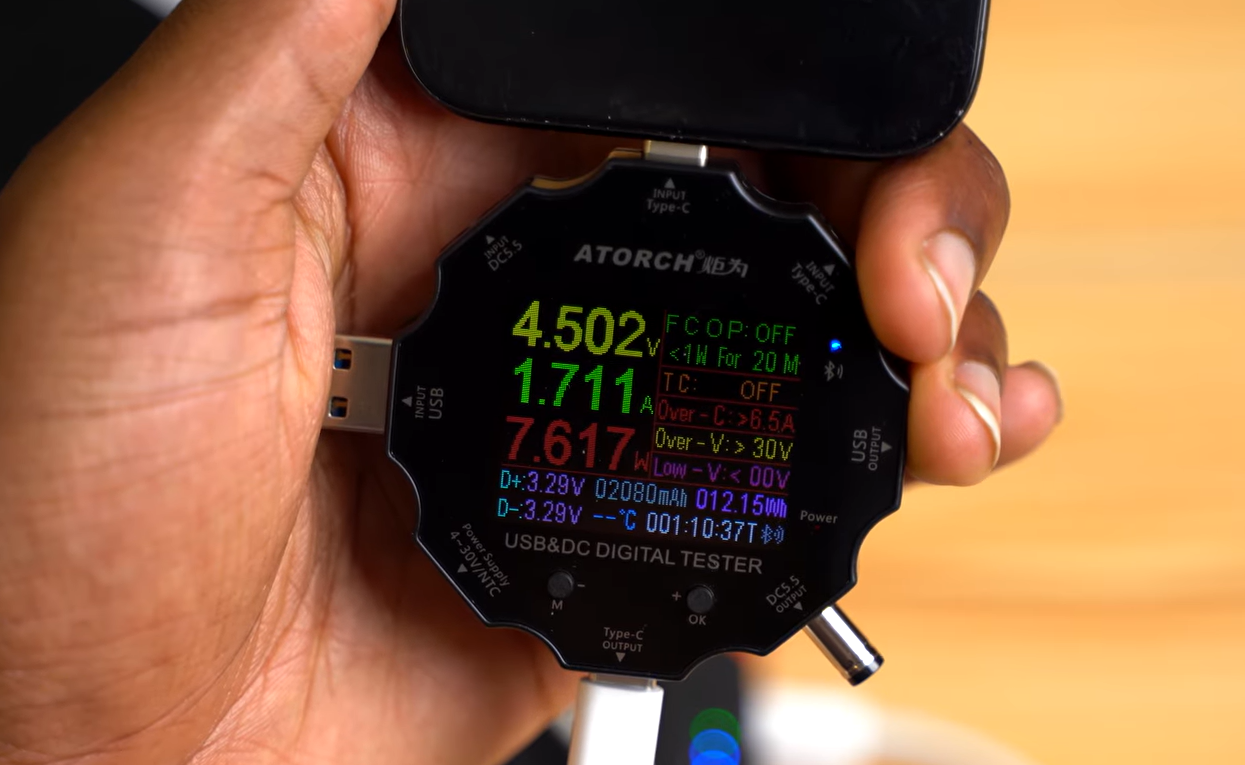
🔍 The Technical “Why”
This happens because the internal circuitry has a maximum total output. When you use multiple ports, the power bank often disables “Fast Charging” (Power Delivery) and reverts to a basic, slower charging mode to prevent the battery from overheating.
Essentially, the 17W isn’t doubled; it’s divided—and in this case, the efficiency dropped significantly.
⚖️ The Verdict
If you are at camp and need to charge your phone and your tablet at the same time, be prepared to wait. Charging will be significantly slower than if you charged them one by one.
Pro Tip: If you’re in a rush, charge your devices one at a time. You’ll actually get more total battery percentage into your devices faster by letting the solar charger power bank hit its 17W peak on one device than by “trickle charging” two devices at 7W.
Durability Test
A power bank for hikers and campers is only as good as its ability to survive a fall on a rocky trail. Most brands claim to be rugged, but we wanted to see for ourselves.
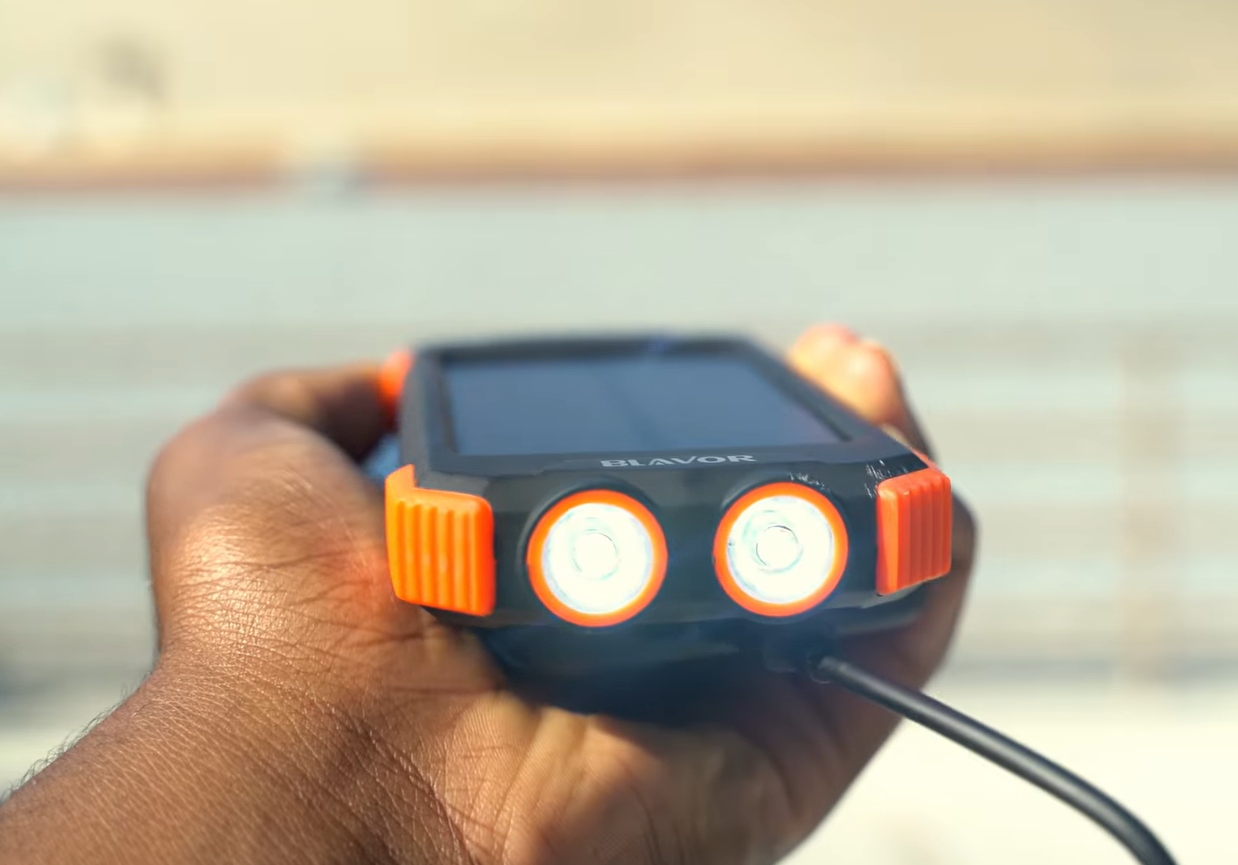
The Test: We performed a standard drop test (simulating a fall from chest height) onto a hard surface.
The Results:
Physical Condition: The unit’s reinforced rubber corners did exactly what they were supposed to. They absorbed the impact without cracking the main ABS plastic shell.
Functionality: Immediately after the drop, we plugged in a phone. The charging connection remained solid, and the dual LED flashlights turned on without a flicker.
Ports: Because the ports are protected by a thick silicone cover, no debris entered the sensitive USB-C or USB-A slots during the impact.
🔍 Why It Survives
The Blavor solar charger power bank carries an IPX5 rating, which technically means it is water-resistant and dustproof. However, it’s the shockproof design—the “ruggedized” rubber skin—that makes it a winner for outdoor use. Many slim power banks have internal batteries that can shift or “swell” after a drop, but the Blavor feels internally secure.
⚖️ The Verdict
This isn’t just a “city” power bank with an orange coat of paint. It’s a truly rugged tool that can handle being tossed into a backpack or accidentally knocked off a picnic table.

✅ Pros
True Rugged Build: Unlike competitors that only look tough, Blavor solar power bank uses flame-retardant materials and reinforced silicone corners. It survived our 4-foot drop test with zero internal or external damage.
Emergency Utility Kit: It’s more than a battery; the built-in dual LED flashlight is surprisingly bright for camping, and the included compass carabiner is a useful extra for hikers.
Travel-Friendly Size: It’s one of the lighter solar-capable units available. It is “Airline Approved”, meaning you can safely take it in your carry-on luggage without issues.
Versatile Charging: The ability to charge via USB-C, USB-A, and Wireless (Qi) simultaneously is great for groups, even if speeds drop when sharing power.
❌ Cons
Solar is for Emergencies Only: In our testing, the solar panel provided only a slow trickle charge. It’s useful for extending battery life in outdoor or emergency situations, but not reliable enough to fully recharge the power bank on its own.
The “Cable Bottleneck”: To get the advertised 18W Fast Charging, you must use your own high-quality cable. The built-in cables (if your model has them) or older standard cables will limit you to around 7W–10W.
Wireless Charging Speed: The wireless pad is rated at 5W, which is significantly slower than modern 15W wireless chargers. It’s best for overnight charging or “maintaining” a battery rather than a quick boost.
Heat Sensitivity: Because of the black solar panel and internal lithium battery, it can get very hot in direct sun. You have to be careful not to leave it on a hot car dashboard, as temperatures over 140°F can damage the battery life.
Blavor vs Other Solar Power Banks
Compared to other solar charger power banks in the same range:
Blavor solar power bank stands out for its durability and build quality
Many cheaper alternatives have weaker batteries or unreliable solar panels
Higher-end options may offer faster charging but cost significantly more
👉 Blavor sits in a balanced middle ground: reliable, reasonably priced, and practical.
Here is the breakdown of where it sits in the 2026 market:
|
Feature
|
Blavor
|
Budget Alternatives
|
High-End Solar Power Banks
|
|---|---|---|---|
|
Build Quality
|
Ruggedized ABS + Silicone
|
Thin plastic shells
|
Industrial-grade / Metal
|
|
Solar Utility
|
Emergency Only (Single Panel)
|
Often decorative/Unreliable
|
4+ Foldable Panels
|
|
Portability
|
Ultra-Light
|
Varies
|
Bulky
|
|
Price Point
|
Affordable (~$30)
|
Cheap ($15–$20)
|
Premium ($60–$100+)
|
Is the Blavor Solar Power Bank Worth It?
The Short Answer: Yes. But only if you view it as a “Safety Tool” rather than a “Solar Generator.”
It is worth it if you need:
Peace of Mind: A backup battery that won’t break if you drop it on a trail.
Emergency Light: The dual-LED flashlight is actually bright enough for campsite setup.
Weight Efficiency: You want solar backup without adding a pound of weight to your pack.
It is NOT worth it if you need:
Primary Solar Charging: If you’re off-grid for weeks, you need a foldable 20W solar panel array, not a single integrated panel.
Laptop Power: This is designed for phones and small tech (GoPros, earbuds), not MacBooks.
🎯 Who Is This For?
Ideal For:
The Day Hiker: You need a light battery to keep your trailing app running.
The Festival Goer: You want something that can handle dust, crowds, and a bit of spilled water.
The Emergency Prep User: A reliable “toss-in-the-bag” item for your car’s 72-hour kit.
Not Ideal For:
The Digital Nomad: If you work from your phone/laptop all day, you’ll find the 10,000mAh capacity and 7W multi-charging too slow.
The Minimalist User: If you just want something slim and lightweight for daily use, this may feel bulky
💡 What Most Reviews Don’t Tell You
Here’s the real truth about solar power banks. Once you understand these key points, the Blavor becomes less of a “slow charger” and more of a reliable backup tool.
1. Solar Charging is Very Slow
The solar panel is only for emergency top-ups, not full charging.
Output is very low (~0.9W)
A full charge from solar alone can take days of strong sunlight
👉 Think of it as a trickle backup, not a main charging method
2. Heat Can Damage the Battery
Solar use often means heat exposure, which lithium batteries don’t like.
Leaving it in hot direct sun or a car can reduce battery life
👉 Keep the battery shaded when possible while charging via solar
3. The Flashlight is Surprisingly Useful
The built-in flashlight can last a very long time on one charge.
👉 In emergencies, it’s often more useful than the solar charging feature itself
🛠️ Simple Maintenance Tips
Charge it every few months even if unused
Try to keep battery between 20%–80% for longer life
Wipe the solar panel occasionally for better efficiency
Frequently Asked Questions
How long does it take to charge via solar vs. cable?
Solar: 20 to 50+ hours of direct sunlight for a full charge. It is strictly for “topping off” or emergencies.
Cable: Approximately 4–8 hours depending on your wall charger. It is always recommended to charge to 100% via a outlet before your trip.
Is it actually waterproof?
Most models (like the PN-W05) carry an IPX4 rating. This means it is “splash-proof” and can handle light rain or sweat, but it should never be submerged in water.
Can I charge the power bank and my phone at the same time?
While technically possible, it is not recommended. Using the wireless charging function while the power bank itself is recharging can lead to overheating and battery swelling.
Why is the green light on even when I’m not charging it?
The green LED indicates the solar panel is capturing light. Even indoor artificial light can trigger this indicator, though it won’t provide a significant charge.
How do I turn on the flashlight?
A common point of confusion: You must long-press the power button for 3–5 seconds to toggle the dual LED flashlights on or off.
Can I leave it on my car dashboard to charge?
No. Temperatures inside a parked car can exceed 176°F (80°C). This extreme heat can cause the lithium-polymer battery to swell or even explode.
Does it support Fast Charging for my phone?
Newer BLAVOR models (20,000mAh+) usually feature 18W or 20W USB-C PD (Power Delivery). However, to reach these speeds, you must use a high-quality external USB-C cable rather than the built-in ones.
What should I do if the battery starts to bulge?
Stop using it immediately. Battery swelling is a sign of internal failure or heat damage. Contact BLAVOR support; they typically offer a warranty for such issues.
Final Verdict
The Blavor Solar Power Bank is a solid backup device—as long as you understand what it’s for. It’s not a solar generator or fast-charging powerhouse. And it won’t replace a wall charger.
What it does well is provide reliable backup power. It handled basic charging well, survived drop testing, and feels durable enough for travel. The flashlight is also a useful bonus in emergencies. At around $30, it offers good value for a rugged backup battery.
👉 Key rule: Always fully charge it via wall outlet before leaving home. Use solar only as a backup.
If you’re a day hiker, a casual traveler, or someone who just wants a tough backup battery in their bag for emergencies, the Blavor deserves a spot in your kit.
If you need fast daily charging or long off-grid use, you should look for a higher-end option.
See how Blavor compares with other top solar power banks in our head-to-head video below.
📖 Related Articles
If you found this review helpful, you might also enjoy these:
Join our weekly newsletter and get honest reviews like this one delivered straight to your inbox.