Advertising Disclosure
Do Red Light Hair Dryers Help with Thinning Hair?
You’ve noticed more hair in the shower drain, on your pillow, or caught in your brush than you’re used to and somewhere in your search for answers, a hair dryer with a built-in red light promised to help. It sounds almost too convenient: dry your hair the way you already do every day, and stimulate growth at the same time. But is that actually how red light therapy works, or is it a real technology stretched onto a product it was never tested on?
Here’s the short answer: red light therapy does have real clinical research behind it for hair loss — that part isn’t hype. But the research was done on dedicated devices, not hair dryers, and the difference between the two matters more than most product pages let on. Before you spend money hoping a blow-dry routine doubles as treatment, this guide walks through what the science actually supports, what a hair dryer can and can’t realistically deliver for hair health, and what’s actually worth looking for if thinning hair is your real concern.

Quick Verdict
⭐ Best For: Anyone curious whether red light hair dryers can genuinely help thinning hair, or who wants a clear-eyed look at the science before spending money on one.
🚫 Not Ideal For: Anyone hoping for a simple yes-or-no answer, or someone dealing with active hair loss who needs a real diagnosis rather than a product recommendation.
✅ Bottom Line: Red light therapy has real clinical evidence behind it — for dedicated devices used in specific, controlled sessions. Whether a hair dryer’s built-in light delivers anything close to that same effect is a different, mostly unanswered question. Keep reading to see exactly where the science holds up.
What Is a Red Light Hair Dryer?
A red light hair dryer also called an infrared hair dryer or red light hair dryer, uses an LED built into the airflow path, combining several distinct technologies into one appliance rather than several dedicated tools:
Hair-Drying Heat and Airflow
The core drying function, same as any conventional dryer — a motor pushes heated or ambient air through a nozzle to remove moisture from wet hair.
Red or Near-Infrared Light Technology
An LED (or several) embedded in the barrel of the dryer, positioned so the light hits the hair and scalp while you’re drying, marketed as delivering the same category of light exposure studied in red light/LLLT research.
Temperature and Intelligent Heat Control
Adjustable heat settings that let you regulate how much thermal heat reaches your hair, independent of the light feature. The red light typically stays on regardless of which heat setting you choose.
Additional Features
Many red light dryers also add ionic technology (for frizz reduction and shine) or other hair-care extras, bundling several “premium” selling points into one device.
How It Differs from a Red Light Therapy Device
A hair dryer’s red light and a dedicated Low-Level Laser Therapy (LLLT) device use the same underlying technology, but the way each one is built and used is different enough to matter:
Purpose-built vs. multi-purpose: A laser cap, helmet, or comb (an LLLT device) is built to do one thing — deliver light therapy to your scalp. A hair dryer is built to dry hair. The red light is just an added feature, not what the dryer was actually designed around.
Controlled wavelength and irradiance: LLLT devices used in studies were built to a specific wavelength (630–680nm) and a measured light strength. Most hair dryers don’t tell you either number for their red light so there’s no way to know if it even matches what was tested.
Session length and consistency: LLLT devices are used in focused sessions — 10 to 20 minutes, several times a week, for months, with the light held steady against the scalp the whole time. A hair dryer’s light only runs for the 3 to 5 minutes it takes to dry your hair, and your head keeps moving, so the exposure is short and inconsistent instead of steady.
Distance and coverage: LLLT devices sit close to the scalp at a fixed distance, which matters because light gets weaker fast the farther it travels. A hair dryer moves around your head at different distances while you style, so it’s not delivering light the same way the tested devices did.
Causes of Thinning Hair
Hair thinning has several possible causes, and identifying the actual cause matters more than any single product — including a hair dryer — because different causes respond to different treatments.
Genetics (Androgenetic Alopecia)
The most common cause of hair thinning in both men and women, driven by genetic sensitivity to hormones (androgens) that gradually shrink hair follicles over time. This is the specific condition most red light therapy research has actually studied.
Hormonal Changes
Pregnancy, menopause, thyroid conditions, and other hormonal shifts can all trigger temporary or ongoing hair thinning, since hair growth cycles are sensitive to hormone levels.
Telogen Effluvium
A temporary form of shedding triggered by physical or emotional stress, illness, surgery, significant weight loss, or a major life event — hair enters the resting phase early and sheds more than usual, usually resolving on its own once the trigger passes.
Nutritional Deficiencies
Low iron, vitamin D, zinc, or protein intake can all contribute to thinning, since hair follicles need adequate nutrients to support the growth phase.
Medications and Medical Treatments
Certain medications (including some blood thinners, antidepressants, and chemotherapy drugs) list hair thinning or loss as a known side effect.
Scalp Conditions
Conditions like seborrheic dermatitis, psoriasis, or scalp infections can affect follicle health and contribute to thinning if left untreated.
Traction and Heat Damage
Tight hairstyles, frequent high-heat styling, and harsh chemical treatments can cause breakage, brittle hair, and over time, damage to the follicle itself. This is the category a gentler hair dryer with better heat control can actually help with directly.
Aging
Hair naturally thins somewhat with age as growth cycles slow and follicles shrink, independent of any specific medical condition.

How Red Light Therapy May Affect Hair Growth
Red light therapy is thought to work through a process called photobiomodulation, essentially, using light at a specific wavelength to stimulate activity inside cells. For hair specifically, the theory is that red light energy is absorbed by cells in the hair follicle, which may help:
Push follicles into an active growth phase. Hair naturally cycles between resting and growing phases; research suggests red light may help nudge more follicles from resting into active growth.
Increase blood flow to the scalp. Better circulation around the follicle is thought to deliver more oxygen and nutrients to support hair growth.
Boost cellular energy production. Photobiomodulation is believed to stimulate mitochondria — the energy-producing part of cells — which may help follicle cells function and divide more effectively.
The research backing this is strongest for androgenetic alopecia (pattern hair loss), where multiple clinical trials have shown measurable increases in hair count and thickness after consistent use of dedicated Low-Level Laser Therapy devices over several months.
What Does the Research Say About Red Light for Thinning Hair?
What Studies Have Found
Multiple clinical trials, including a meta-analysis of 8 RCTs (about 750 participants), have found that low-level light therapy at 630–680nm significantly increases hair count and thickness in people with androgenetic alopecia. The FDA has cleared several dedicated devices based on this research, starting with a laser comb in 2007.
These studies tested devices built specifically to deliver therapeutic light — laser combs, caps, and helmets — not general-purpose appliances with a light feature added on. Results also aren’t uniform; they depend on:
Wavelength — 630–680nm shows the most supporting evidence
Light intensity (irradiance) — how strong the output actually is
Treatment duration — most results appeared after months of consistent use
Frequency of use — several sessions a week, not occasional exposure
Type and cause of hair loss — the strongest evidence is for androgenetic alopecia specifically, not thinning from other causes
Why Red Light Hair Dryer Claims Need More Caution
Dedicated light-therapy devices are designed around one main purpose: delivering a specific amount of light to the scalp for a set period of time. A hair dryer, on the other hand, is primarily designed to dry and style hair, with red light serving as an additional feature.
That difference matters because the potential benefits of red light therapy can depend on factors such as wavelength, light intensity, exposure time, distance from the scalp, and coverage. A dedicated light-therapy device may be designed to keep these factors relatively consistent throughout a treatment session. A hair dryer is constantly moving, is typically used for only a few minutes, and may provide a different level of light exposure depending on how it is held and used.
The SRI DryQ hair dryer, for example, incorporates red light into the drying process and claims that the technology can support hair health and hair growth. That claim is not entirely without basis: red light therapy itself has been studied for its potential to support hair growth, particularly in certain types of hair loss. The key question is whether the amount and delivery of red light from a particular hair dryer provide the same type of exposure used in studies of dedicated light-therapy devices.
So, the red light in the DryQ hair dryer is based on a technology with research behind it, but that doesn’t mean its hair-growth effects should automatically be assumed to match those of a dedicated clinical-style red light device. The most useful way to evaluate a red light hair dryer is to look at what it actually delivers, how it is used, and what evidence supports the specific claims being made.
Can a Red Light Hair Dryer Prevent Hair Damage?
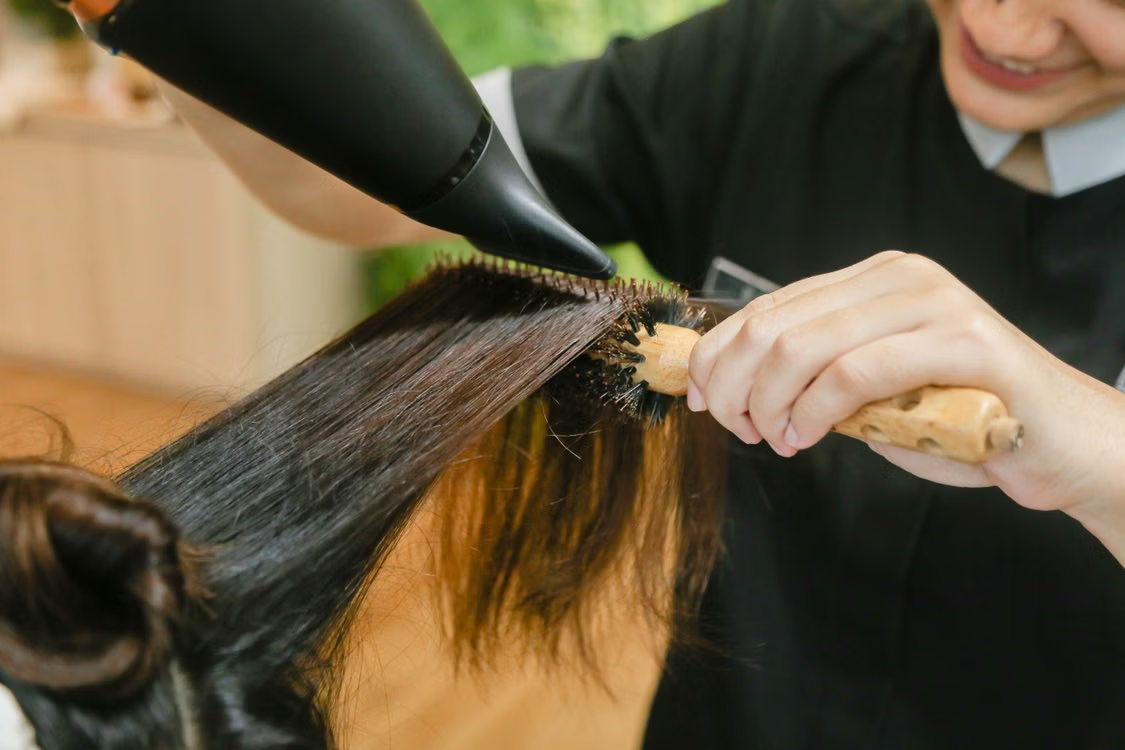
Yes, but credit the dryer’s heat control and airflow for that, not the red light. Repeated high heat is the main cause of styling-related hair damage, so a hair dryer with adjustable heat settings and strong airflow genuinely reduces damage by letting you dry effectively at lower or more consistent temperatures which is a real, mechanical effect that has nothing to do with the red light feature.
The red light itself is a separate claim tied to hair growth, not damage prevention, and it’s not the mechanism the clinical research has actually tested. So if a red light hair dryer helps protect your hair, it’s the drying technology doing the work. The red light is an unproven bonus, not the reason it works.
What Actually Reduces Heat-Related Damage
Since heat exposure is the real driver of styling damage, it’s worth knowing exactly which features address that regardless of whether a hair dryer has a red light or not. To help reduce unnecessary heat exposure, check whether the hair dryer:
Intelligent temperature control
Lower heat settings
Even airflow
Faster drying
A cool-shot function
Hair Shedding vs. Hair Breakage
These two get confused constantly, but they’re different problems with different causes and knowing which one you’re actually dealing with changes what’s worth addressing.
Hair Shedding
This happens at the root — a hair falls out with its follicle, usually because it’s completed its natural growth cycle and moved into the shedding phase. Losing 50–100 hairs a day is considered normal. Shedding becomes a concern when it increases noticeably beyond that, which can point to the causes covered earlier in this article — hormonal changes, telogen effluvium, nutritional deficiencies, or genetics. This is the kind of thinning that red light therapy research has actually studied, since it relates to the hair growth cycle itself.
Hair Breakage
This happens along the hair shaft, not at the root. The hair snaps somewhere in the middle or at the ends, usually from mechanical or heat-related stress: repeated high heat styling, tight hairstyles, harsh brushing, chemical treatments, or general wear. Breakage often shows up as visible shorter pieces, flyaways, or a rough, uneven texture, rather than hair actually falling out. This is the kind of damage a dryer’s heat control and airflow can genuinely help prevent, as covered earlier — it’s a mechanical problem, not a growth-cycle one.
What to Look for in a Red Light Hair Dryer for Thinning Hair
Red-Light Wavelength
Look for a brand that actually publishes the wavelength of its red LED, ideally in or near the 630–680nm range that clinical research on hair growth has actually studied. If a product doesn’t state a wavelength at all, there’s no way to know whether it’s even in the range that’s been tested and most consumer hair dryers don’t disclose this, which is worth treating as a red flag rather than a minor omission.
Heat Control
Adjustable heat settings let you dry effectively without defaulting to maximum temperature, which matters more for thinning or fragile hair since repeated high heat is one of the clearest, most well-established causes of hair damage. This is a separate concern from the red light feature entirely — a hair dryer can have excellent heat control regardless of whether its light claim holds up.
Drying Speed
Airflow speed (measured in CFM or mph) is the actual mechanism behind faster drying, not the red light. A dryer that dries efficiently reduces the total time your hair spends under heat, which is a real, testable benefit independent of any growth claim.
Weight and Ergonomics
A lighter, well-balanced dryer is easier to hold through a full styling session, which matters especially if you’re drying thinning hair carefully, section by section, over a longer routine. This has nothing to do with the light technology, but it affects how usable and comfortable the dryer actually is day to day.
Light Coverage and Placement
Consider how much of your scalp is actually exposed to the light and for how long, given how you naturally move a dryer while styling. A brand that’s transparent about where the LEDs sit in the barrel and how much of the airflow path they cover gives you more to evaluate than one that simply advertises “red light therapy” without any detail on delivery.
Ionic Technology
An ionic hair dryer reduces static and smooths the cuticle for shinier, less frizzy hair — a separate, well-established mechanism from red light. Worth checking for on its own merits, since it’s one of the more reliably effective “premium” features across the dryer category generally.
Noise Level
Not a performance factor, but it affects whether you’ll actually want to use the dryer daily — relevant if red light exposure depends on consistent, regular use (which the research suggests matters for any real effect) and a loud, unpleasant dryer is one you’re less likely to reach for every day.
Attachment Type (Diffuser Included)
If thinning hair is a concern, a diffuser attachment that disperses airflow more gently across the scalp can reduce direct heat concentration on any one area — genuinely useful for anyone being extra careful with fragile hair, independent of the red light question.
Brand Transparency and Documentation
Does the brand publish any testing, third-party certification, or technical data beyond marketing language — the way Zuvi cited SGS third-party testing for its moisture claims, versus SRI’s DryQ, which offered nothing beyond the phrase itself? A brand willing to show its work is at minimum being more honest with you than one that isn’t, even if that documentation still falls short of a clinical trial.
Return Policy and Warranty
Given how unverified most red-light hair dryer claims currently are, a generous return window matters more here than on traditional hair dryers. This is your practical safety net if the product doesn’t do what you hoped, since there’s no way to “test” a growth claim in the store before buying.
Frequently Asked Questions
Can red light hair dryers help with thinning hair or hair loss?
Red light itself has real clinical evidence for hair growth, but that evidence comes from dedicated LLLT devices used in focused sessions — not hair dryers. Most hair dryers don’t disclose the light’s wavelength or dose, and a few minutes of moving exposure doesn’t match the studied protocol. The science is real; whether a specific dryer delivers it effectively isn’t proven.
Do red light hair dryers really help reduce frizz?
If they do, it’s the ionic technology doing the work, not the red light. Ionic tech smooths the cuticle and neutralizes static — that’s the actual mechanism behind less frizz. Red light isn’t linked to frizz reduction in any research.
Are red light hair dryers safe for daily use?
Generally yes, at consumer light levels, though anyone with a scalp condition or light-sensitivity concerns should check with a dermatologist first. Worth noting: clinical studies used focused sessions a few times a week, not daily incidental exposure, so daily use isn’t actually replicating the tested protocol.
Does a red light hair dryer dry hair faster than a regular one?
Not because of the light. Drying speed comes down to airflow (CFM and mph), which has nothing to do with the red light feature. Check the actual airflow specs rather than assuming “red light” implies faster drying.
How is a red light hair dryer different from a laser cap or comb?
Dedicated devices deliver a measured light dose at a fixed distance, in focused sessions over months. A hair dryer’s light is secondary, with shorter and less consistent exposure. Related technology, different delivery — and that gap is what the research doesn’t cover.
Should I switch to a red light hair dryer if I’m losing hair?
Not as a first step. See a dermatologist to identify the actual cause — genetics, hormones, a scalp condition, or something else — since treatment depends on the cause. A red light hair dryer isn’t a substitute for that diagnosis.
Can a red light hair dryer cause any harm?
Not typically, at consumer light levels. The bigger risk with any hair dryer is heat damage from high or prolonged use. Anyone with a photosensitivity condition or related medication should check with a dermatologist first.
Final Verdict: Are Red Light Hair Dryers Worth It for Thinning Hair?
Red light therapy itself has real clinical evidence behind it. Multiple trials and an FDA clearance history support it for hair loss, but that evidence comes from dedicated devices used in focused, measured sessions over months, not a few minutes of moving light during a blow-dry. Most hair dryers don’t even publish the wavelength or dose of their built-in light, so there’s no way to confirm it matches what was actually studied.
That doesn’t make a red light hair dryer a bad purchase. If it also has strong heat control, good airflow, and ionic technology, those benefits are real and worth paying for on their own. Just don’t buy one expecting it to treat thinning hair the way a laser cap might; that claim isn’t backed up yet. If genuine hair loss is the concern, a dermatologist — not a hair dryer — is the right first step toward an actual diagnosis and a treatment that’s been tested for it.
Looking for a red light hair dryer built specifically for fine or thin hair? Read our SRI Hair Dryer Review: How to Use the Dry Q for Fine, Thin Hair for a full breakdown of settings, technique, and what to expect.