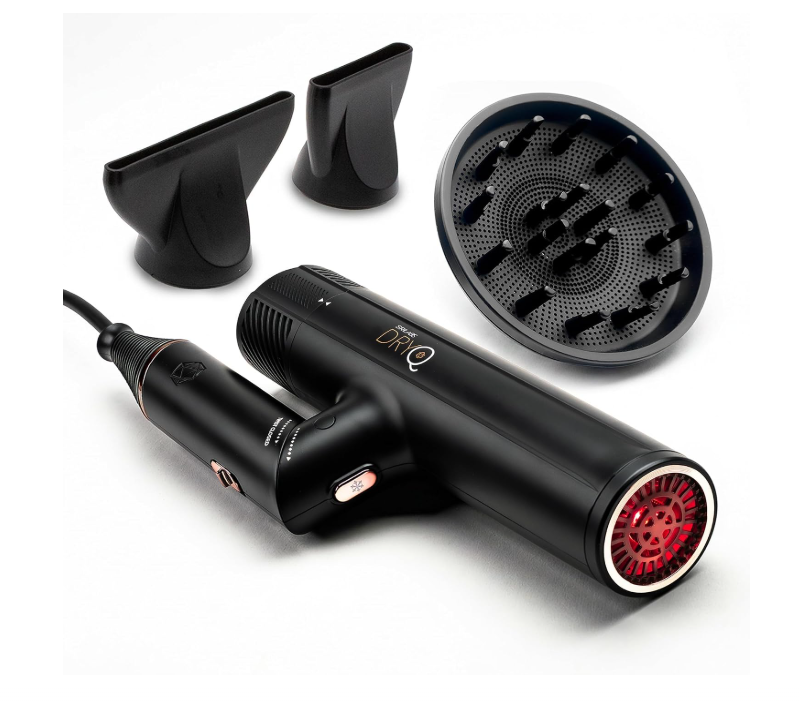
Advertising Disclosure

Skin Research Institute has a financial connection to products sold via links on our website such as our top choices.


SRI Hair Dryer Review: How to Use the Dry Q for Fine, Thin Hair
SRI hair dryer review

If you have fine or thinning hair, blow-drying can feel like a balancing act: you want enough heat and airflow to get your hair dry quickly, but too much can leave delicate strands looking flat, frizzy, or damaged. That’s where the SRI Dry Q hair dryer comes in, with features designed to make drying easier without treating your hair like it needs maximum heat to get the job done. But does it actually work well for fine, thin hair and are you using it the right way? In this SRI Hair Dryer review, we’ll break down how to use the Dry Q, what settings to choose, and what you can realistically expect when drying finer strands.


Quick Verdict

Best For: People with fine or thin hair who want precise, adjustable heat control, a root-lift technique using the concentrator nozzle, and a lightweight, quiet build for everyday styling.

🚫 Not Ideal For: Anyone looking to skip technique entirely. This hair dryer rewards using the lower heat and speed settings rather than defaulting to full power.

Our Verdict: A well-equipped hair dryer for fine, thin hair, with the settings and attachments to build volume without over-processing strands. See the full breakdown below for how to get the most out of it.


Why Thin Hair Needs a Different Approach

Fine, thin hair behaves differently than thicker or coarser hair types, and using the wrong heat settings or technique can do more harm than good. Here’s what makes fine hair more sensitive to styling tools:

Less Natural Protection

Each strand has less structure to absorb heat, so high temperatures can cause damage faster than they would on thicker hair.

Prone to Over-Drying

Fine hair loses moisture quickly. Blasting it with high heat for too long can leave it dry, brittle, and more prone to breakage.

Easily Weighed Down

Too much product or too much direct heat pressed close to the scalp can flatten fine hair, working against the volume most people with this hair type are trying to achieve.

More Visible Static and Flyaways

Fine strands are more reactive to dryness and friction, making frizz and static more noticeable than on thicker hair.

Slower to Build Volume

Fine hair has less natural body, so it can fall flat quickly after drying if the wrong technique is used, making root-lift technique more important than for thicker hair types.

More Sensitive to Product Buildup

Heavy oils, creams, or too much styling product can weigh fine hair down fast, making lightweight, targeted product choices more important than for coarser hair.

Tangles and Snaps More Easily When Wet

Fine hair is more fragile in its wet state, meaning aggressive brushing or high-speed airflow right after showering can cause more breakage than it would on thicker strands.


SRI Hair Dryer Review: Key Features and Specifications

SRI dryq hair dryer

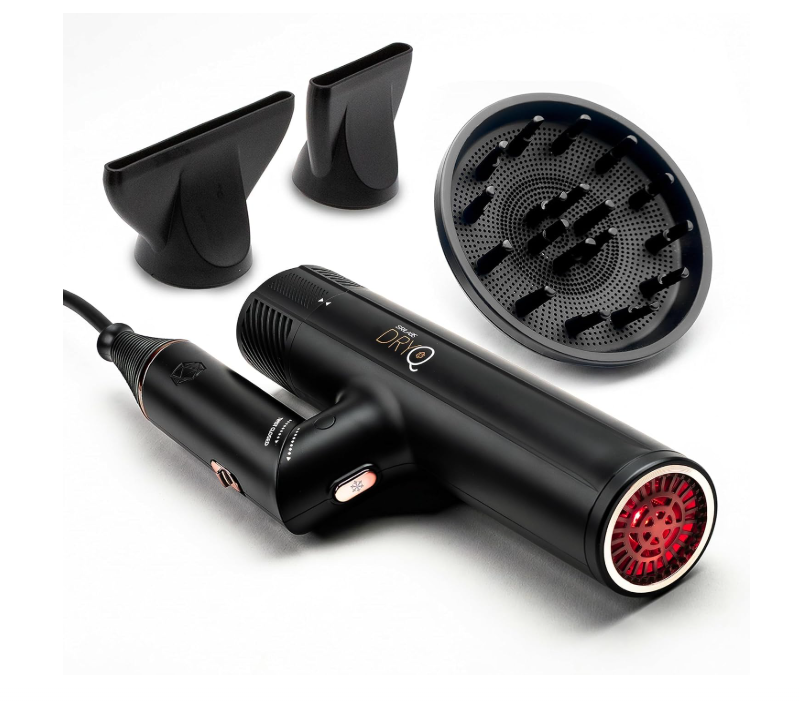
The SRI Dry Q is a high-tech hair dryer from SRI (Skin Research Institute), a brand known for beauty tools that combine performance with hair health. The SRI DryQ hair dryer is built around infrared heat and ionic technology, designed to dry hair faster while aiming to reduce heat damage, frizz, and static. It offers multiple heat and speed settings, a cool shot button for locking in style, and a lightweight, ergonomic design meant for everyday use. To learn more about whether it’s worth the investment overall, check out our full SRI Dry Q hair dryer review.

Key Features

Infrared Heat Technology

SRI states that infrared light may support hair growth by stimulating hair follicles while drying hair faster. As an infrared hair dryer, the Dry Q uses infrared technology to penetrate the hair shaft directly, allowing for faster drying with less surface-level heat exposure, which matters for fine, thin hair since thinner strands have less natural resistance to heat damage.

Ionic Technology

SRI describes the Dry Q’s ionic technology as delivering negative ions that help keep hair smooth and provide a frizz free finish. Fine hair tends to show static and flyaways more visibly than thicker hair, so this feature is especially relevant for anyone trying to keep fine strands smooth without weighing them down with extra product.

Intelligent Heat Control

SRI states this smart hairdryer automatically controls excessive heat to help protect hair from damage. For fine hair specifically, automatic heat regulation is useful since over-drying is a common risk with thinner strands, and not having to manually monitor the temperature reduces that risk.

Quiet, Lightweight, and Foldable

At a stated 79 decibels, SRI positions the Dry Q as quiet enough for early-morning use without disturbing others, and its foldable, lightweight design makes it easy to store or travel with. This is a practical plus for anyone doing longer styling routines on fine hair, which often involves more sectioning and touch-ups.

Magnetic Attachments

Attachments lock in and pop out easily via magnetic connection, making it simple to switch between nozzles or diffusers depending on the desired result. This is useful for fine hair routines that may switch between a concentrator for root-lift and a diffuser for gentler, more even drying.

Specifications

Product Name / Model SRI Dry Q Hair Dryer
Price $227.99
Wattage 1,300 watts
Power Source Corded electric
Voltage 127V
Speed Settings 3 speeds
Total Settings 7 total settings
Hair Type All hair types
Weight 11.8 oz
Noise Level 79 dB
Cord Length 8 ft professional-length cord
Warranty 2 years
Included Components SRI Dry Q unit, 2 nozzles, 1 diffuser
Brand / Manufacturer Skin Research Institute
Model Number DryQV2
UPC 647535556079
Best Sellers Rank #20,567 in Beauty & Personal Care; #67 in Hair Dryers
Key Technologies Ionic technology, infrared heat technology, intelligent heat control
Additional Features Cool shot button, magnetic attachment system


Recommended Settings and Technique for Fine, Thin Hair

Fine, thin hair is more prone to heat damage than thicker hair, so the goal here isn’t drying as fast as possible, it’s drying efficiently at the lowest heat that still gets the job done.

Heat Setting

Start with the lowest heat setting available. Fine strands have less natural protection against heat, so a gentler setting reduces the risk of dryness and breakage, even if it takes a few extra minutes. Save higher heat for thicker sections or second passes if hair isn’t drying evenly.

Speed Setting

A lower or medium airflow speed works well for fine hair. High speed can cause more tangling and flyaways on thin strands, while a gentler airflow gives you more control, especially when directing hair for volume at the roots.

Drying Distance

Hold the dryer 6 to 8 inches from your hair rather than pressing it close. Fine hair heats up faster than thick hair, so keeping some distance helps avoid over-drying any one section.

Technique

  • Start at the roots, using the concentrator nozzle to direct airflow downward along the hair shaft for smoothness and shine

  • Lift sections at the root while drying to build volume, rather than letting hair lie flat against the scalp

  • Move the dryer continuously; avoid holding it in one spot, since fine hair dries faster than you’d expect

  • Finish each section with the cool shot button to set the style and lock in volume without added heat

Timing

Fine hair typically dries faster than thicker hair types, so check progress every minute or so rather than drying on a fixed timer. Overdrying, even a section that already looks dry, is one of the most common causes of damage for this hair type.


Tips to Maximize Volume Without Damage

Fine, thin hair can build real volume without relying on high heat, it’s more about technique than power. Here’s how to get the most lift while keeping strands healthy:

  • Dry upside down at the roots. Flipping your head over while drying at the roots lifts hair away from the scalp, creating natural volume before you even style. Use a lower heat setting here since the scalp is more sensitive to prolonged heat exposure.

  • Use the concentrator nozzle and point it downward. Directing airflow down the hair shaft (rather than blasting it from underneath) helps smooth the cuticle for shine while still allowing you to lift sections at the root for volume.

  • Dry in sections, starting at the roots. Clip hair up and work through it in layers, focusing airflow at the base of each section first. This builds volume more evenly than drying all the hair at once from the ends.

  • Finish with the cool shot button. Once a section is dry, a quick blast of cool air helps “set” the style and lock in lift at the root, without adding more heat exposure to already-dry strands.

  • Avoid parking the dryer in one spot too long. Fine hair dries faster than thicker hair, so constant, sweeping motion is important; holding heat on one section for too long is one of the fastest ways to cause dryness and breakage.

  • Use a lightweight volumizing product, not a heavy one. Heavier creams or oils can weigh down fine strands and undo the lift you just built with technique, working directly against the goal of this section.

  • Keep the hair dryer at a slight distance from the scalp. A few inches of distance reduces direct heat exposure while still giving enough airflow to lift and dry effectively, an easy way to protect fragile strands without sacrificing results.


How Often Should You Blow Dry Fine Hair?
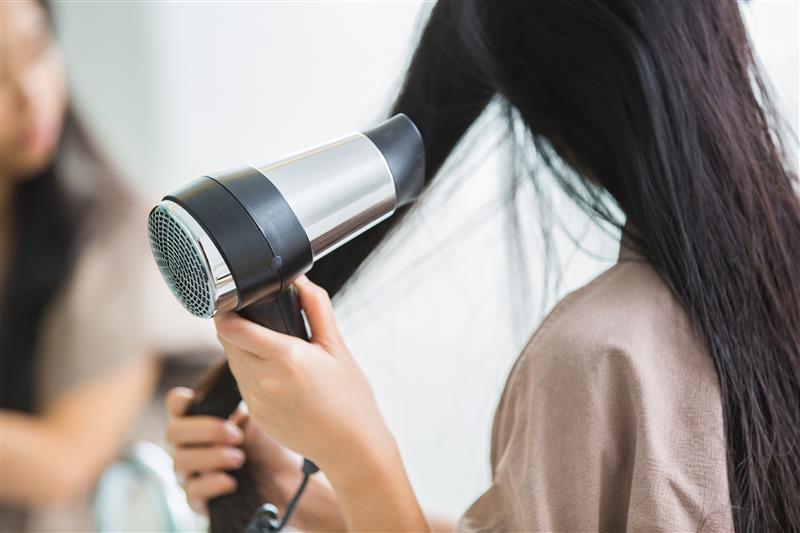
a woman using blow dryer on fine hair

Daily heat styling compounds damage over time, even with a perfect technique. Heat exposure adds up cumulatively, so even a gentle, well-protected blow-dry still contributes some wear each time, and fine hair has less structural reserve to absorb that wear before it shows up as breakage or dullness.

If your routine allows it, stretching blow-dries to every other day cuts your total monthly heat exposure roughly in half, while still keeping hair styled most days. On off-days, dry shampoo at the roots (where oil and flatness show first) or a loose braid overnight can maintain your style without adding heat. Over weeks and months, that difference is often what separates hair that’s slowly thinning and becoming brittle from hair that holds its thickness and shine.

 

Frequently Asked Questions

1. What heat and speed settings should I use on the SRI Dry Q hair dryer for fine, thin hair?

Start with the lowest heat setting and a lower or medium airflow speed. Fine strands have less natural resistance to heat, so a gentler setting reduces the risk of dryness and breakage, even if drying takes slightly longer.

2. How far should I hold the SRI Dry Q hair dryer from my scalp?

Aim for 6 to 8 inches of distance rather than holding it close. This helps avoid concentrating heat on any one section, which matters more for fine hair since it heats up faster than thicker hair types.

3. Can the SRI Dry Q hair dryer help add volume to fine, thin hair?

The dryer’s included concentrator nozzle and cool shot button can support a root-lifting technique, drying hair upside down or in lifted sections at the root, then locking in that lift with a blast of cool air. Volume comes primarily from technique, the tools just make it easier to execute.

4. Does the SRI Dry Q hair dryer come with attachments useful for fine hair?

Yes. It includes two nozzles and a diffuser, all magnetic for easy swapping. The concentrator nozzle is especially useful for fine hair, since directing airflow precisely helps avoid overexposing any one section to heat.

5. How long does it typically take to dry fine, thin hair with the SRI Dry Q hair dryer?

Exact drying time will vary, but fine hair generally dries faster than thicker hair types. It’s worth checking progress every minute or so rather than relying on a fixed timer, since overdrying, even hair that looks dry, is a common cause of damage for this hair type.

6. Is the SRI Dry Q hair dryer too powerful for fine, thin hair?

Not if used on its lower heat and speed settings. The adjustable settings are what make it usable across hair types, including finer, more heat-sensitive hair, as long as you’re not defaulting to the highest heat setting out of habit.

7. Does the SRI Dry Q hair dryer have a memory function for saving my preferred settings?

According to SRI, yes, the blow dryer includes a memory function that lets you return to your preferred setting without resetting it each time, useful if you’ve found the right combination of heat and speed for your hair.

8. What’s SRI’s return policy if the Dry Q doesn’t work well for my hair type?

SRI offers a 60-day money-back guarantee, so if the Dry Q isn’t the right fit for your hair after trying it, you can return it within that window (RMA number required).


Takeaway

The SRI Dry Q hair dryer holds up well as an everyday option for fine, thin hair, provided you’re using the lower heat and speed settings rather than defaulting to full power. Its adjustable heat and speed settings, concentrator nozzle, and cool shot button give you the tools to build volume at the root without over-processing already-fragile strands but as with any tool, the technique matters more than the tech.

SRI designed the Dry Q around infrared heat and ionic technology, intended to help hair dry faster while reducing frizz and static. The infrared heat aims to work at the hair shaft level rather than just the surface, and the ionic function is designed to counter static buildup, both of which line up well with the specific pain points fine, thin hair deals with. Also, the dryer’s intelligent heat control is built to automatically manage temperature to help prevent overheating, which is a useful safeguard for a hair type that’s more prone to over-drying.

If you have fine or thin hair and want a dryer that gives you low-heat control, a lightweight build, and root-lift-friendly attachments, the Dry Q is a reasonable pick at this price point. To achieve the best results, follow the techniques outlined above to protect fine strands from damage.


Learn how to blow-dry fine hair without heat damage. Read here for tips, techniques, and mistakes to avoid for stronger, shinier results.


Tria Regina David

Tria David is a content writer, SEO specialist, and digital strategist dedicated to helping shoppers make informed, confident decisions. She creates research-driven buying guides, product comparisons, and practical resources that simplify complex information and provide real value to readers. With experience across diverse industries — including legal, technology, home improvement, health and more — Tria combines data-backed SEO strategy with a reader-first approach, so her content not only ranks well but truly helps consumers navigate their choices.