Advertising Disclosure

Skin Research Institute has a financial connection to products sold via links on our website such as our top choices.


Franklin Sensors Prosensor 710+ Review: Real Results From a Live Wall Test
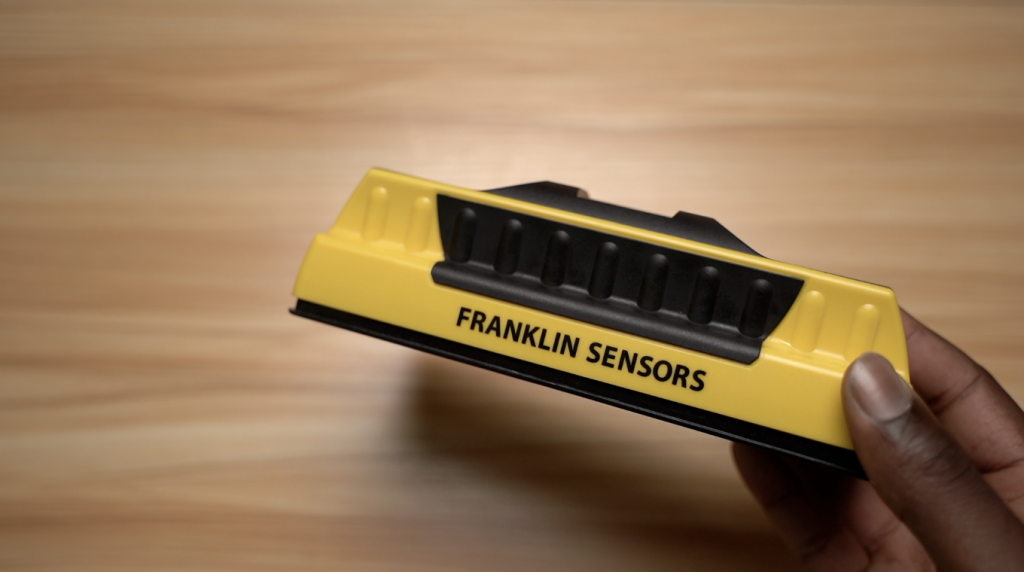
Franklin Sensors Prosensor 710+ Review

Whether you’re hanging pictures for a home improvement project or just tired of your old stud finder letting you down, finding the right tool matters more than most people realize. Drill in the wrong spot once and you’ll understand exactly why.

The Franklin Sensors ProSensor 710+ has been getting a lot of attention as one of the best stud finders on the market right now. But we didn’t want to just take the manufacturer’s word for it. We brought in a handyman, built a dedicated mock wall loaded with wood studs, copper pipes, gas lines, sewer pipes, electrical cables, and ducting hoses, and put the ProSensor 710+ through every scenario a real wall could throw at it.

If you’re shopping for a new stud finder and want to know exactly what this one can and cannot do before you spend your money — this review gives you the full, unfiltered picture. And if you’re still deciding between the ProSensor 710+ and other top options, check out our head-to-head comparison of the Franklin Sensors vs Bosch stud finder to see which one actually comes out on top.
 

⭐ Quick Verdict

The Franklin Sensors ProSensor 710+ is one of the most accurate and easiest stud finders to use at its price point. It nailed wood stud detection every time, requires zero calibration, and the built-in bubble level adds genuine everyday value. The only real drawbacks are its inability to detect live wiring, copper pipes, and gas lines but for straightforward stud finding, it is hard to beat at $54.95.


Franklin Sensors Prosensor 710+ Review: Key Features & Specifications

Franklin stud finder

The Franklin Sensors ProSensor 710+ is a multi-point stud finder that takes the guesswork out of locating studs behind walls. Unlike traditional stud finders that detect one point at a time and often give inconsistent readings, the Franklin ProSensor 710+ uses patented MultiScan Technology to simultaneously detect and display the full width of multiple studs at once through its 13 LED indicators.

Just press it against the wall and the LEDs instantly show you where the studs are — no setup, no guessing, no repeated scanning needed. On top of that, the Franklin ProSensor 710+ adds a built-in bubble level and AC wire detection, making it a step up from the base Franklin ProSensor 710 for anyone who needs a little more from their stud finder. Built for both DIY homeowners and professionals, it is one of the most straightforward and reliable stud finders on the market.

 Key Features

13 Individual Sensors for Superior Accuracy

Unlike conventional stud finders that use a single sensor, the ProSensor 710+ scans thirteen locations simultaneously, ensuring every stud is correctly identified with far greater precision and far fewer false readings.

Triple Accuracy Technology

The device analyzes and triangulates data from all 13 sensors at once to pinpoint the exact location and full width of each stud — delivering consistently reliable results that single-sensor models simply cannot match.

One-Step Operation With No Calibration

Just place it on the wall and press the button, the LEDs instantly light up where the wall studs are. No sliding, no setup, no calibration needed before every use.

Detects Multiple Studs at Once

Powered by innovative stud sensing technology, the ProSensor 710+ instantly finds hidden studs and can detect up to two objects simultaneously across a full 7-inch scanning width in a single press.

1.6-Inch Detection Depth

The device automatically adjusts through one layer of drywall, scanning up to 1.6 inches deep for reliable readings across standard wall types and surfaces.

Wide LED Display Showing Full Stud Width

The 13 LED indicators display the complete width of the stud — both center and edges at once so you know exactly where to drill without any guesswork.

Center Stud Indicator

On certain models, the middle LED turns green to mark the exact center of the stud, giving you a precise drilling point with zero uncertainty.

Built-In Bubble Level

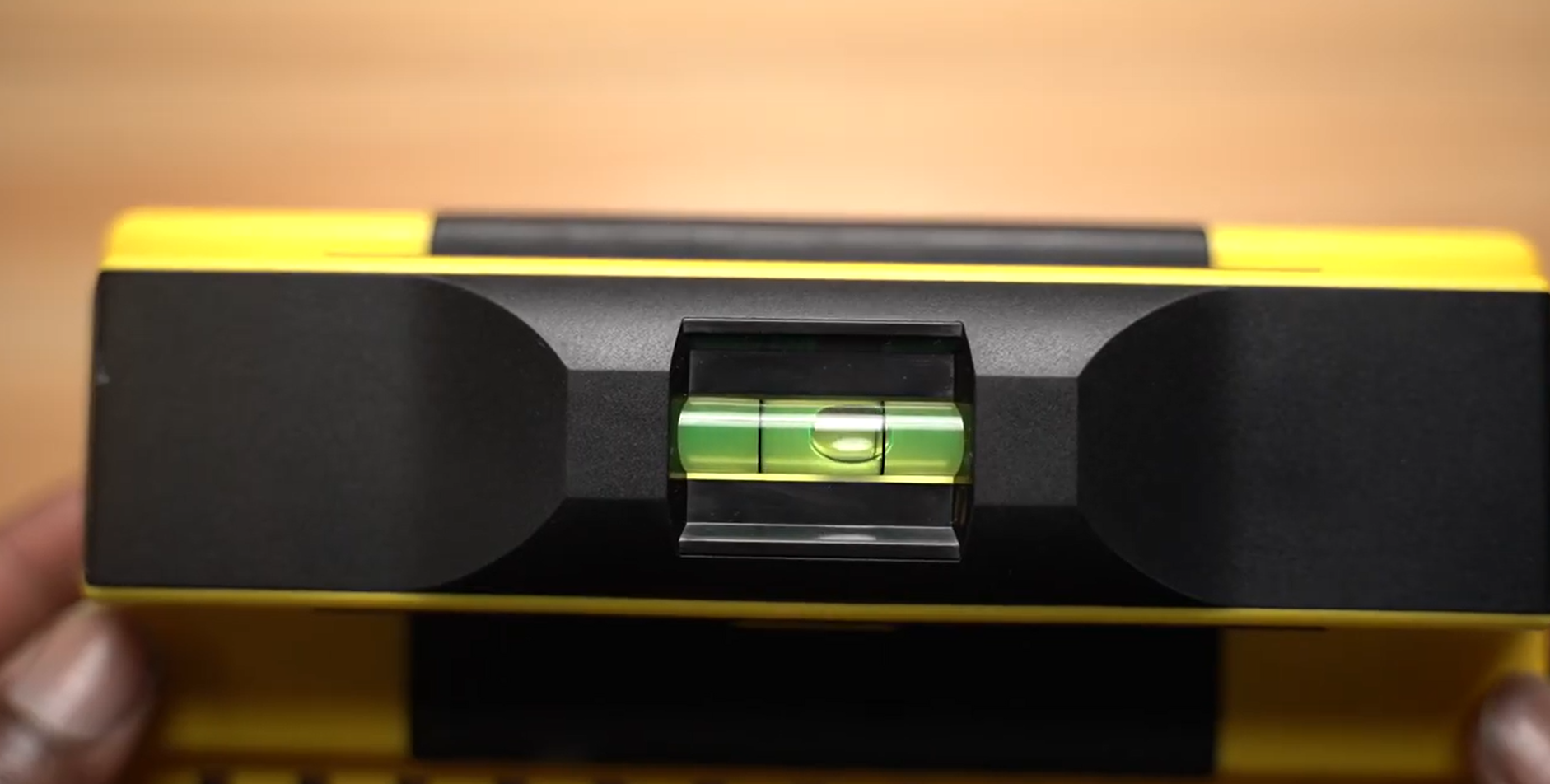
The ProSensor 710+ includes a built-in bubble level, making it a two-in-one tool that lets you find studs and ensure perfectly level installations without needing a separate level.

Built-In Ruler

An integrated ruler runs along the top edge of the device, allowing you to measure and mark stud locations on the spot without reaching for a separate tape measure.

Powered by AA Batteries

The ProSensor 710+ runs on two standard AA batteries which is more affordable and easier to find than the 9-volt batteries most other stud finders require. Note that rechargeable batteries are not compatible.

Specifications

Specification Details
Product Name Franklin Sensors ProSensor 710+
Price $54.95
Dimensions 7.5 x 3 x 2.7 inches
Weight 6.4 oz
Number of Sensors 13
Number of LEDs 13
LED Display Width 7 inches
Detection Depth Up to 1.6 inches
Battery Type 2 x AA alkaline batteries (not included)
Rechargeable Battery Compatible No
Target Materials Wood studs, metal studs
Compatible Surfaces Drywall, sheetrock, standard lath and plaster
Calibration Required No
Built-in Bubble Level Yes
Built-in Ruler Yes
Center Stud Indicator Yes (middle LED turns green on certain models)
AC Wire Detection No
Live Wire Detection No
Country of Manufacture Made in the USA
Color Yellow


How We Tested the Franklin Sensors Prosensor 710+
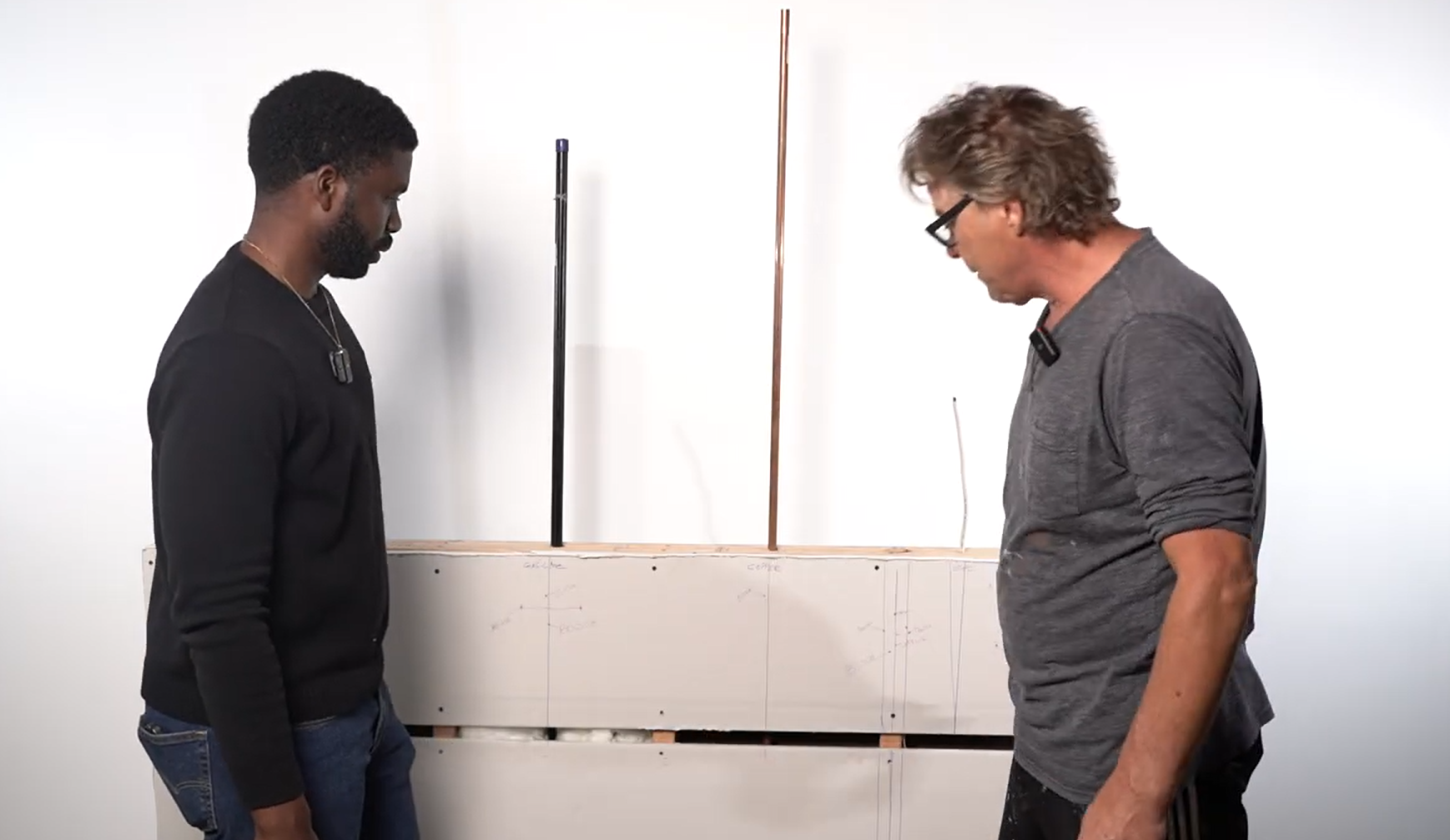
handyman showing how the mock wall was created

Testing Setup

To make this test as close to real-world conditions as possible, we brought in a handyman to help build a dedicated mock wall from scratch. Inside the wall, spaced at standard 16-inch intervals, were wood studs alongside a range of materials you would commonly find hidden behind drywall in a real home:

  • Wood studs

  • Copper pipe

  • Gas line

  • Sewer pipe

  • Flexible ducting hose

  • Live electrical cable

Testing against all of these materials in a single controlled environment gave us a much more accurate and complete picture of what the ProSensor 710+ can and cannot do — far beyond what a standard stud-only test would reveal.


Performance Test Results

Wood Studs Detection

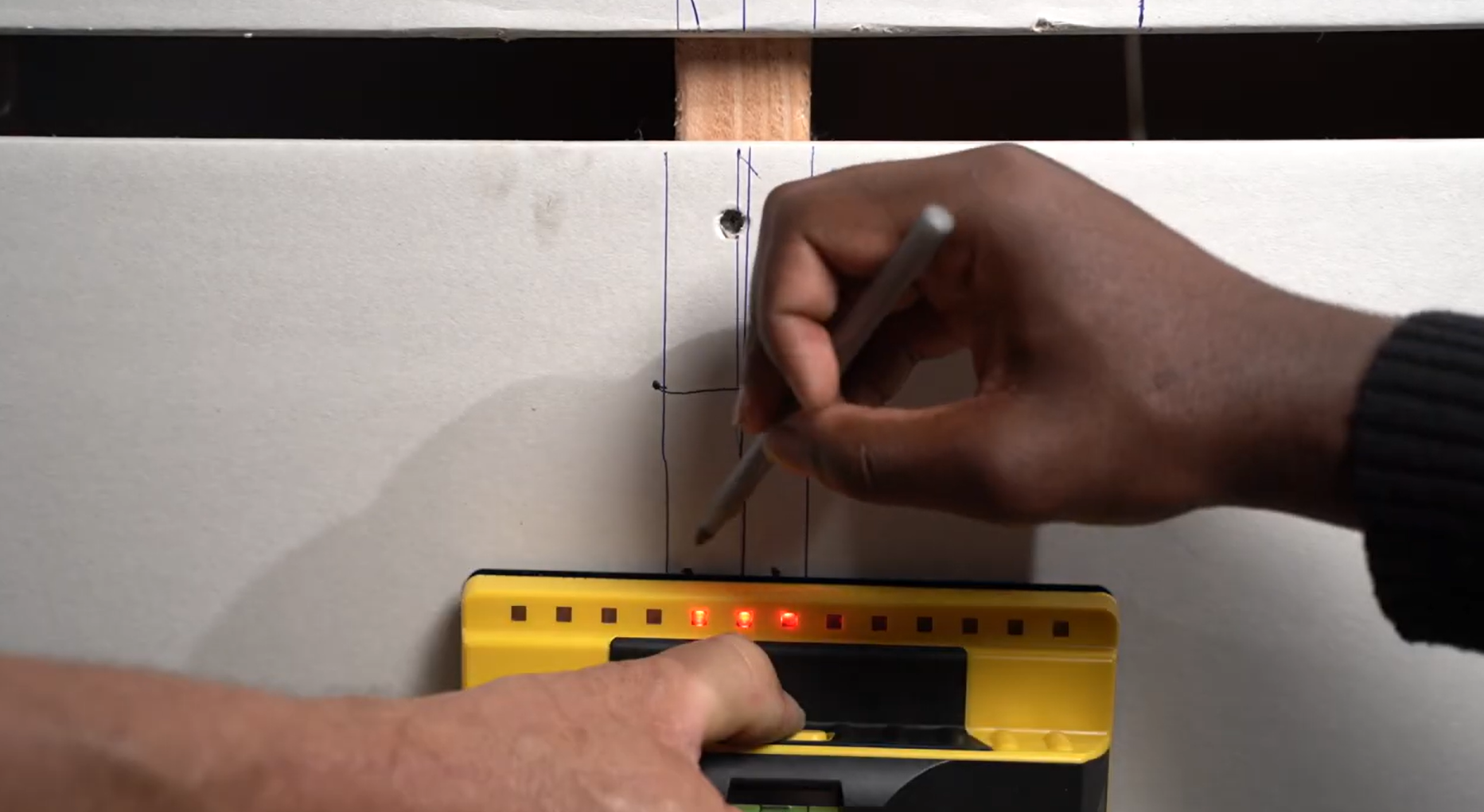
marking the drywall with the area where the wood stud was detected

Observation

The ProSensor 710+ delivered a tight, well-defined reading right away. The LEDs lit up with precision, creating a clear and immediate picture of exactly where the stud started and where it ended.

Result

When it comes to detecting wood studs, the ProSensor 710+ is accurate and reliable. The results were clean, consistent, and easy to read at a glance.

Gas Line Detection
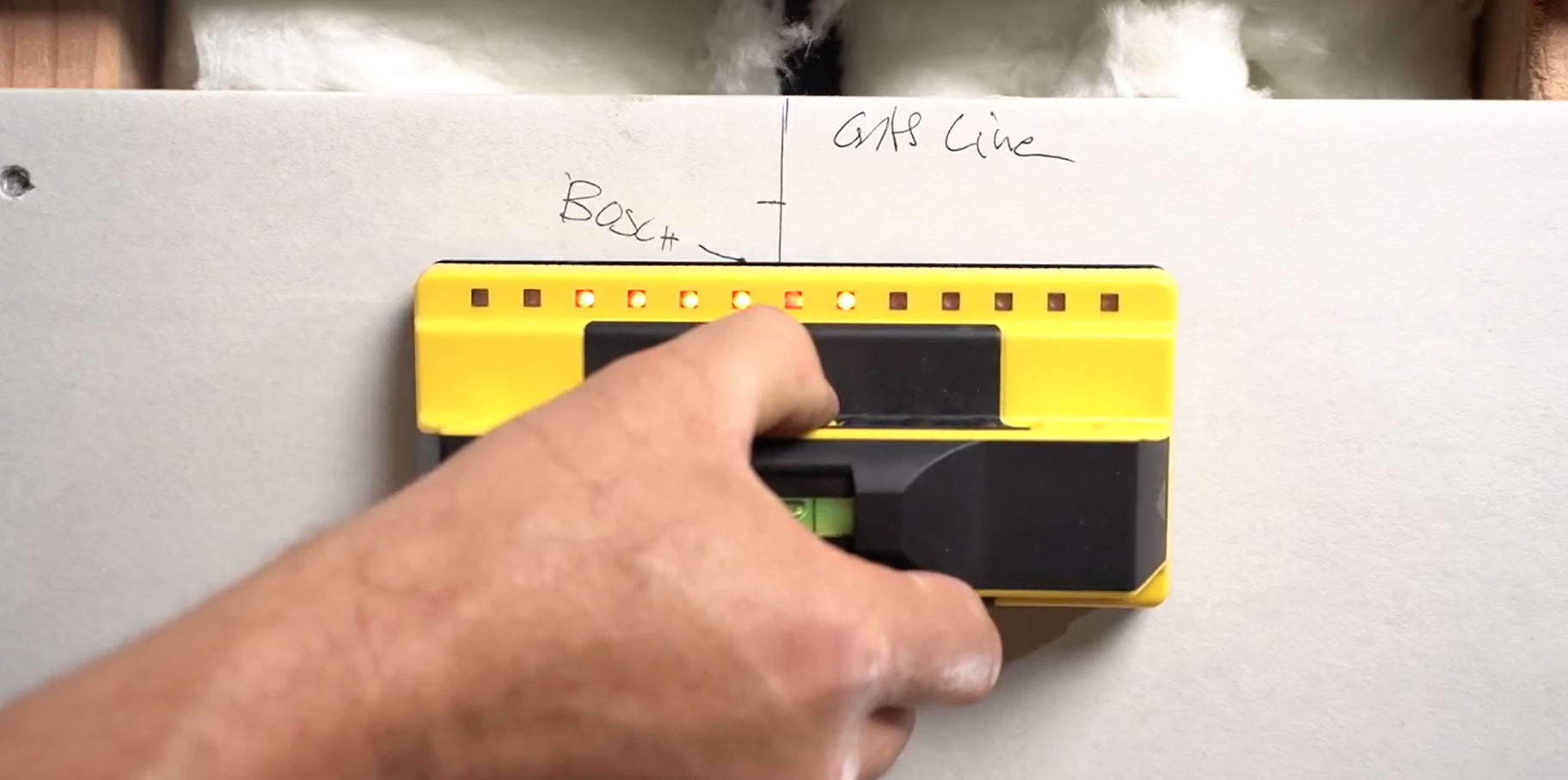
dete

Observation

The Franklin Sensors ProSensor 710+ struggled here. It picked up the stud without issue, but as it moved over the metal gas line, the reading became inconsistent and unreliable. The LED spread was unusually wide and never settled into a defined result. It seemed to recognize that something was behind the wall but couldn’t determine exactly what or where.

Result

The Franklin Sensors ProSensor 710+ is not built for gas line detection. While it can sense that something is present, it cannot identify or precisely locate metal pipes making it an unreliable tool for this specific use case.

Sewer Pipe Detection
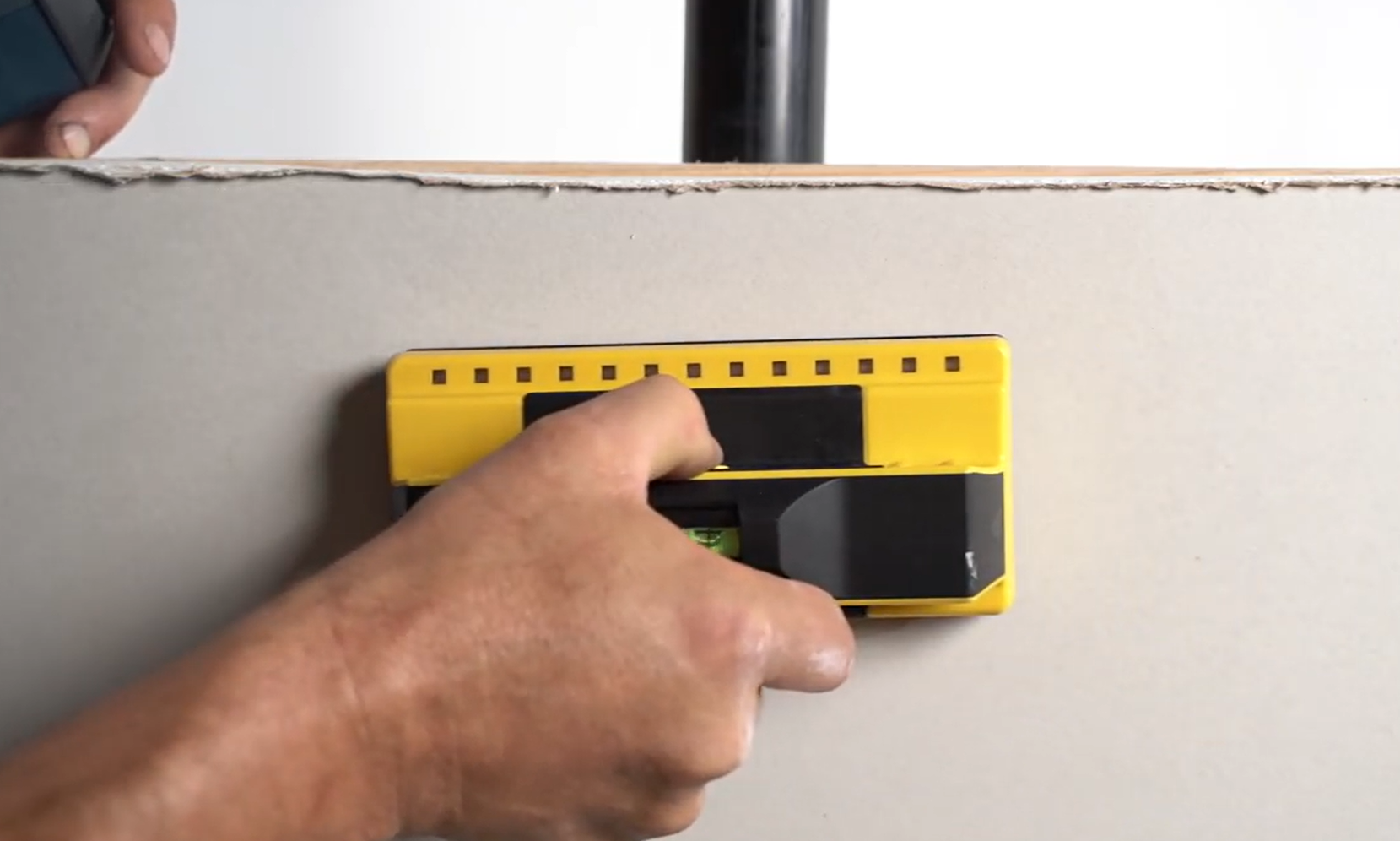
detecting sewer pipe using Franklin stud finder

Observation

The Franklin ProSensor 710+ showed no reaction whatsoever. No LEDs lit up, no reading was generated. It simply did not detect the sewer pipe at all.

Result

Sewer pipe detection is completely outside the Franklin ProSensor 710’s capabilities. It was designed specifically for locating wood and metal studs, not pipes. If your project involves locating sewer lines behind walls, a dedicated pipe detector or multi-function wall scanner would be the right tool for the job.

Electrical Wire Detection
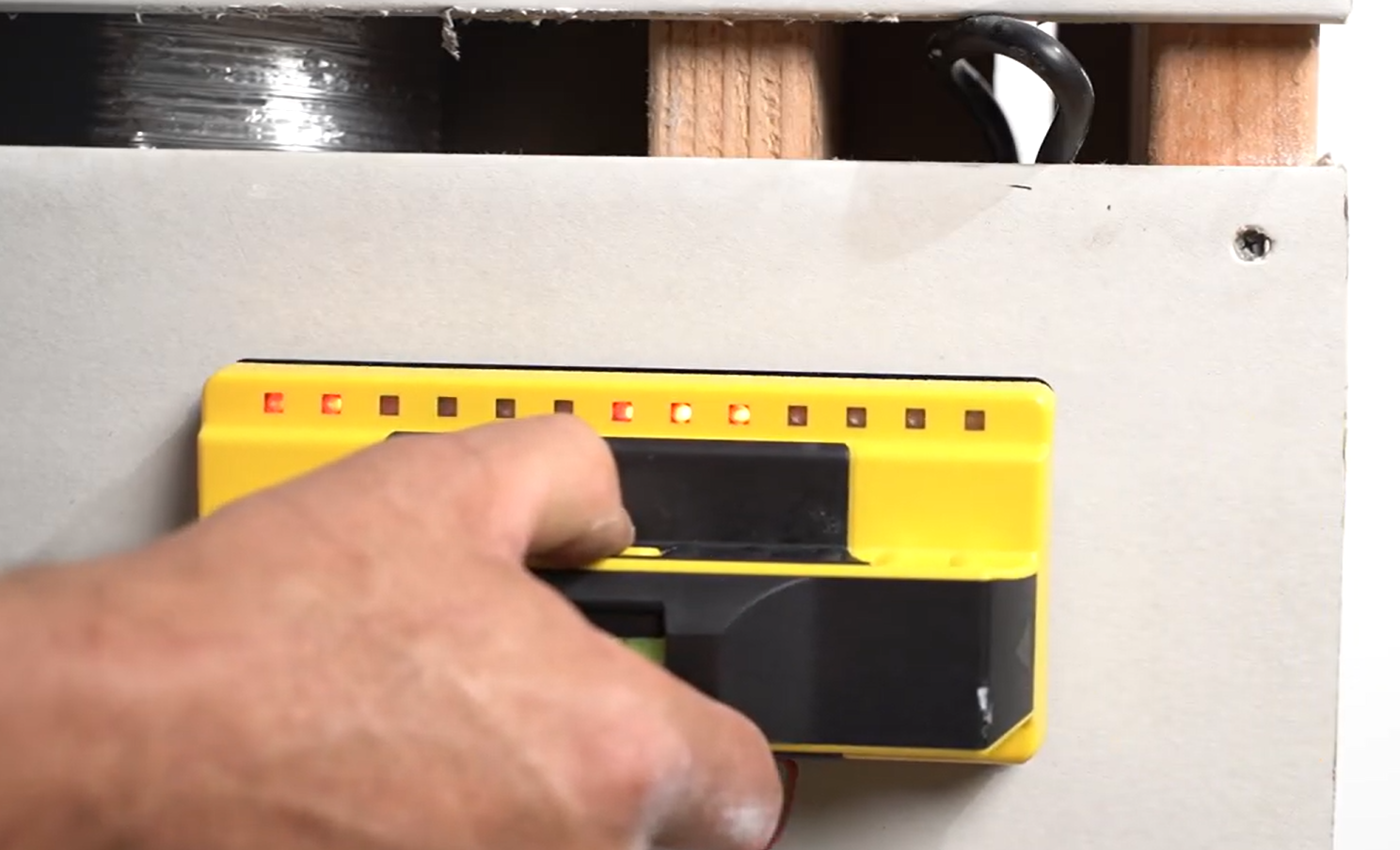
detecting electric wire using Franklin stud finder

Observation

The Franklin Sensors ProSensor 710+ picked up the studs without any issue but showed no response to the electrical wiring. Even directly over the cable, there was no indication that any wiring was present behind the wall.

Result

The base Franklin Sensors ProSensor 710+ does not include AC wire detection and this test confirmed it. It will not warn you of live electrical cables, which is an important limitation to be aware of before drilling. If electrical wire detection is a priority for your project, the ProSensor 710+ or a multi-function wall scanner with built-in AC detection would be the safer and more suitable option.

Ducting Hose Detection
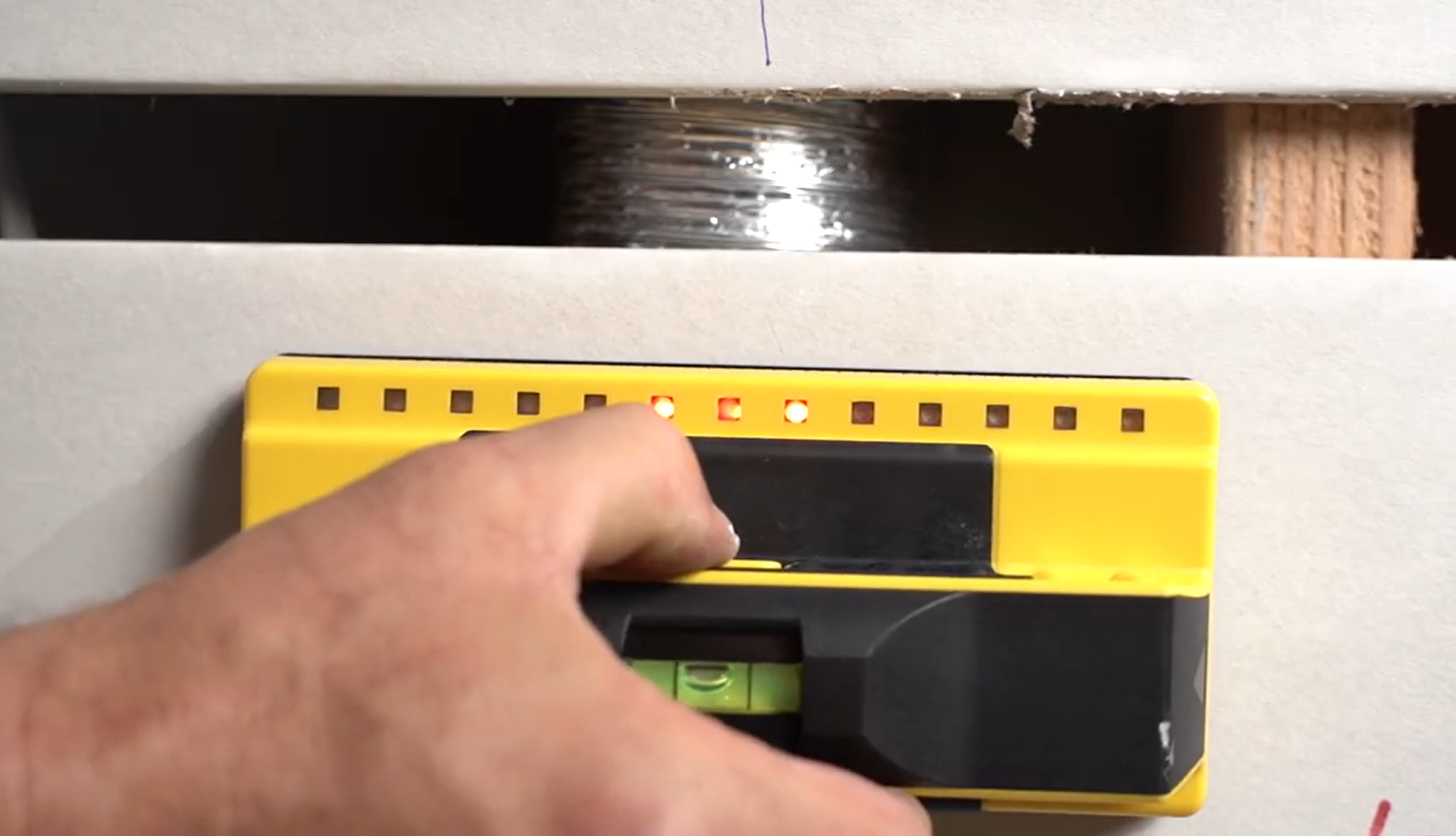
detecting ducting hose using Franklin stud finder

Observation

As the Franklin ProSensor 710+ moved across the wall, the LEDs responded actively and tracked the ducting hose as it passed over it. The reading was smooth, consistent, and easy to follow from one side to the other.

Result

The Franklin ProSensor 710+ handled ducting hose detection without any trouble. The LEDs gave a clear and accurate reading of the hose’s location behind the drywall.

Copper Pipe Detection
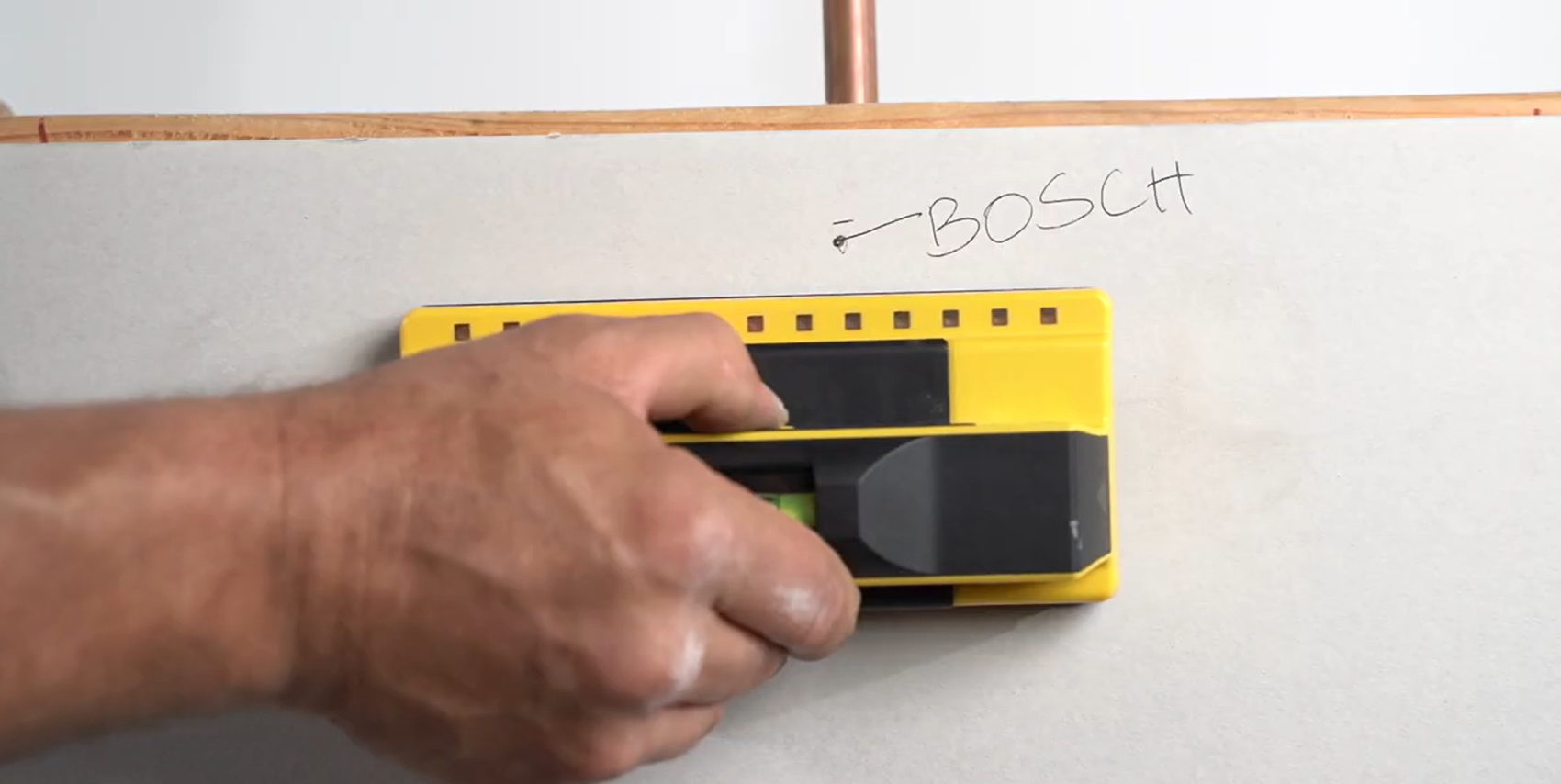
detecting copper pipe using Franklin stud finder

Observation

The Franklin ProSensor 710+ had no trouble picking up the stud on the right side but completely missed the copper pipe. There was no LED response over the pipe at any point during the test.

Result

Copper pipe detection is another area where the Franklin ProSensor 710+ falls short. It was not designed to locate copper pipes and the test confirmed that limitation clearly. If your project involves finding copper plumbing behind walls, a multi-function wall scanner with pipe detection capability would be the more appropriate tool to reach for.

Overall Results

Test Expected Outcome Actual Result Verdict
Wood Stud Detection Accurately detects wood studs behind drywall LEDs lit up with a tight, precise, and well-defined reading ✅ PASSED
Gas Line Detection Accurately detects and locates metal gas line Reading was wide, inconsistent, and never settled into a defined result ❌ FAILED
Sewer Pipe Detection Detects and locates sewer pipe behind drywall No LEDs lit up — zero reaction throughout the entire test ❌ FAILED
Electrical Wire Detection Detects and warns of live electrical cable No response to electrical wiring even when scanning directly over it ❌ FAILED
Ducting Hose Detection Accurately detects flexible ducting hose LEDs tracked the hose smoothly and consistently across the wall ✅ PASSED
Copper Pipe Detection Accurately detects and locates copper pipe Completely missed the copper pipe with no LED response at any point ❌ FAILED


Franklin Sensors Prosensor 710+ Pros and Cons

✅ Pros

  • Scans thirteen locations simultaneously for fast and accurate stud detection

  • No calibration required — press the button and get instant results

  • Displays full stud width including both center and edges at once

  • Detects up to two objects simultaneously across a 7-inch scanning width

  • Built-in bubble level makes the ProSensor 710+ a two-in-one tool

  • Built-in ruler for quick on-the-spot measurements

  • Simple one-button operation — beginner friendly

  • Works on drywall, sheetrock, and standard lath and plaster

  • Runs on common AA batteries (easy and affordable battery replacement anytime)

❌ Cons

  • Franklin Sensors ProSensor 710+ does not detect live electrical wiring

  • Unable to locate copper pipes or sewer pipes

  • Inconsistent and unreliable on gas lines

  • Not compatible with rechargeable batteries

  • Detection limited to 1.6 inches deep

  • Bulkier than traditional single-point stud finders

  • No AC wire detection — available only on higher ProSensor models like the M210

  • Priced higher than the base ProSensor 710 and basic stud finders


Franklin Sensors Prosensor 710+ Review Vs Bosch GMS120 Wall Scanner

Feature Franklin Sensors ProSensor 710+ Bosch GMS120-27
Type Multi-sensor stud finder Multi-function wall scanner
Number of Sensors 13 sensors Single scanning sensor
Detection Depth Up to 1.6 inches Up to 4.7 inches (120mm)
Wood Stud Detection
Metal Detection ✅ Metal studs only ✅ Magnetic & non-magnetic metals
Live Wire Detection
Copper Pipe Detection
Gas Line Detection ⚠️ Inconsistent
Sewer Pipe Detection
Ducting Hose Detection
Simultaneous Detection ✅ Up to 2 objects at once ❌ Single object at a time
Calibration Required ❌ No ✅ Yes
Display Type 13 LED indicators Color-coded LED ring with center indicator
Full Stud Width Display ❌ Center only
Built-in Ruler
Built-in Bubble Level
IP Rating ❌ None ✅ IP54
Battery Type 2 x AA batteries 2 x AA or 3.7V Li-Ion (sold separately)
Rechargeable Battery ❌ Not compatible ✅ Li-Ion option available
Made in USA
Best For DIY homeowners needing stud detection with leveling Professionals needing multi-material detection
Price $54.95 $103.38


Franklin Sensors ProSensor 710+ vs Bosch GMS120-27 Wall Scanner

At $54.99, the ProSensor 710+ is the more affordable option, while the Bosch GMS120-27 comes in at a significantly higher price point of around $79 to $100 depending on where you buy it. But the price difference reflects the difference in capability. The ProSensor 710+ is purpose-built for stud detection — fast, accurate, and simple with a built-in bubble level and ruler adding everyday convenience. The Bosch is a full multi-material scanner that also detects live wires, copper pipes, and non-magnetic metals at a deeper scan depth of up to 4.7 inches.

If stud finding is all you need, the Franklin ProSensor 710+ delivers better value at a lower price. If your project requires knowing everything behind the wall before you drill, the Bosch justifies its premium price tag.

Read our complete Bosch GMS120-27 Wall Scanner review to see how it performed in our live wall test.


Is the Franklin Sensors ProSensor 710+ Right for You?

The Franklin Sensors ProSensor 710+ is built for anyone who wants fast, accurate stud detection with zero frustration. Here’s who will get the most out of it:

Who Should Buy the Franklin ProSensor 710+?

DIY Homeowners

If you’re hanging shelves, mounting a TV, or tackling a home renovation project, the ProSensor 710+ makes the job straightforward. No experience needed — just press the button and the LEDs instantly show you exactly where to drill.

First-Time Stud Finder Users

With no calibration required and a single-button operation, it’s one of the most beginner-friendly stud finders available. If you’ve never used a stud finder before, this is the easiest one to start with.

Anyone Who Has Struggled With Traditional Stud Finders

If you’ve dealt with inconsistent readings, false positives, or a stud finder that only works when you start it in exactly the right spot, the ProSensor 710+ solves all of those problems in one tool.

Professional Contractors and Tradespeople

Speed and accuracy matter on the job. The ProSensor 710+’s ability to detect multiple studs at once and display full stud width instantly makes it a dependable choice for professionals who need results they can trust every single time.

Anyone Who Needs a Level Too

The built-in bubble level makes the ProSensor 710+ a two-in-one tool — find your stud and confirm your installation is level without reaching for a separate tool.

Who Should Skip It?

Look elsewhere if you need to:

  • Detect live electrical wiring before drilling

  • Locate copper pipes behind walls

  • Identify gas lines with precision

  • Find sewer pipes or other plumbing

For those needs, a more advanced multi-function scanner is the better fit — the Bosch GMS120-27 or the Franklin Sensors M210 are both worth considering. The Franklin Sensors ProSensor 710+ is a stud finder first and foremost, and anything beyond that is outside its capabilities.


Frequently Asked Questions

1. What is the difference between the ProSensor 710 and ProSensor 710+?

The ProSensor 710+ includes a built-in bubble level that the base 710 does not have. Both models share the same 13-sensor array, Triple Accuracy Technology, no-calibration operation, and 1.6-inch detection depth. The 710+ is essentially the same tool with the added convenience of a built-in level, making it a two-in-one tool at a slightly higher price point.

2. Does the Franklin Sensors ProSensor 710+ detect live electrical wiring?

No. Despite being a common assumption, the ProSensor 710+ does not include AC wire detection. That feature is only available on higher Franklin Sensors models like the M210. Always use a separate wire detector before drilling if live wiring is a concern in your project.

3. Does the ProSensor 710+ require calibration?

No. Unlike most traditional stud finders that require calibration against a blank section of wall before every use, the ProSensor 710+ is ready the moment you press the button. Place it on the wall, press, and the LEDs instantly show you where the studs are.

4. How deep does the ProSensor 710+ detect studs?

The ProSensor 710+ detects studs up to 1.6 inches deep, which covers standard single-layer drywall in most homes. It may struggle on walls with multiple layers or unusually thick construction.

5. Can the ProSensor 710+ detect metal studs?

Yes. The ProSensor 710+ detects both wood and metal studs. However it is not a full multi-material scanner and cannot detect pipes, wires, or other materials behind walls.

6. Can it detect copper pipes or gas lines?

No for copper pipes — our test confirmed zero response. For gas lines, the ProSensor 710+ gave an inconsistent and unreliable reading. It should not be relied upon for either material. A dedicated multi-function wall scanner is needed for those tasks.

7. Is the Franklin ProSensor 710+ worth the price?

For stud detection specifically, yes. It outperforms most single-sensor stud finders in speed, accuracy, and ease of use. The built-in bubble level adds everyday value that the base Prosensor 710 stud finder lacks. However if your project requires detecting pipes, wires, or other materials, you will need to pair it with a more capable device or upgrade to a higher Franklin Sensors model.

8. What is the warranty on the Franklin Sensors ProSensor 710+?

The Franklin ProSensor 710+ is covered by Franklin Sensors’ standard warranty against defects in material and workmanship under normal use. Parts, repairs, and services are warranted for 90 days from the date of shipment. Keep your proof of purchase from an authorized reseller in case you need to make a claim.


Final Verdict: Franklin Sensors ProSensor 710+ Review — Does It Live Up to the Hype?

The Franklin Sensors ProSensor 710+ does exactly what it promises. Across our live wall tests, wood stud detection was fast, precise, and consistent every single time. The 13-sensor array, Triple Accuracy Technology, and zero-calibration operation make it one of the most straightforward and reliable stud finders available at its price point.

The built-in bubble level is a genuine bonus which turns a single-purpose tool into a two-in-one solution that saves you from reaching for a separate level on every job.

That said, it has clear limitations. It failed to detect live electrical wiring, copper pipes, sewer pipes, and gave unreliable results on gas lines. If your project involves anything beyond studs and ducting, the Franklin Sensors ProSensor 710+ will fall short and you will need a more capable tool alongside it.

But if stud detection is your primary need, the Franklin ProSensor 710+ delivers outstanding value at $54.95. It is fast, accurate, and beginner-friendly. For DIY homeowners and professionals alike who need a dedicated stud finder they can trust, it is one of the best options available at this price.


Want to see how both tools performed side by side on the same mock wall? Read our detailed Franklin Sensors ProSensor 710+ vs Bosch GMS120-27 comparison review for the full breakdown.


Tria Regina David

Tria David is a content writer, SEO specialist, and digital strategist dedicated to helping shoppers make informed, confident decisions. She creates research-driven buying guides, product comparisons, and practical resources that simplify complex information and provide real value to readers. With experience across diverse industries — including legal, technology, home improvement, health and more — Tria combines data-backed SEO strategy with a reader-first approach, so her content not only ranks well but truly helps consumers navigate their choices.