Advertising Disclosure

Skin Research Institute has a financial connection to products sold via links on our website such as our top choices.


Franklin vs. Bosch Stud Finder Review: Which One Is Actually Worth Buying?

⚠️ Some links may be affiliate links. If you purchase through them, we may earn a small commission at no extra cost to you.

Franklin vs. Bosch Stud Finder Review: Which One Is Actually Worth Buying?

Writtten and Edited by: Benjamin White

EUNOIA™ Cortisol Reduction Capsules

Ritual Stress Relief Supplement

Thorne Iso-Phos (Phosphatidylserine)

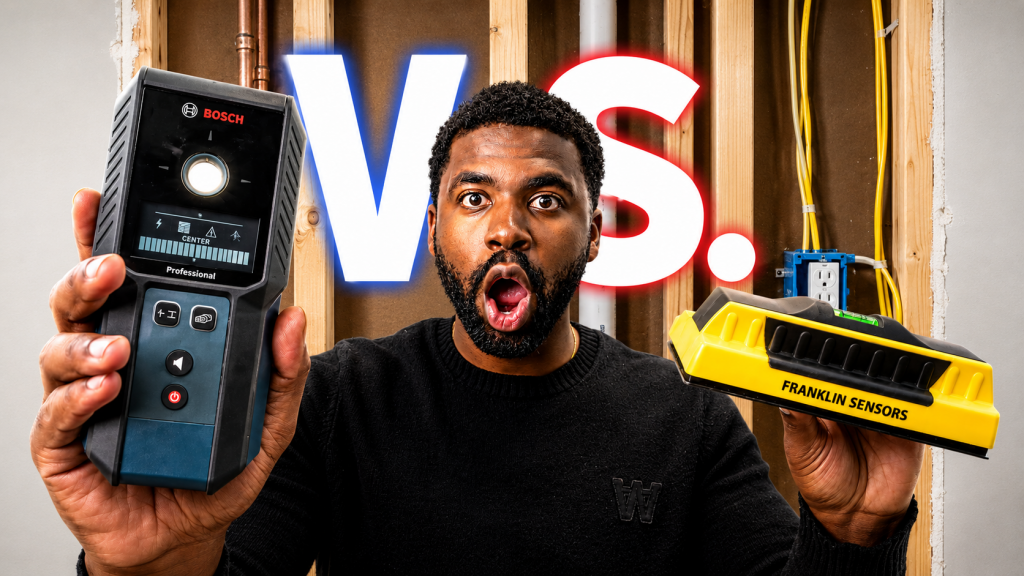
Somebody in the comments told me that my stud finder video sucked. Okay… maybe that’s dramatic. What they actually said was that my lineup was invalid because I didn’t include the Franklin. Apparently, it’s the stud finder. The industry standard.

So I finally picked one up, and today it’s going head-to-head against the reigning champ from our last test — the Bosch. By the end of this review, we’ll find out if the Bosch keeps the crown, or if the Franklin really is the king of stud finders.

If you’d like to see the video of us testing these stud finders watch at this link:

The Stud Finders We Tested

The Franklin ProSensor 710+ came in at $54.95 on Amazon at the time of filming. It features 13 patented sensors designed to detect studs more accurately across a wider surface area.

One thing people love about this model is how simple it is to use. There’s no calibration required — just press and hold the button and start scanning. The wide LED display shows both the center and edges of the stud at the same time, which makes it easy to visualize what’s behind the wall.

Key Features:

  • 13 sensors for wide detection
  • No calibration required
  • Built-in bubble level
  • Simultaneous edge and center stud detection
  • Wide LED display

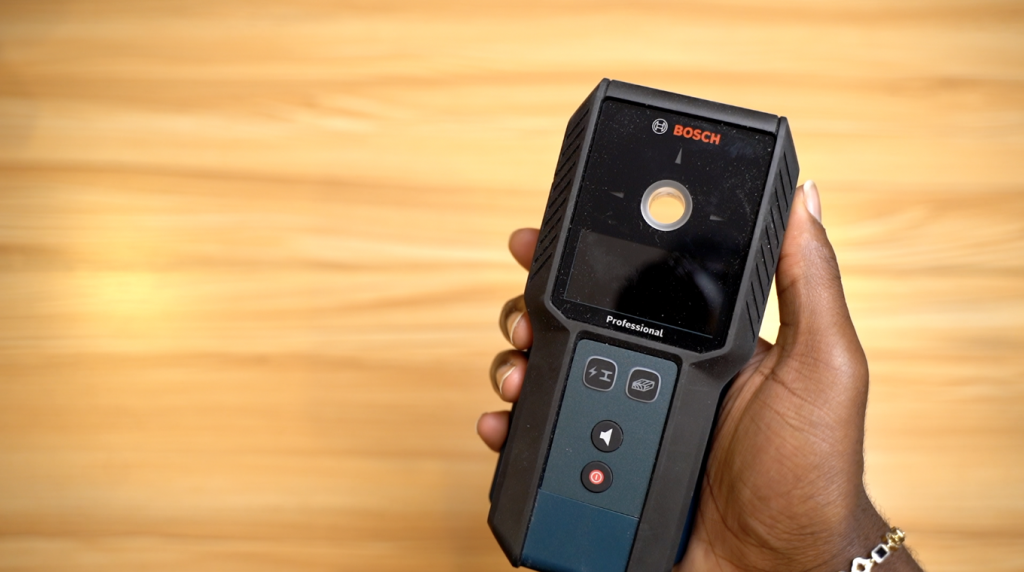
The Bosch GMS120 came in at $103.38 on Amazon at the time of filming. Unlike the Franklin, this tool is designed to detect more than just wood studs. It can also identify metal and live electrical wiring behind drywall.

What makes the Bosch stand out is its display system. Different icons appear on screen depending on the material it detects, and the red center circle helps pinpoint exactly where the object is located.

Key Features:

  • Detects wood, metal, and live electrical wires
  • LCD display with material indicators
  • Center-finding detection circle
  • Audio alerts
  • Multi-material scanning modes

The Test Setup

For this test, we brought in a handyman who built a mock wall with multiple materials hidden behind drywall. Inside the wall were:

  • Wood studs
  • Copper pipe
  • Gas line
  • Sewer pipe
  • Flexible ducting hose
  • Live electrical cable

This gave us a much more realistic test than simply locating studs in a standard wall.

The Test Setup

Wood Stud Detection

The Bosch delivered a wide and accurate reading when locating the wood studs. It clearly identified the general stud location and gave a reliable center point.

The Franklin, however, gave a tighter and more defined reading. The LEDs created a very clear picture of exactly where the stud started and ended.

Wood Stud Test Results

Stud Finder Detection Accuracy Ease of Reading Notes
Bosch GMS120 Very Good Very Good Wider detection area but accurate

Winner: Franklin

Gas Line Detection

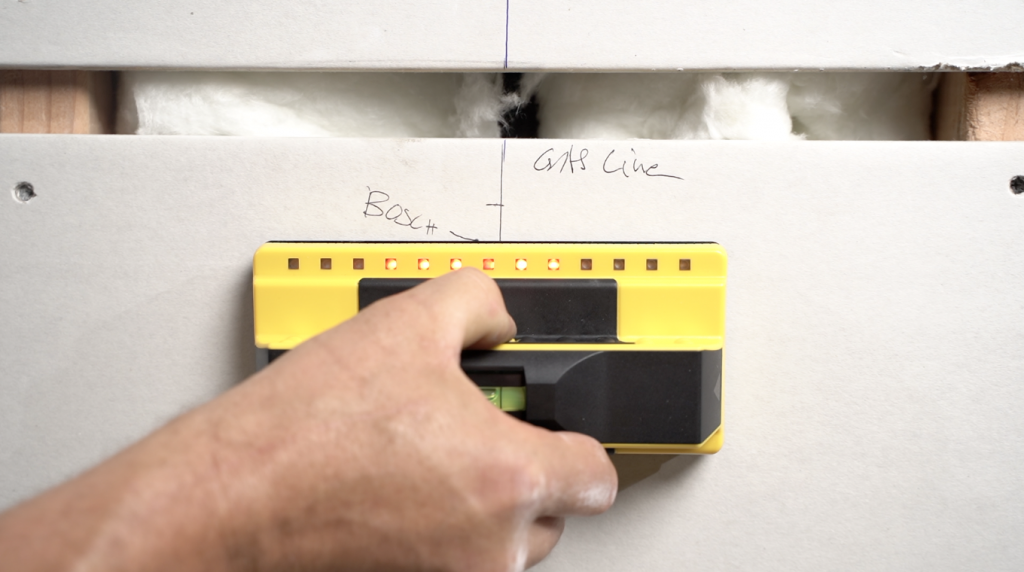
The Bosch immediately recognized that there was metal behind the drywall. It beeped and flashed its indicators, although the center point was slightly off.

The Franklin recognized that something was behind the wall, but the lighting spread was extremely wide and inconsistent. It seemed confused and never provided a precise reading.

Gas Line Test Results

Stud Finder Detected Material Accuracy Notes
Franklin ProSensor 710+ Partial Poor Wide and unclear detection zone

Winner: Bosch

Sewer Pipe Detection

This test produced one of the biggest surprises.

The Bosch suddenly displayed a warning symbol indicating electrical detection, even though there was no electrical cable near the sewer pipe. That false positive caused the Bosch to fail this test.

The Franklin didn’t react at all and showed no detection.

Sewer Pipe Test Results

Stud Finder Detection Result Accuracy Notes
Bosch GMS120 False electrical warning Poor Incorrectly identified electrical signal
Franklin ProSensor 710+ No detection Poor Failed to detect material

Winner: No Winner

Electrical Wire Detection

The Bosch struggled here. It did not properly detect the live electrical wire hidden behind drywall. The only time it responded was when the cable was placed directly against the tool itself, which defeats the purpose of scanning through a wall.

The Franklin also failed this test and never recognized the electrical cable.

Electrical Detection Results

Stud Finder Detected Live Wire Passed Test Notes
Bosch GMS120 No No Only worked when cable touched device
Franklin ProSensor 710+ No No No electrical detection capability

Winner: No Winner

Ducting Hose Detection

This was one of the few tests where both stud finders performed equally well.

Both devices accurately identified the location of the ducting hose behind the drywall.

Ducting Test Results

Stud Finder Accuracy Notes
Bosch GMS120 Excellent Accurate location
Franklin ProSensor 710+ Excellent Accurate location

Winner: Bosch

Copper Pipe Detection

The Bosch once again showed why its multi-material scanning is useful. It successfully recognized the copper pipe and gave a mostly accurate location, although the indicator shifted slightly left.

The Franklin failed to detect the copper pipe entirely.

Copper Pipe Test Results

Winner: Tie

Stud Finder Detected Copper Accuracy Notes
Bosch GMS120 Yes Good Slightly off-center but reliable
Franklin ProSensor 710+ No Poor No detection

Overall Results

Final Scorecard

Test Winner
Wood Studs Franklin
Gas Line Bosch
Sewer Pipe No Winner
Electrical No Winner
Ducting Tie
Copper Pipe Bosch

Which Stud Finder Should You Buy?

After all the testing, the handyman helping us with the build said he would personally buy the Bosch.
And honestly, that makes sense.
The Franklin is fantastic if your main goal is finding wood studs quickly and accurately. Its display is easy to read, requires no calibration, and gives very defined stud edges.
But the Bosch proved to be far more versatile overall. Even though it wasn’t perfect, it could recognize multiple types of materials behind drywall — including metal and copper pipe — while the Franklin struggled outside of wood detection.

Final Verdict

Buy the Franklin if:

  • You mainly need to locate wood studs
  • You want the easiest tool to read
  • You prefer fast scanning with no calibration
  • You want a lower-cost option

Buy the Bosch if:

  • You want multi-material detection
  • You work around plumbing or metal often
  • You need a more professional-grade scanner
  • You want more detailed wall information

For basic DIY homeowners, the Franklin may honestly be all you need.

But if you want the most capable all-around wall scanner, the Bosch keeps the crown.

Test Winner
Wood Studs Franklin
Gas Line Bosch
Sewer Pipe No Winner
Electrical No Winner
Ducting Tie
Copper Pipe Bosch

Frequently Asked Questions

Are Franklin stud finders really the best?

Franklin stud finders are extremely popular because they provide very accurate wood stud detection with easy-to-read LED displays. However, they are more limited when it comes to detecting materials like copper, metal, or live electrical wiring.

Can a stud finder detect electrical wires?

Some stud finders claim to detect live electrical wires, but accuracy varies significantly. In our test, neither model reliably detected electrical wiring behind drywall.

What’s the difference between a stud finder and a wall scanner?

A traditional stud finder is mainly designed to locate wood framing behind drywall. A wall scanner, like the Bosch GMS120, can also detect metal pipes, electrical wiring, and other materials.

Why do stud finders give false readings?

Stud finders can struggle with dense materials, uneven drywall thickness, moisture, or overlapping materials behind the wall. Calibration issues and interference can also cause false positives.

Is the Bosch worth the extra money?

If you only need to find wood studs occasionally, probably not. But if you work around plumbing, electrical, or remodeling projects often, the extra material detection features can absolutely be worth it.

Benjamin White

Ben White is a Los Angeles–born and raised video creator and reviewer with Shopper Advocate. He began his creative journey in 2020, producing short films, Youtube videos, and creating content for brands that developed his eye for detail and storytelling. Today, he brings that same production experience into hands-on product testing — breaking down performance in real-life situations and helping consumers cut through the hype to make the right call with their money.