Advertising Disclosure
SOARAISE Solar Charger Power Bank 48000mAh: Is It Worth It?

Ever been deep into a hike, camping trip, or even just a long day out, only to watch your phone battery slowly crawl toward zero—with no outlet in sight?
That’s exactly the problem the SOARAISE Solar Charger Power Bank is designed to solve. One device, four solar panels, and enough ports to keep multiple devices running at once—it almost sounds too good to be true.
So we got one and tested it ourselves. No marketing fluff, just real-world results.
If you want a bigger picture of how it compares against other options, we also put together a full breakdown of the best picks in our guide: Best Solar Power Banks in 2026? I Tested 4!
By the end of this review, you’ll know whether the SOARAISE power bank deserves a spot in your pack or if your money is better spent elsewhere.
⚡ Quick Verdict
Best for: Camping, group travel, emergency backup
Not ideal for: Fast daily charging or lightweight minimalist hiking
Verdict: Worth it as a high-capacity backup power source, but not as your main everyday charger
👉 Bottom line: The SOARAISE solar charger power bank is a rugged, high-capacity power bank that earns its place in any serious outdoor kit. The solar panels are best used as an emergency backup, but the massive 48,000mAh battery and multi-device support make it a standout option for extended trips.
SOARAISE Solar Charger Power Bank 48000mAh: Key Features
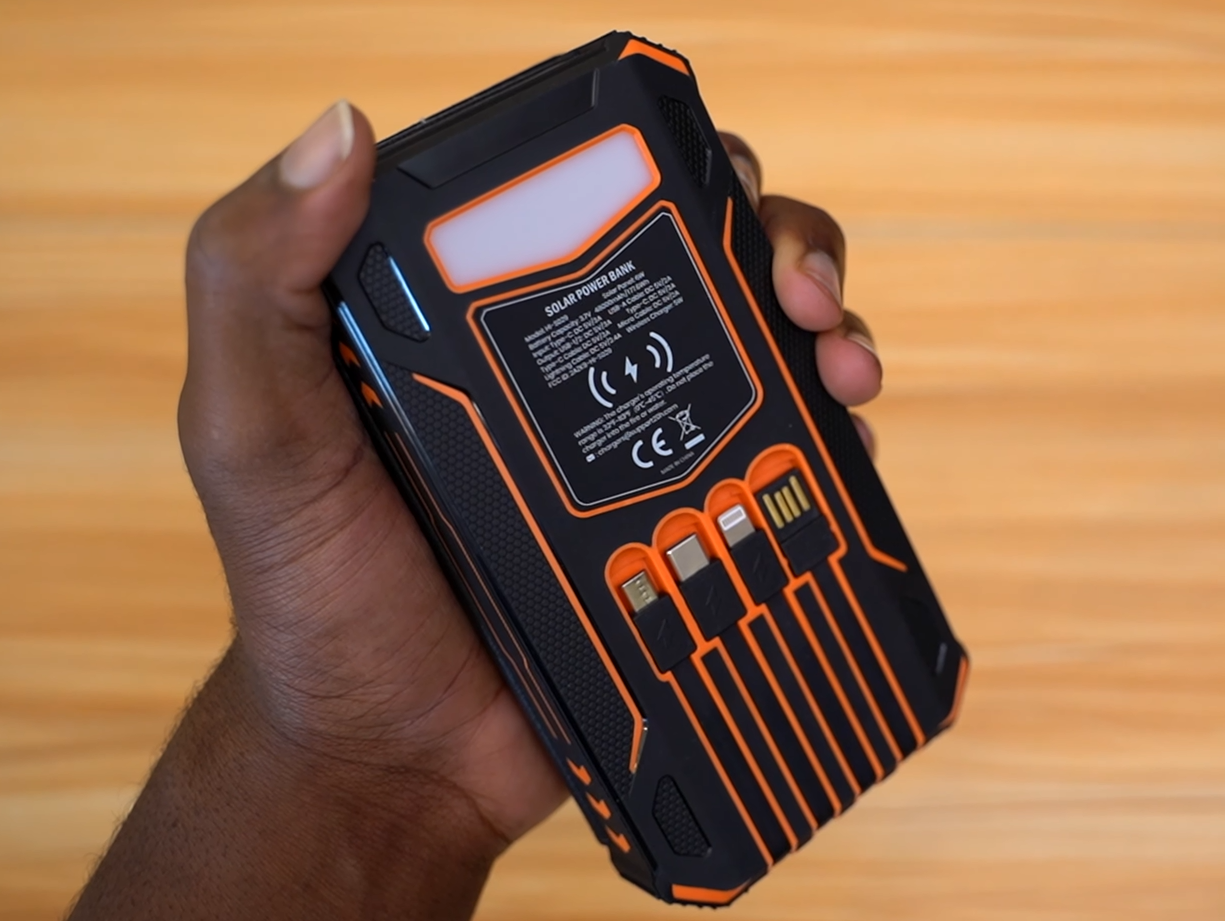
The SOARAISE Solar Charger is a heavy-duty portable power bank built for people who spend serious time outdoors. It uses four monocrystalline silicon solar panels, the same high-efficiency technology found in residential solar systems.
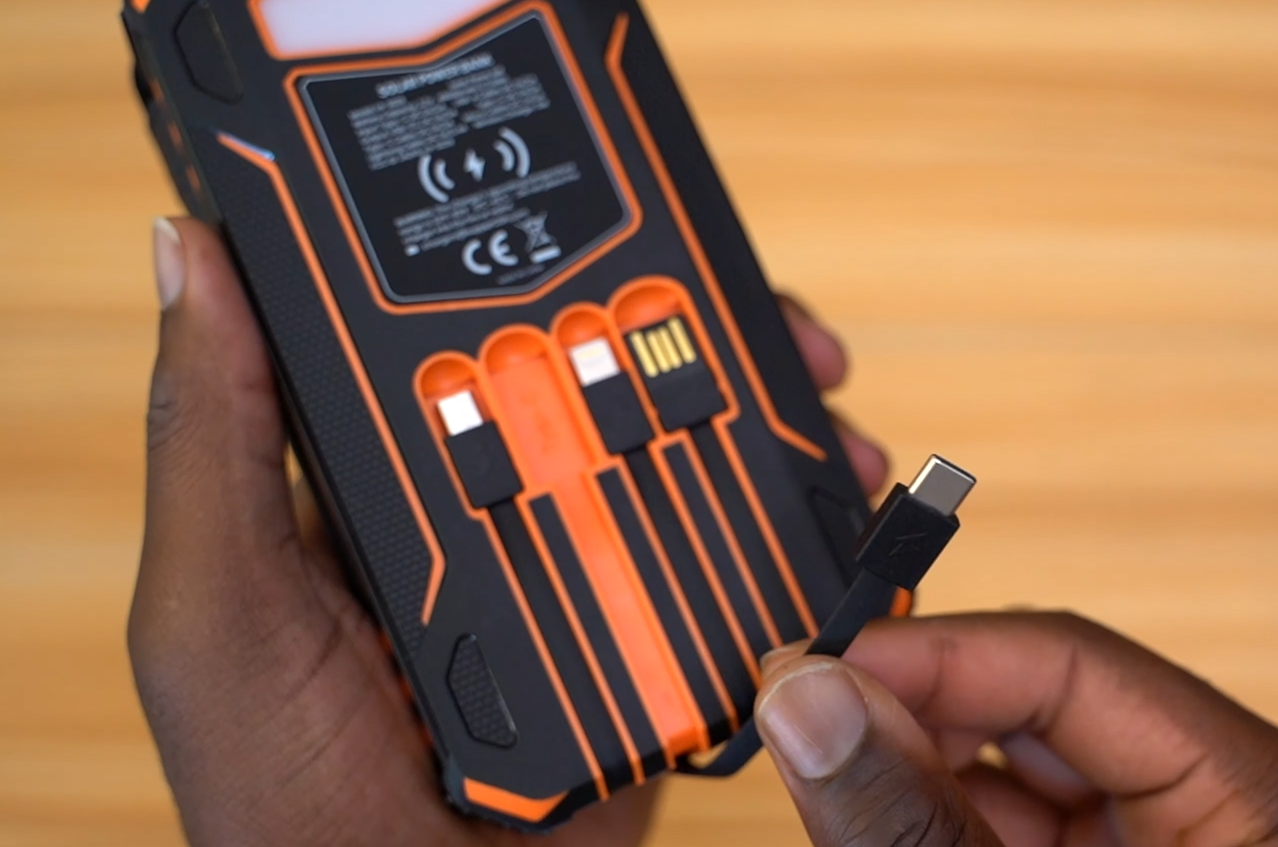
What makes it stand out is its ability to power up to seven devices at once, with USB-C fast charging, wireless charging, and four built-in cables all packed into one unit. That level of versatility is rare for a portable USB C battery pack of this size.
Built for tough conditions, it’s waterproof, dustproof, and shock-resistant, with sealed ports to keep out moisture and debris. It also includes a 3-mode flashlight (steady, SOS, strobe) and a hook for hanging on a backpack or tent, making it especially useful in emergencies.
Here’s what sets this model apart:
USB-C Fast Charging (High-Speed Output)
Delivers faster charging for smartphones and other devices via USB-C, helping reduce downtime when you need power quickly during travel or outdoor use.
High-Capacity Portable Solar Battery Bank
Built with a large 48000mAh lithium-polymer battery capacity for enhanced safety and extended battery life. It can charge multiple devices several times with every device up to 60% in 30 minutes under ideal conditions.
Power Up to 7 Devices Simultaneously
Supports multiple outputs including USB ports, USB-C, wireless solar charging, and built-in cables allowing multiple devices powered at the same time without needing extra accessories.
4-Panel Monocrystalline Solar Charging
Equipped with high-efficiency 4 solar panels that enables direct solar charging, the solar panel charger charges the device using sunlight for emergency recharging. Best used as a backup power source when wall charging is unavailable.
Wireless Charging + Built-in Cables
Charge compatible phones using the advanced wireless charging pad by simply placing them on the device, while integrated cables eliminate the need to carry extra wires.
Rugged Outdoor-Ready Build
Designed for tough environments with a durable casing that helps protect against drops, impact, dust, and outdoor wear and tear.
Waterproof, Dustproof, and Shockproof
Built with sealed protection to help guard against rain, dirt, and accidental splashes—ideal for camping, hiking, and emergency use.
3-Mode LED Camping Flashlight
Includes steady light (up to 200 hrs), SOS signal (100 hrs), and strobe mode (70 hrs) for emergencies, nighttime use, or outdoor survival situations.
Portable Design with Hanging Hook
Comes with a built-in hook so you can easily attach it to backpacks, tents, or gear for convenient solar charging and hands-free carrying.
🔍 How We Tested This
We tested the SOARAISE solar power bank through a series of real-world stress tests to see if it matches its claims:
Charging Speed Test: Compared the built-in cables with a high-quality USB-C cable using a digital power tester
Multi-Device Test: Charged a smartphone and iPad at the same time to check power distribution
Solar Charging Test: Measured charging speed in direct midday sunlight from 50% battery
Durability Test: Performed a drop test on a hard surface to evaluate build strength
Performance Test Results
We put the SOARAISE solar power bank through real-world use to assess its performance in charging speed, multi-device capability, solar efficiency, and overall reliability in everyday situations.
Solar Charging Test
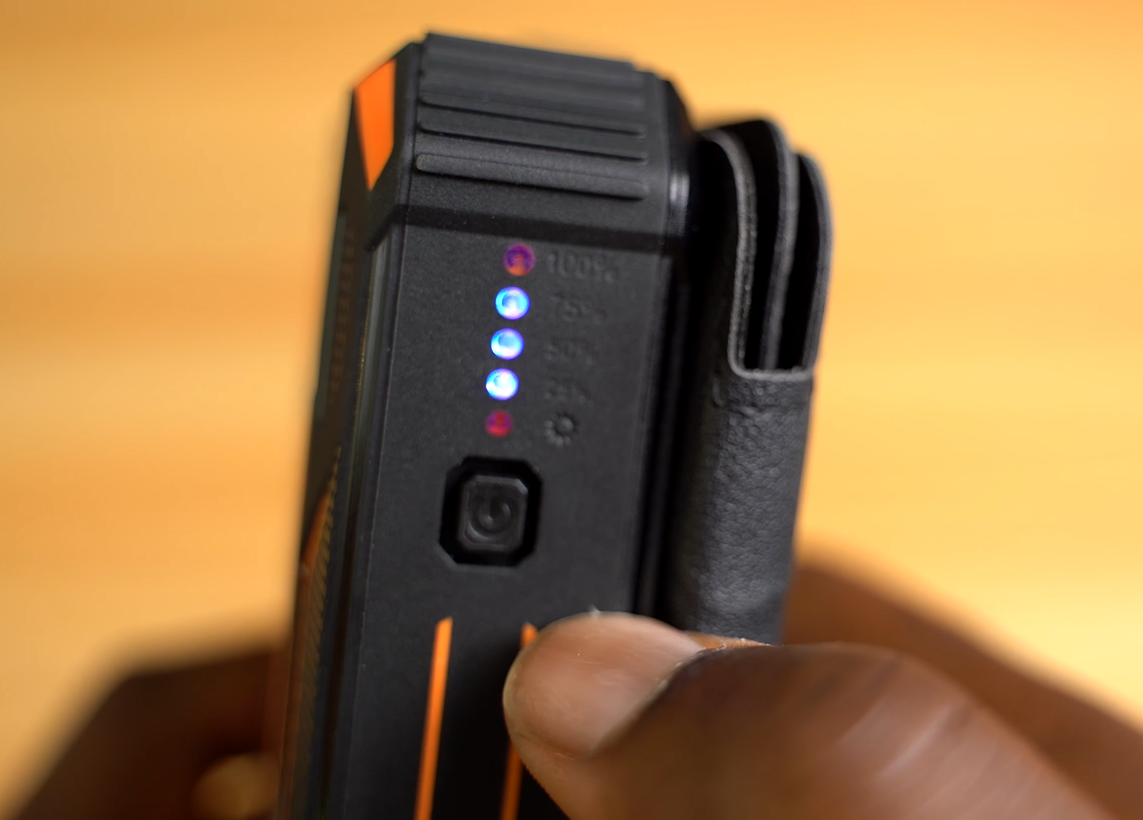
We tested the SOARAISE Solar Power Bank starting at 50% battery level and placed it under direct sunlight for 2 hours. After that time, the battery increased to about 75%, showing a 25% gain from solar charging alone.
Real Performance Insight
A 25% gain in two hours shows that solar charging on the SOARAISE is relatively slow. Fully charging the device using only sunlight would take many hours of ideal conditions, making it unsuitable as a primary charging method.
Heat can also affect performance, as the device may slow charging to protect the battery in hot environments.
⚖️ Key Takeaway
The solar portable charger feature is best used for emergency top-ups, not full recharging. It works well for maintaining battery during hikes, outdoor camping trips, or keeping your phone alive in power outages when no outlet is available.
Pro Tip: Always charge it via wall outlet before trips, and rely on solar charger only as a backup.
Charging Speed Test
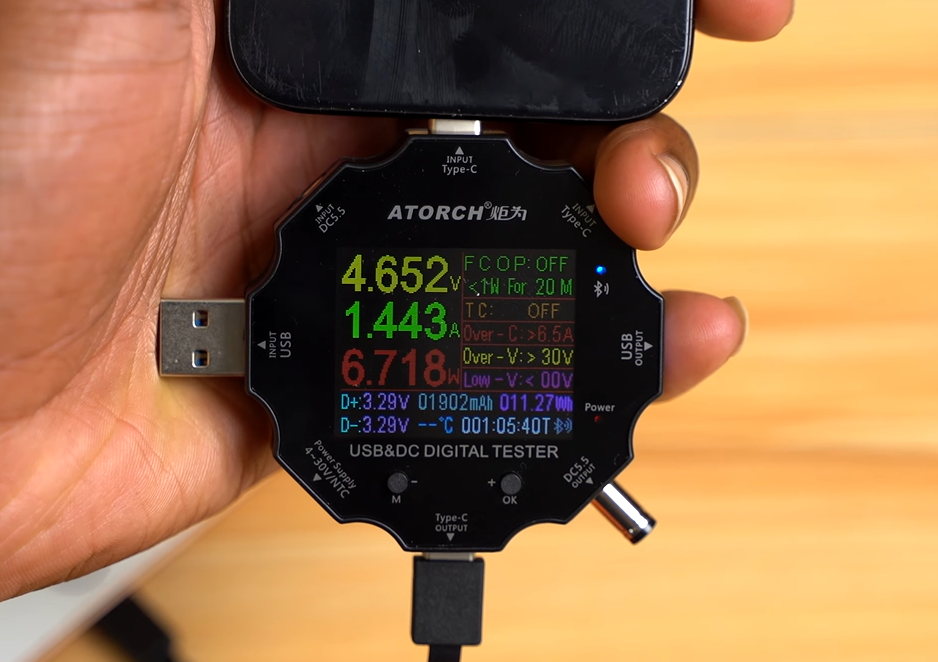
We wanted a clear, numbers-based answer to know whether SOARAISE actually delivers the power it promises. To find out, we plugged in a USB Digital Power Tester and measured the real-time wattage — specifically to see whether those built-in cables were holding back the unit’s true charging potential.
Test 1: Using the Built-in USB-C Cable
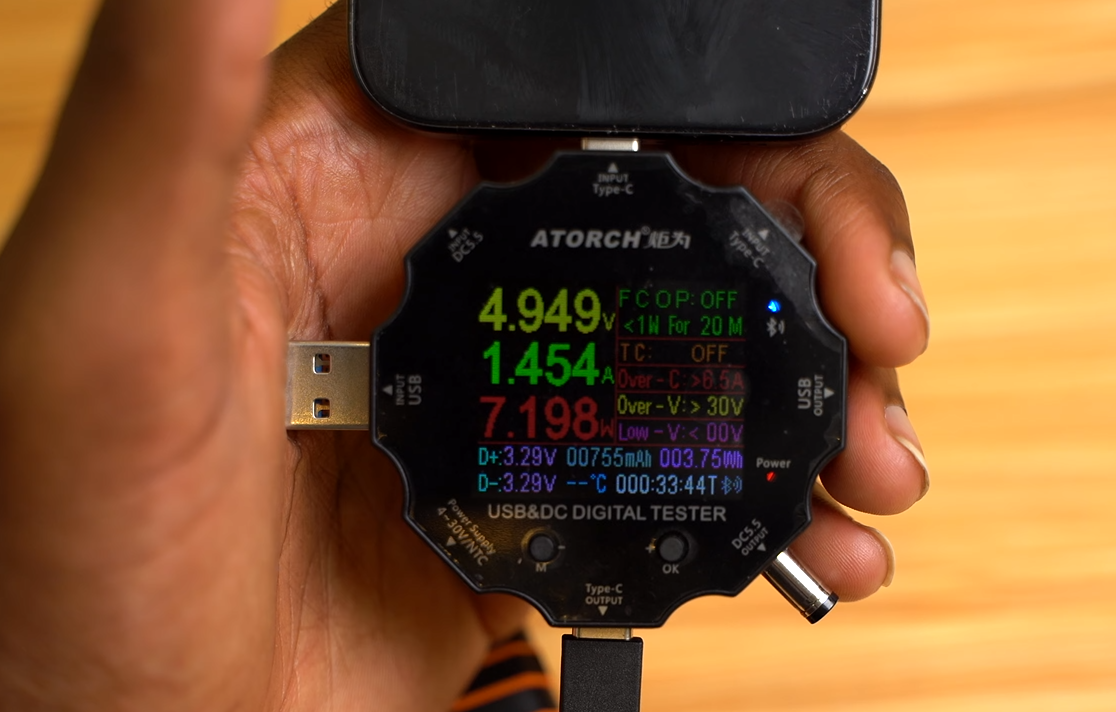
Output: Reached up to 7.19W
Result: Increased battery by 3% in 3 minutes
Verdict: This is standard charging speed which is fine for casual use, but relatively slow if you need a quick top-up.
Test 2: Using a High-Quality External USB-C Cable
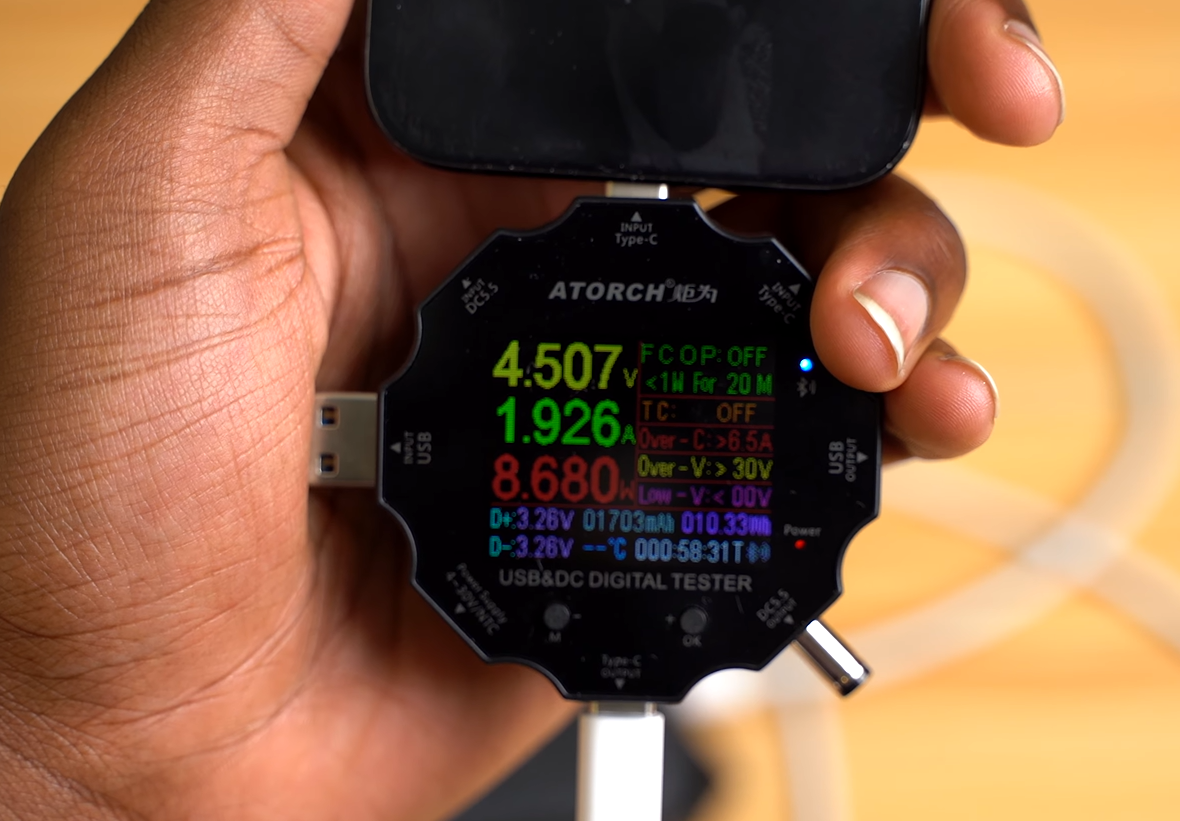
Thinking the built-in cable might be slowing things down, we tested again using a personal USB-C cable.
Output: Settled around 8W
Result: Battery increased by 4% in 3 minutes
Verdict: Using an external cable provided a slight improvement, but charging speed remained relatively moderate overall.
🔍 Why This Matters
Many users assume built-in cables reduce performance, but our testing showed only a slight difference in charging speed compared to using an external cable.
While a separate USB-C cable delivered slightly better output, the improvement wasn’t significant enough to dramatically change charging time.
Pro Tip: The built-in cables are convenient and perfectly fine for everyday use. If you want slightly better performance, you can still use a high-quality USB-C cable—but the difference is minimal.
Multi Device Test
For this test, we connected multiple devices at the same time to see how the power bank would handle real-world use. This will help determine whether the power stays stable or drops when charging a cell phone and iPad together, which is something most users will likely do while traveling or on the go.
Single Device (Phone Only)
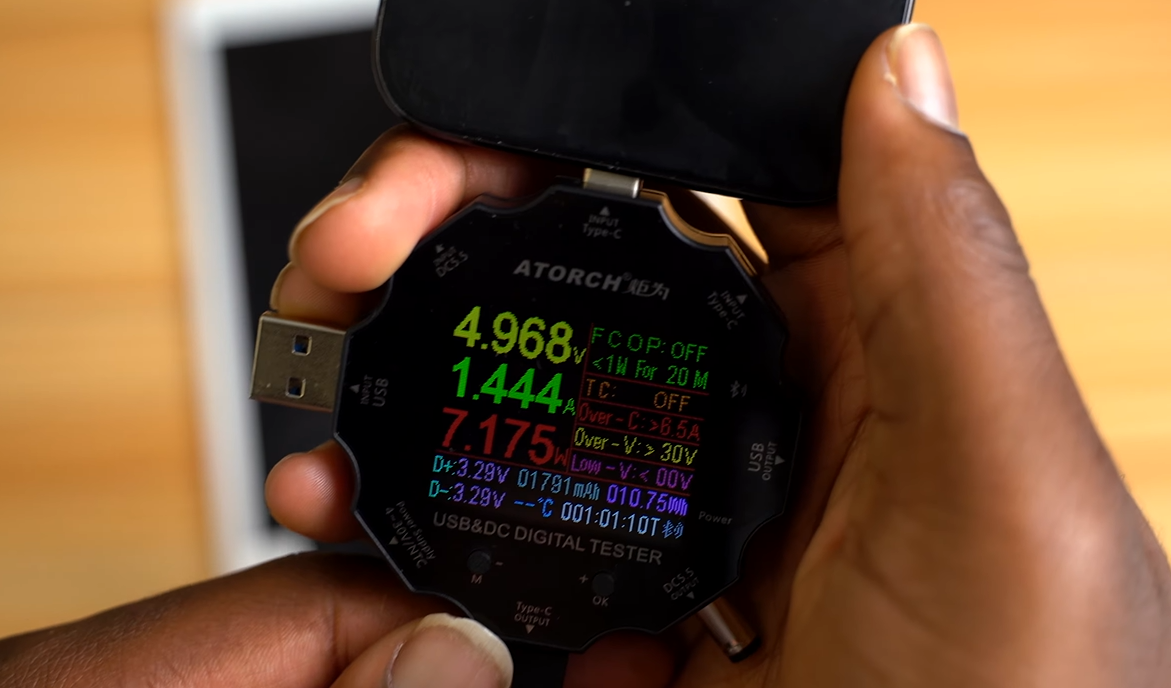
When first connected, the solar charger power bank started at around 7 watts.
Dual Devices (Phone + iPad)
When the iPad was plugged in, the power output immediately dropped from 7W to around 6 watts total, shared between both devices.
⚖️ The Verdict
SOARAISE portable solar battery bank can handle charging multiple devices at once, but with a noticeable drop in total output when a second device is added. While it works fine for light, everyday use (like phone + tablet charging on the go), the reduced wattage means both devices will charge more slowly compared to single-device charging.
Pro Tip: If speed matters, charge your devices one at a time. You’ll get better overall charging efficiency by letting the power bank focus its full output on a single device instead of dividing the power between two.
Durability Test
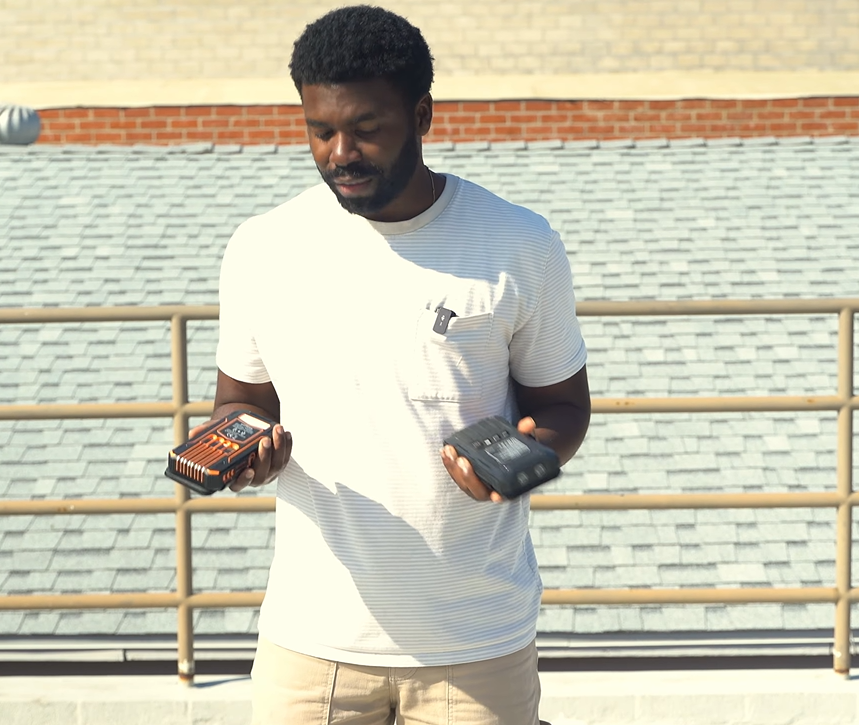
The Test: We performed a standard drop test, simulating a fall from chest height onto a hard surface to see how the unit would hold up under real accidental impact.
Drop Test Results:
We performed a drop test from chest height onto a hard surface to simulate accidental falls.
After the drop, there were no issues. The power bank continued charging normally, and the flashlight worked without any problems. The ports were also unaffected, and everything functioned as expected.
Final Verdict:
The device handled the drop well and remained fully operational with no damage or performance issues.
SOARAISE Solar Power Bank Pros and Cons
✅ Pros
Huge Battery Capacity
Massive 48,000 mAh battery can charge phones, tablets, and other devices multiple times before needing a recharge.
Direct Solar Charging
Equipped with 4 high-efficiency solar panels that enable direct solar charging, giving you emergency power when outlets aren’t available.
Wireless Charging Pad
Built-in wireless charging makes it easy to top up compatible phones without cables.
Multi-Device Support
Can power up to 7 devices at once (5 Output and 2 Input) with a combination of USB-A, USB-C, built-in cables, and wireless charging pad.
Fast Charging Capable
USB-C port delivers rapid charging (e.g., boosting an iPhone from 15 % to 60 % in about 30 min).
❌ Cons
Bulkier & Heavier
The large battery and rugged build make it bigger and heavier than typical portable power banks.
Solar Charging Is Slow
Solar panel charging is best for emergency topping-up; it’s much slower than wall or USB charging.
Higher Price Point
Larger capacity and extra features come at a higher cost compared with simpler solar chargers.
Solar Output Varies
Like many solar power banks, performance depends heavily on sunlight conditions and may not match marketing claims.
SOARAISE vs Other Solar Power Banks
Compared to other solar power banks in the same range:
The SOARAISE solar charger power bank stands out for its massive battery capacity and multi-device versatility
Many cheaper alternatives offer far less capacity and unreliable solar panels
Higher-end options may offer faster charging speeds but at a significantly higher price
👉 The SOARAISE is a balance between performance and price — powerful enough for heavy use, but not as compact or cheap as basic everyday power banks.
If you want a wider comparison of different models we tested, check out our guide to the best solar power banks in 2026 we tested.
| SOARAISE⭐ Best Value | Anker SOLIX C200 | BLAVOR | KEPSWIN | |
|---|---|---|---|---|
| Type | ☀️ Solar Power Bank | ⚡ Power Station | ☀️ Solar Power Bank | ☀️ Solar Power Bank |
| Capacity | 48,000mAh | 192Wh (60,000mAh) | 10,000–20,000mAh | 49,800mAh |
| Fast Charging | PD QC 3.0 | PD 3.1 140W USB-C | 20W USB-C | PD 22.5W |
| Solar Panels | 4 panels (7X efficiency) | Up to 100W solar input | 1 panel | 4 panels (8X efficiency) |
| Wireless Charging | ✓ Yes | ✗ No | ✓ Qi | ✗ No |
| Built-in Cables | ✓ 4 cables | ✗ No | ✗ No | ✓ 4 cables |
| AC Outlet | ✗ No | ✗ No | ✗ No | ✗ No |
| Waterproof | ✓ Yes | ✓ IPX4 | ✓ IPX5 | ✓ Yes |
| Flashlight / SOS | ✓ Yes | ✗ No | ✓ Dual LED | ✓ 3 modes |
| Output Ports | Up to 7 | 5 ports (USB-C & USB-A) | Up to 3 | 3–5 ports |
| Battery Type | Li-ion | LiFePO4 (3,000 cycles) | Li-ion | Li-ion |
| App Control | ✗ No | ✓ BT & Wi-Fi | ✗ No | ✗ No |
| Airline-Friendly | ✗ May exceed | ✓ Yes | ✓ Yes | ✗ May exceed |
| Warranty | — | 3 Years | — | — |
| Brand Trust | Growing | ⭐ Industry Leader | Growing | New / Emerging |
| Price Range | 💰 Budget–Mid | 💰💰 Mid–Premium | 💰 Budget | 💰 Budget–Mid |
| Best For | Group charging | Reliability & longevity | Lightweight carry | Outdoor & emergencies |
vs BLAVOR 10,000–20,000mAh
vs KEPSWIN 49,800mAh
vs Anker SOLIX C200
Is the SOARAISE Solar Power Bank Worth It?
Yes. But only if you genuinely need the capacity and versatility it offers.
It is worth it if you need:
Massive Power Reserve: A 48,000mAh battery designed for extended battery life, giving you enough power to charge your phone, tablet, and even a group multiple times over.
Group Charging: The ability to power up to 7 devices at once makes it ideal for camping trips, group travel, or family outings.
Emergency Readiness: The 3-mode flashlight with up to 200 hours of steady light and rugged waterproof build make it a serious emergency tool.
It is NOT worth it if you need:
Lightweight Travel: At this size and weight, it’s not something you’ll want in a minimalist daypack or carry-on bag.
Fast Daily Charging: Our tests showed moderate charging speeds which is fine for casual use but not ideal if you’re always in a hurry.
Primary Solar Charging: Like all solar power banks, the solar panels are for emergency top-ups only, not reliable daily charging.
Who Is the SOARAISE Solar Power Bank For?
Ideal For:
The Group Camper: You need one device that can keep multiple people’s phones and tablets alive for an entire weekend trip.
The Emergency Prepper: The 48,000mAh capacity, rugged build, and long-lasting flashlight make this a serious addition to any emergency kit.
The Long-Distance Traveler: Multi-day trips where wall outlets are unreliable — this has enough juice to keep you covered the entire time.
Not Ideal For:
The Minimalist Hiker: If you value lightweight gear above everything else, the size and weight of the SOARAISE will feel like a burden on long trails.
The City Commuter: If you just need a slim, fast charger for daily use, a compact solar charger will serve you far better at a lower price.
💡 What Most Reviews Don’t Tell You
Here’s the real truth about the SOARAISE that most reviews gloss over. Once you understand these points, you’ll know exactly how to get the most out of it.
1. Four Solar Panels Still Won’t Charge It Fast
Four panels sounds impressive — and it is an improvement over standard single panel chargers. But our testing showed only a 25% battery gain after 2 hours of direct sunlight.
Fully charging via solar panels alone could still take days of ideal conditions
👉 Always wall-charge before your trip. Solar is your safety net, not your strategy.
2. The Built-in Cables Are Actually Fine
Unlike some power banks where built-in cables are a major bottleneck, our tests showed only a minimal difference between the built-in cable and an external high-quality USB-C cable.
👉 The built-in cables are genuinely convenient and perform well enough for everyday use.
3. Multi-Device Charging Slows Everyone Down
The SOARAISE can charge 7 devices but powering multiple devices at once drops total output significantly. In our test, adding a second device dropped output from 7W to 6W shared between both.
👉 If speed matters, charge one device at a time for the best results.
4. The Flashlight Is a Serious Emergency Tool
With up to 200 hours of steady light on a single charge, the built-in flashlight is far more useful than most people expect.
👉 In a power outage or emergency situation, this device doubles as a long-lasting lantern.
🛠️ Simple Maintenance Tips
Charge it via wall outlet at least once every few months even if unused — lithium batteries can degrade permanently if left at 0% too long
Try to keep the battery between 20% and 80% for a longer overall lifespan
Wipe the solar panels occasionally with a damp cloth — dust and fingerprints can noticeably reduce charging efficiency
Avoid leaving it in direct extreme heat such as a hot car dashboard — high temperatures can damage the internal battery over time
Frequently Asked Questions
1. Does the SOARAISE solar panel actually work?
Yes, but with realistic expectations. Our testing showed a 25% battery gain after 2 hours of direct sunlight starting from 50%. It works but just slowly. Think of it as an emergency backup rather than a reliable primary charging method.
2. How long does it take to fully charge the SOARAISE?
Via wall outlet: approximately 8–12 hours depending on your charger. Via solar only: realistically many hours of perfect direct sunlight.
3. Can it really charge 7 devices at the same time?
Technically yes, but our multi-device test showed a noticeable drop in output when charging more than one device. Charging a phone and iPad simultaneously dropped total output from 7W to around 6W shared between both. It works for light use, but don’t expect fast charging across all ports at once.
4. Is the SOARAISE solar charger actually waterproof?
SOARAISE power bank is built to be waterproof, dustproof, and shockproof with sealed ports designed to handle rain, splashes, and outdoor conditions. It is suitable for camping and hiking but should not be submerged in water.
5. How many times can it charge my phone?
With a 48,000mAh battery, it can charge most smartphones many times over on a single full charge, making it one of the highest capacity portable solar power banks in its category.
6. Is the wireless charging any good?
It works conveniently for cable-free charging by simply placing your phone on the pad. However like most power bank wireless charging, it is slower than wired charging and is best used for overnight charging or maintaining battery levels rather than quick top-ups.
7. Is the SOARAISE solar power bank worth the price?
Yes, if you need the capacity and versatility. At its price point, SOARAISE solar power bank offers a massive 48,000mAh battery, multi-device support, rugged build, and solar backup in one unit. If you only need a slim everyday charger though, a more compact and affordable option would serve you better.
8. How durable is it? Will it survive a drop?
Our drop test from chest height onto a hard surface showed no damage at all. The solar power bank continued charging normally, the flashlight worked without issues, and all ports remained fully functional after impact.
9. What devices is it compatible with?
It works with most smartphones including iPhone and Android, tablets like iPad, and smaller devices like earbuds and GoPros. It is not designed to charge laptops or high-powered devices.
10. How do I turn on the flashlight?
The SOARAISE includes a 3-mode LED flashlight — steady light, SOS signal, and strobe mode. Refer to the included manual for the exact button sequence as it may vary slightly by model, but it typically involves pressing and holding the power button.
11. Can I charge the power bank and my devices at the same time?
While it is technically possible, it is not recommended to charge the power bank and use wireless charging simultaneously as this can lead to overheating. For best results charge the unit fully first then use it to power your devices.
12. Why is the charging speed slower than advertised?
Our tests showed that using the built-in cables delivered around 7W while a high-quality external USB-C cable delivered around 8W. The difference was minimal. To get the best charging speed always use the USB-C port with a quality cable and charge one device at a time.
Final Verdict
The SOARAISE Solar Power Bank is one of the most capable portable power banks we have tested at this price point. A 48,000mAh battery, four solar panels, rugged waterproof build, and enough ports to charge an entire group — it covers a lot of ground in one device.
That said, it is not for everyone. It is bulkier than your average power bank, solar charging is slow, and multi-device output drops when you plug in more than one device at a time.
The rule that applies here is simple: wall-charge it fully before any trip and treat the solar panels as your backup, not your plan.
If you need serious power for camping, group travel, or emergency preparedness, the SOARAISE solar charger power bank is worth every penny. But if you need something slim and fast for everyday use, a more compact option will serve you better.
See how SOARAISE solar charger power bank compares with other top solar power banks in our head-to-head video below.
📖 Related Articles
If you found this review helpful, you might also enjoy these:
Subscribe to our weekly newsletter and receive honest reviews like this directly in your inbox.