Advertising Disclosure
Best Carb-Reducing Rice Cookers for Families & Real Blood Sugar Impact in 2026

Best Carb-Reducing Rice Cookers for Families & Real Blood Sugar Impact in 2026
Can a rice cooker actually help reduce how rice affects your blood sugar? We tested the most searched options to find out what delivers real, measurable differences and what does not

Reviewed by:
Marcus Chen , Home Appliance Product Tester
April 07, 2026
Reviewed and Edited by: SA Editorial Team
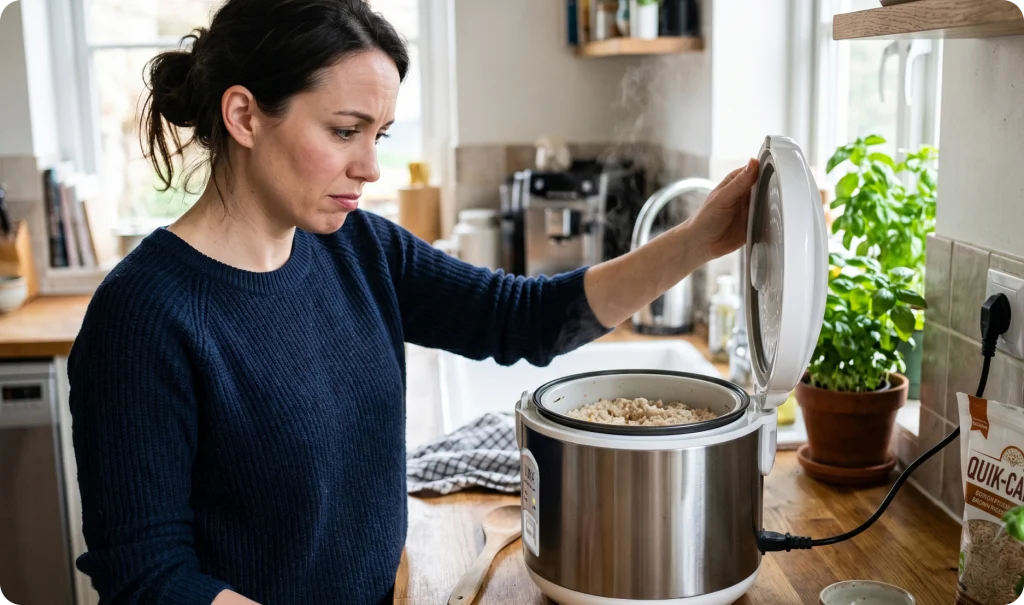
Understanding the Buyer's Health Challenge
If you’ve been told to cut rice because of diabetes, pre-diabetes, or a low-carb eating plan, you already know the frustration. Rice is not just food for most people. It’s culture, comfort, and a daily staple that a two-sentence doctor’s note can’t simply erase from a lifetime of eating habits.
The good news is that a growing body of food science research suggests that how rice is cooked matters as much as whether it’s eaten. Specific cooking methods particularly those that separate starchy water during the cook cycle and use controlled steam-finish techniques — can measurably reduce the glycemic impact of the same grain that spiked your blood sugar before.
The bad news is that most of the “low carb rice cookers” showing up in search results are either making unverified claims, using marketing language without data to support.
That’s why our team set out to test the most popular options on the market with one specific question: which rice cooker actually delivers a meaningful, testable reduction in glycemic impact and which ones are just riding a health trend?
What We Tested and Why It Matters
Most rice cookers in this category make similar promises. Very few explain how those results are achieved. So we evaluated the top models using a strict framework focused on what actually impacts buyers:
- Glycemic impact design
- Inner pot material safety
- Grain versatility beyond white rice
- Daily performance and durability
Key takeaway: Many products rely on claims. Only one is built around a clear, physical method designed to reduce starch during cooking.
The Problem Buyers Are Trying to Solve
If you have been told to reduce rice due to diabetes, pre diabetes, or a low carb plan, you already understand the tradeoff. Rice is not easy to remove. It is a core part of everyday meals.
That is why most buyers are not looking for elimination. They are looking for a better way to cook it.
What Actually Changes the Outcome
Emerging food science points to a simple but overlooked factor:
The cooking method matters.
Methods that:
- Separate starchy water during cooking
- Use a controlled steam finish may help reduce how the same rice affects your body compared to standard cooking.
This turns the decision from what you eat into how you prepare it every day.
Where Most “Low Carb” Rice Cookers Fall Short
After testing multiple models, we found consistent gaps:
Unverified claims
Carb reduction percentages are often presented without third party data or clear methodology.
No real difference in cooking
Many “low carb” settings only adjust time or temperature.
They do not remove starch from the process.
Rebranded standard designs
Several products use the same PTFE non-stick construction with new health focused messaging.
Lack of proof
Most claims are not supported by independent testing.
What to Look for Instead
If your goal is to reduce carb impact while still eating rice, one question matters most: Does the cooker physically change the cooking process?
Because without a real mechanism, the outcome is likely the same as a standard rice cooker.
The Ones That Delivered
After testing, the gap between marketing claims and real performance became clear.
Only one product met our full standard across all criteria. Two others performed well within their category, but come with clear tradeoffs you should understand before buying.
Here are the top three, ranked by overall performance.



EDITOR’S CHOICE
#1 — SRI Home CERA IQ Grain Cooker - Built for Health Focused
RATING: 9.4 / 10
PRICE: $239.99
Why It Ranked #1
The CERA IQ is the only cooker we tested with a built in starch separation system.
Not a mode. Not a claim. A physical mechanism.
That distinction is what separates it from every other option in this category.
What You Are Actually Getting
-
Starch separation during cooking
A 304 stainless steel drain basket removes starchy water before a controlled steam finish. This directly supports lower GI cooking methods used in food science. -
PFAS free ceramic inner pot
No PTFE. No fluoropolymer coatings.
Backed by third party testing, not brand language. -
Smart grain automation
Handles grains with automatic water ratios and temperature control.
No guesswork, even with less common grains. -
Designed for real daily use
- Silent phone notification instead of loud alarms
- Side steam vent that protects cabinets
- Replaceable ceramic pot
- 5 year warranty
What This Means in Real Life
- More control over how rice is cooked, not just what you eat
- Consistent results across different grains without trial and error
- Cleaner materials for buyers avoiding non stick coatings
- No disruptive alerts for scheduled cooking
Value Breakdown
At $149, it sits:
- $50 above entry level options
- $50 below premium models
For that difference, you get features no other model offers at any price point in this comparison.
Pros:
- Only model combining ceramic pot + starch separation + smart grain control
- Verified material safety, not just claims
- Quiet, practical features built around real usage
- Strong long term value with warranty and replaceable parts
Cons:
- Requires app setup for full functionality
- Smaller capacity for larger households
- Needs WiFi for smart features
Bottom Line
If your goal is to reduce carb impact without eliminating rice, this is the only option here designed to support that consistently.


#2 — Toshiba Rice Cooker with Fuzzy Logic (TRCS01)
RATING: 7.6 / 10
Where It Performs Well
- Fuzzy logic cooking improves consistency
- Handles brown rice and porridge better than basic cookers
- Solid build quality from an established brand
Where It Falls Short
- PTFE inner pot at a premium price
- No smart features or app connectivity
- No silent mode for scheduled cooking
- No mechanism for starch reduction or lower GI cooking
What You Are Paying For
At $199, you are paying for consistency and brand reliability.
Not for innovation or health focused features.
Bottom Line
A dependable mid range option, but difficult to justify when lower priced alternatives offer more functionality.


#3 Pick — Cook with Color Rice Cooker
RATING: 6.6 / 10
Where It Works
- Easy, one touch operation
- Compact and visually appealing
- Good for occasional white rice cooking
Where It Breaks Down
- Consistent reports of lid leakage during cooking
- PTFE non stick inner pot
- No support for brown rice or alternative grains
- No scheduling or advanced features
What That Means for Buyers
This is a basic cooker with design appeal, not a performance driven option.
At $99.99, expectations for reliability are higher than what many buyers report experiencing.
Bottom Line
Best suited for light, occasional use.
For daily cooking or health focused use, the limitations become clear quickly.
Side by Side Comparison
| Feature | CERA IQ | Toshiba TRCS01 | Cook with Color |
|---|---|---|---|
| Inner Pot | Ceramic | PTFE | PTFE |
| Starch Reduction | Yes | Yes | Yes |
| Smart Features | Yes | No | No |
| Known Issue | None reported | Loud alerts | Glass leakage |
Final Recommendation
If you are trying to:
- Manage blood sugar
- Follow a low GI or low carb approach
- Keep rice in your diet without overcorrecting
Then the method of cooking matters more than most buyers realize.
The SRI Home CERA IQ stands out because it is built around that principle:
- Physical starch reduction system
- Cleaner material construction
- Consistent multi grain performance
At $249, it delivers capabilities that both cheaper and more expensive options do not match in this comparison.
Bottom line:
Most rice cookers focus on convenience.
This one focuses on how the food is actually prepared and that is where the difference shows.
Frequently Asked Questions
Which rice cooker actually does something different, not just marketing?
Most rice cookers in this category use presets or water adjustments.
The SRI Home CERA IQ Grain Cooker is the only model here that uses a physical starch separation step during cooking, followed by a controlled steam finish.
That process difference is what sets it apart from standard rice cookers and “low carb modes.”
Does this actually reduce carbohydrates in rice?
No rice cooker removes carbohydrates from rice.
What some systems, including the CERA IQ, can do is change how rice is cooked by separating starchy water during the process, depending on grain type and preparation.
This is about cooking method control, not transforming rice into a low carb food.
How is the CERA IQ different from regular rice cookers?
Standard cookers:
- Boil rice and absorb water
- Use fixed presets
- Do not separate starch during cooking
The CERA IQ:
- Uses a built in drainage system to separate starchy water mid cycle
- Finishes with controlled steaming
- Automatically adjusts for multiple grain types
The difference is in the cooking mechanism, not just settings.
Why do many “low carb rice cookers” feel the same?
Because most of them are not structurally different inside.
They typically rely on:
- Extra water cooking
- Timer adjustments
- Pre programmed modes
Without a physical separation step, the cooking process remains very close to a standard rice cooker.
Is there real evidence behind these cooking methods?
Some research on cooking techniques suggests that starch handling and preparation methods can influence how rice behaves after cooking.
However:
- Results vary by grain type
- Outcomes are not identical across users
- It is not a medical intervention
These cookers are best viewed as tools for more controlled preparation, not guaranteed outcomes
What makes the SRI Home CERA IQ worth the price difference?
At $149, it sits in the mid range category, but adds features most competitors do not offer:
- Starch separation mechanism (not a preset mode)
- PFAS free ceramic inner pot
- Multi grain automation for 40 plus grains
- Consistent repeatable cooking process
You are paying for cooking system design, not just basic functionality.
Who is this actually for?
The CERA IQ is designed for buyers who:
- Still want rice as part of their diet
- Care about how food is prepared, not just portion size
- Want more consistency across grains
- Prefer a more controlled cooking process
It is not limited to low carb users, but it is especially relevant for them.
Is this better than cheaper rice cookers?
Cheaper cookers can work for basic use, but typically:
- Do not separate starch during cooking
- Use standard PTFE coated inner pots
- Offer limited grain flexibility
The CERA IQ is positioned for buyers who want more control and consistency rather than entry level convenience.
Do I need the app to use it?
No.
The cooker works without the app for basic cooking.
The app is only needed for advanced features like grain presets and scheduling.