Advertising Disclosure

Skin Research Institute has a financial connection to products sold via links on our website such as our top choices.


JAXWQ Stud Finder Review: We Tested It on a Real Wall

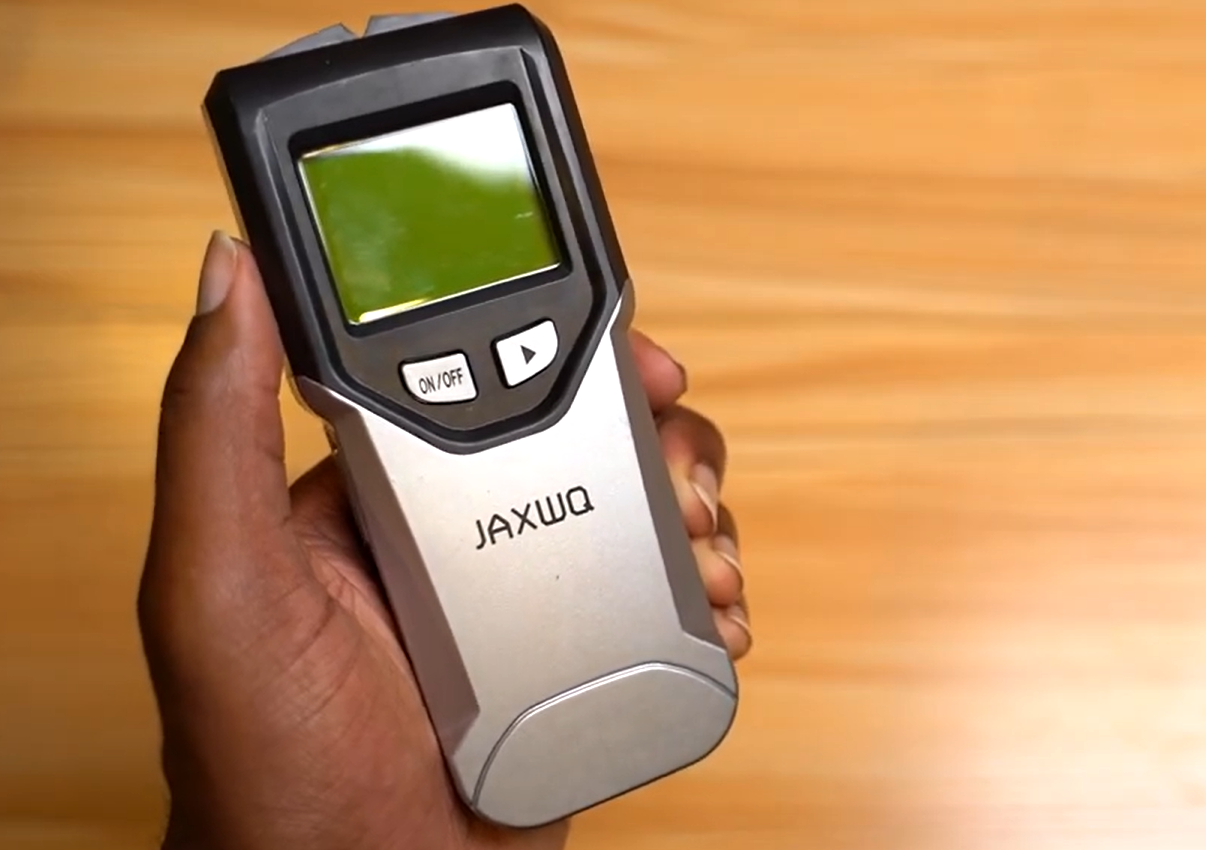
JAXWQ stud finder review

Drilling into a wall without knowing what’s behind it is a gamble nobody wants to take. Whether you’re hanging shelves, mounting a TV, or running new fixtures, knowing exactly where your studs, pipes, and wires are can save you from a costly or dangerous mistake.

In this JAXWQ stud finder review, we put it through a hands-on test using a mock residential wall setup to find out if it actually delivers where it counts — five scanning modes, an HD LCD display, and a smart microprocessor chip, all at a budget-friendly price point.

If you’re weighing your options, we also tested it alongside others in our real-world testing of the best stud finders in 2026.
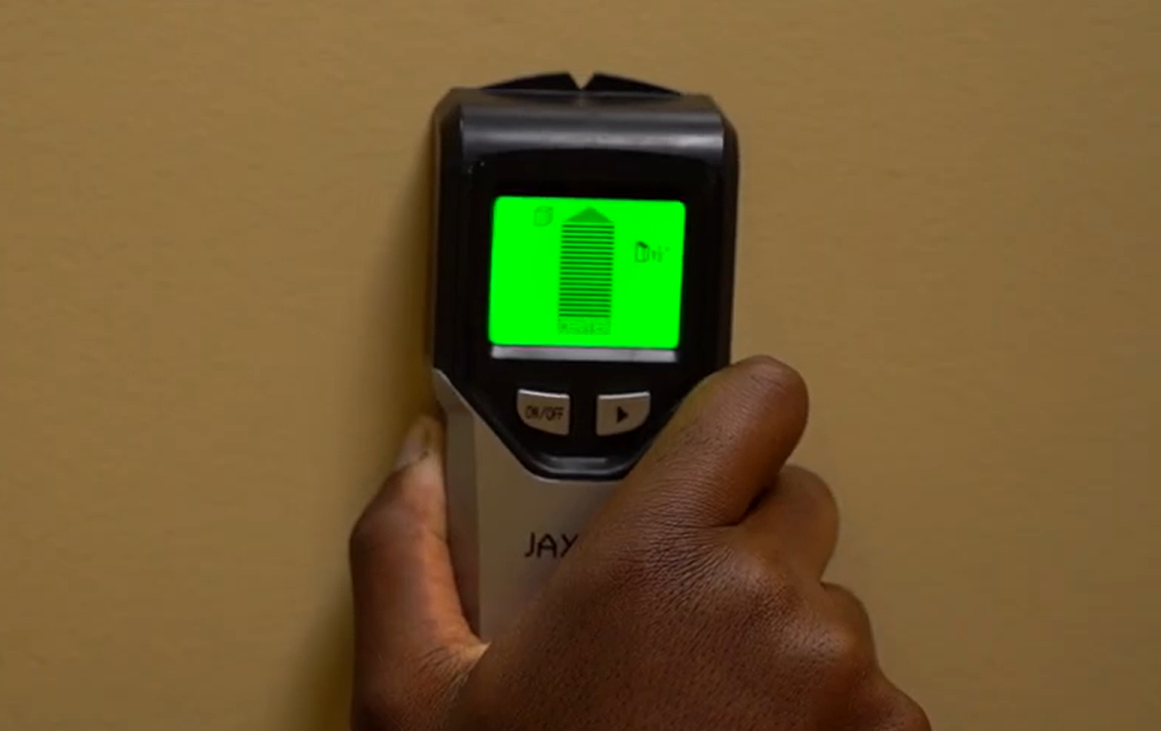
 

⭐ Quick Verdict

The JAXWQ Stud Finder is a solid, beginner-friendly pick for everyday home projects — but it has a few limitations worth knowing before you buy.

What it does well:

  • Accurately locates wood stud centers

  • Easy to use right out of the box

  • Good for standard drywall mounting and hanging tasks

Where it falls short:

  • Failed to detect copper pipe and live power cord in our tests

  • Not reliable as your only safety check near electrical or plumbing areas

Best for:

Casual DIYers tackling everyday wall projects on a budget.


JAXWQ Stud Finder Review: Key Features & Specifications

JAXWQ stud finder wall scanner

The JAXWQ Stud Finder and Wall Scanner is a 5-in-1 handheld stud detector beam finder built to help homeowners and DIYers locate hidden structures behind walls, floors, and ceilings before drilling or mounting. It uses an intelligent microprocessor chip to detect density changes beneath surfaces, allowing it to identify wood studs, metal objects, live AC wires, joists, and pipes with precision.

It comes equipped with multiple scanning modes — including Stud Scan, Deep Scan, Metal Scan, and AC Wire modes — covering detection depths of up to 2.36 inches depending on the material. An HD LCD display and built-in audio alerts work together to guide you through each scan in real time, while automatic live wire warning stays active across all modes for added safety.

 Key Features

5-in-1 Scanning Modes

Covers five detection modes in a single tool — the Stud Scan Mode finds the center and edges of wood and metal studs at both shallow and medium depths, the Deep Scan Mode detects objects hidden behind thicker or double-layered walls, the Metal Scan Mode detects pipes, conduit, and other metal objects deeper behind the surface, and AC Wire Scan keeps you alert to live electrical wiring, letting you switch based on what you’re looking for and how deep it sits behind the wall.

Intelligent Microprocessor Chip

An upgraded smart chip reads density changes behind surfaces in real time, delivering fast and consistent detection without the guesswork of older sensor technology.

HD LCD Display

A backlit, high-definition (HD) LCD screen shows signal strength, detection mode, object location, and battery status at a glance — no need to interpret vague indicator lights.

Audio Alert System

Built-in audible alerts sound as you approach a detected object. The audio signal guides your scanning path even when you’re not looking directly at the screen.

Automatic Live Wire Warning

AC wire detection stays active across all scanning modes. A flashing warning icon appears on the display the moment the tool picks up live, unshielded electrical wiring even if you’re in Stud Scan Mode or Metal Scan Mode.

Marking Notch

A notch at the top of the device lets you mark the exact center point of a detected stud or object directly on the wall without lifting the scanner, keeping your measurements accurate and your workflow smooth.

Auto Power-Off

The device shuts off automatically after 3 minutes of inactivity to preserve battery life.

Ergonomic Single-Hand Design

The side-mounted calibration button is positioned for easy thumb access, making it comfortable to operate with one hand during longer scanning sessions.

Specifications

Specification Details
Model JAXWQ 5-in-1 Stud Finder Wall Scanner
Color Soft Gray
Scanning Modes 5 (Stud Scan 0.5 in, Stud Scan 1 in, Deep Scan 1.5 in, Metal Scan, AC Scan)
Stud Detection Depth Up to 1.5 inches (38 mm)
Metal Detection Depth Up to 2.36 inches (60 mm)
AC Wire Detection Depth Up to 2 inches (51 mm)
Display HD LCD with backlight
Alerts Visual (LCD icons) + Audible
Power Source 9V battery (included)
Auto Power-Off After 3 minutes of inactivity
Best For Drywall, wood paneling, plaster (flat, dry surfaces only)
Ideal Use Cases Hanging shelves, mounting TVs, electrical work, DIY projects


How We Tested the JAXWQ Stud Finder

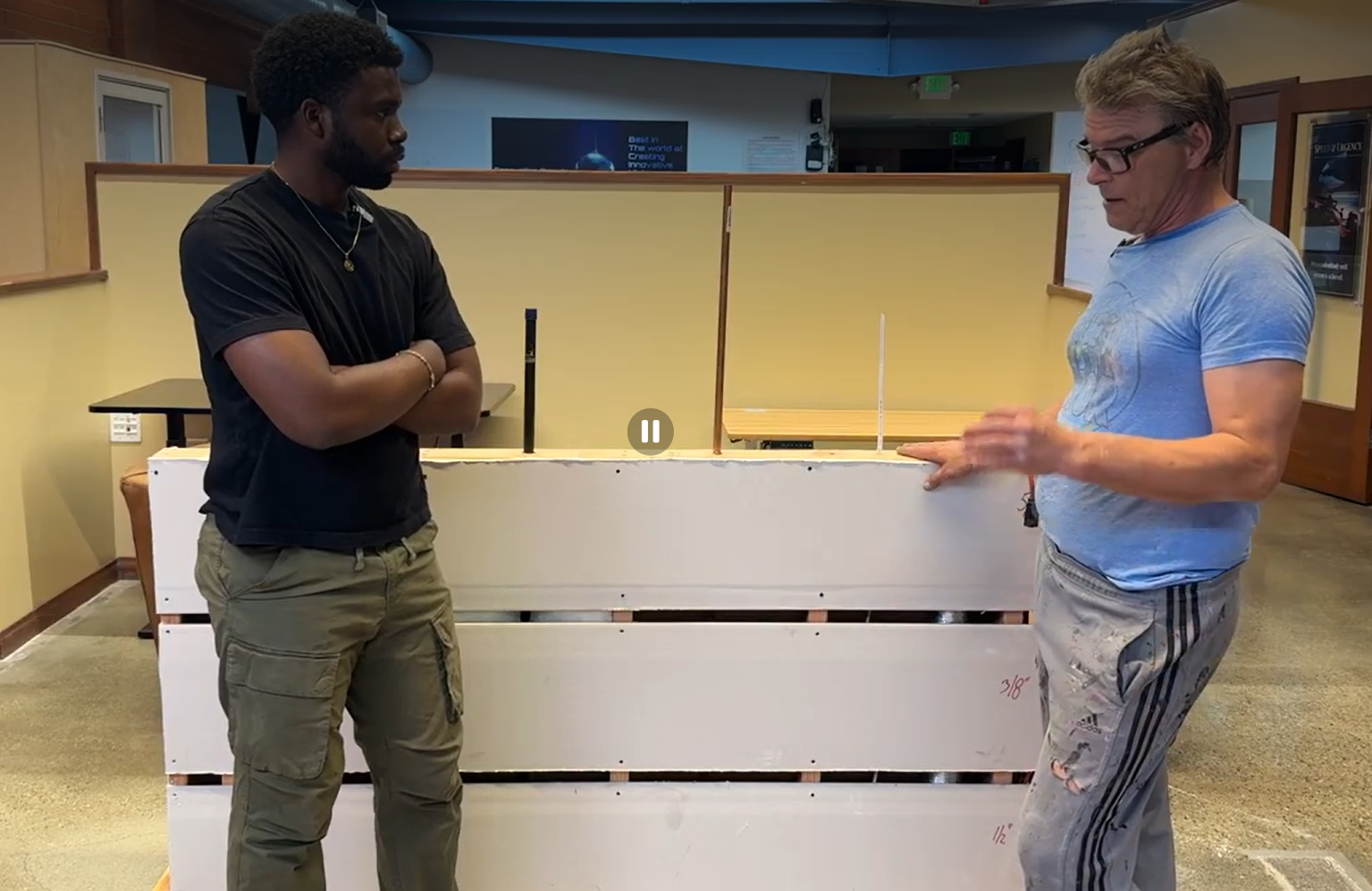
handyman showing how the mock wall was builty

The Test Wall Setup

To put the JAXWQ stud finder through a realistic test, we built a mock drywall setup that mirrors what you’d typically find inside the walls of a residential home. We used three different drywall thicknesses to see how the scanner performs across varying wall depths:

  • Bottom section — 1/2 inch drywall

  • Middle section — 3/8 inch drywall

  • Top section — 5/8 inch drywall

What We Hid Behind the Wall

To simulate real-world conditions, our handyman embedded the same materials you’d commonly find inside a home’s walls:

  • Live electrical wiring — an extension cord plugged into a live outlet to replicate active wiring

  • Standard wiring

  • Copper pipe

  • Gas line

  • Sewer pipe

  • Duct tape along the top section

What We Were Looking For

For anyone shopping for a stud finder, accuracy is the number one thing that matters — especially for handymen and DIYers who need to drill or mount with confidence. That was the core focus of our testing.


Performance Test Results

Accuracy Test — Finding Wood Studs

JAXWQ wall scanner stud finder

When scanning for wooden studs, the JAXWQ stud finder delivered solid results. It consistently locked onto the center of each stud with no significant offset, landing right on target across our test wall. For the most basic and important job a stud finder needs to do, this one gets it right.

Metal Detection — Copper Pipe
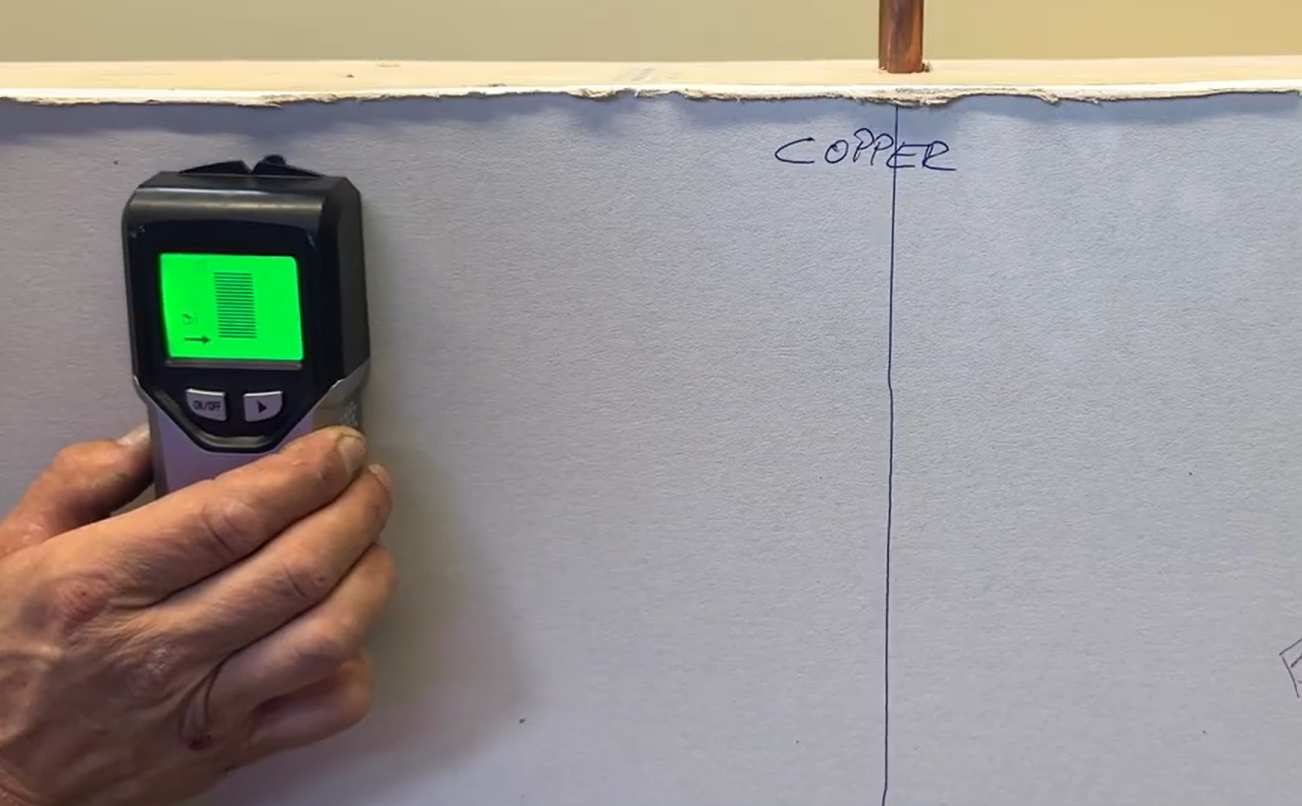
JAXWQ stud finder failed the metal detection test

The JAXWQ had mixed results in the metal detection test. It picked up the nail on the wall without any issue, but it failed to detect the copper pipe entirely. If you’re planning to use it to locate plumbing behind your walls, that’s something to be aware of before buying.

Gas Line Detection
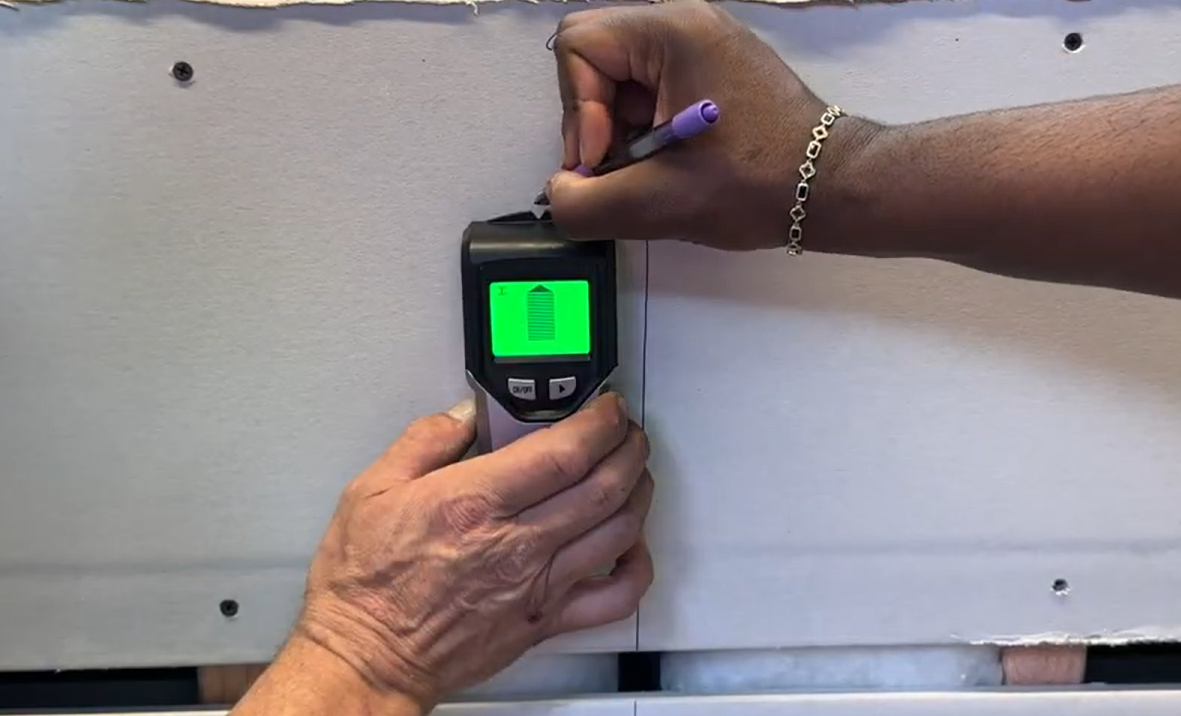
marking the drywall after detecting gas line

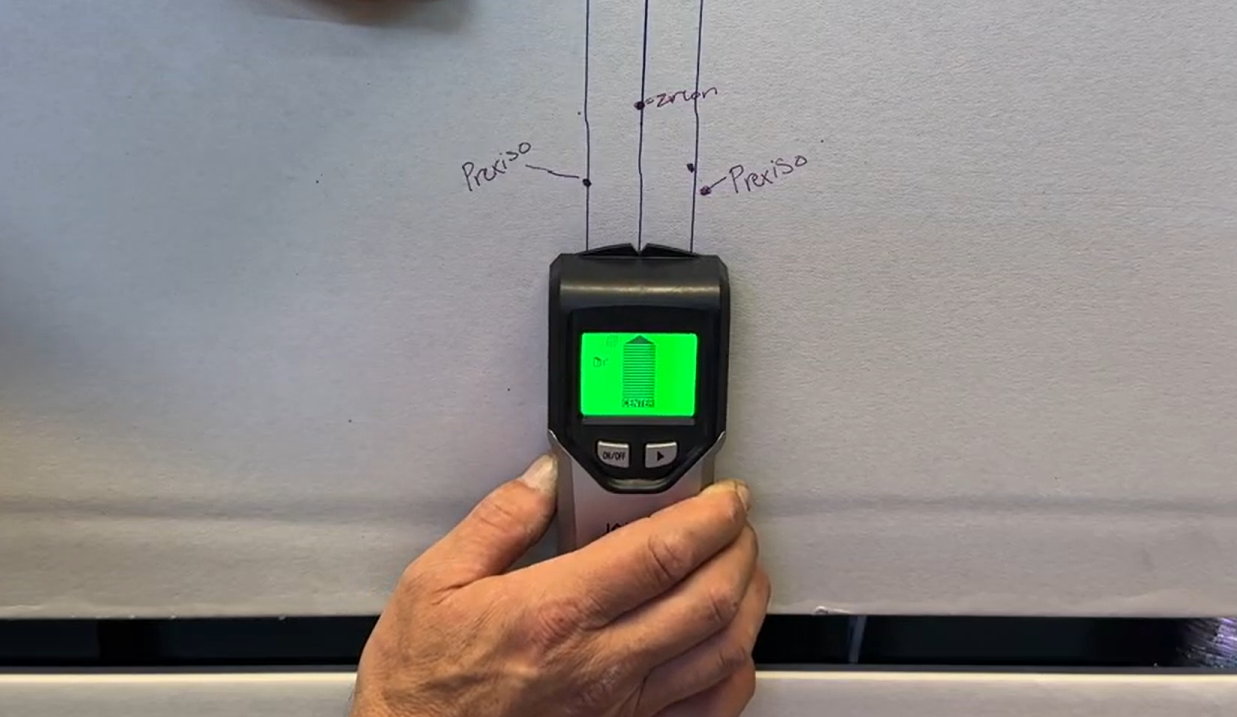
The JAXWQ was able to detect the gas pipe, though not by pinpointing the center directly. Instead, it picked up both edges of the pipe. That said, if you calculate the midpoint between the two edges, the result is accurate enough to give you a reliable center location.

Electrical Wire (No Power)
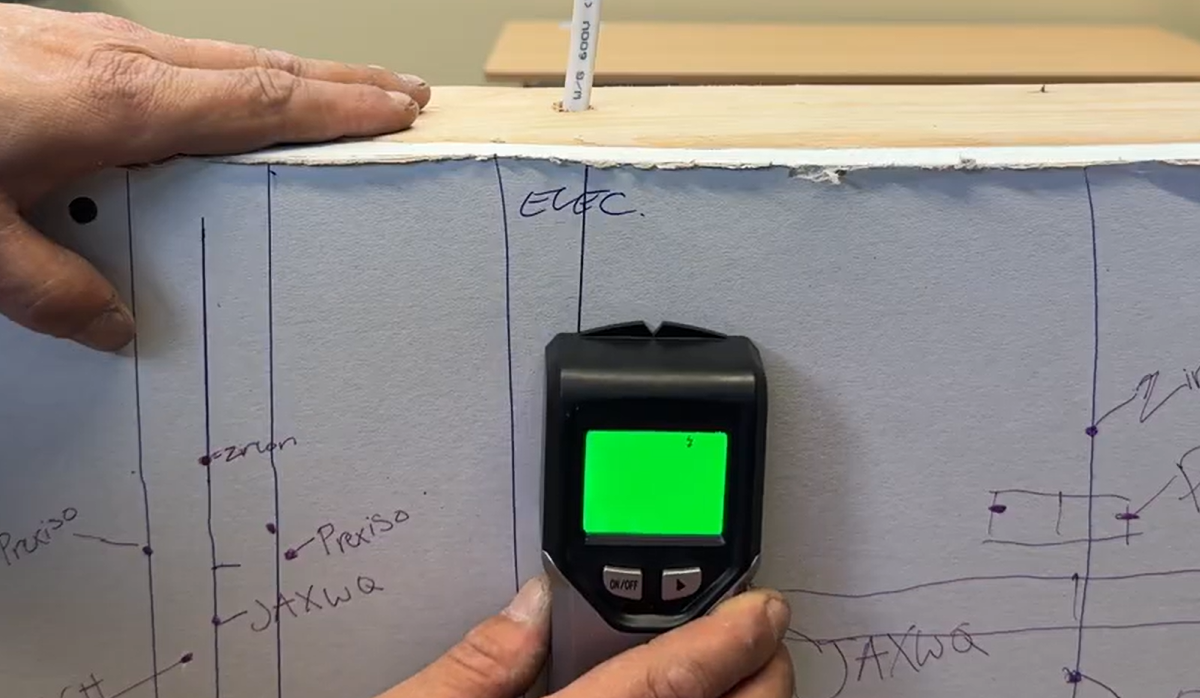
electrical wire scanning path

We tested a standard electrical wire with no current running through it, and the JAXWQ stud finder returned no reading at all. If you’re scanning for non-powered wiring behind your walls, this tool alone won’t be enough to find it.

Ducting Hose Detection
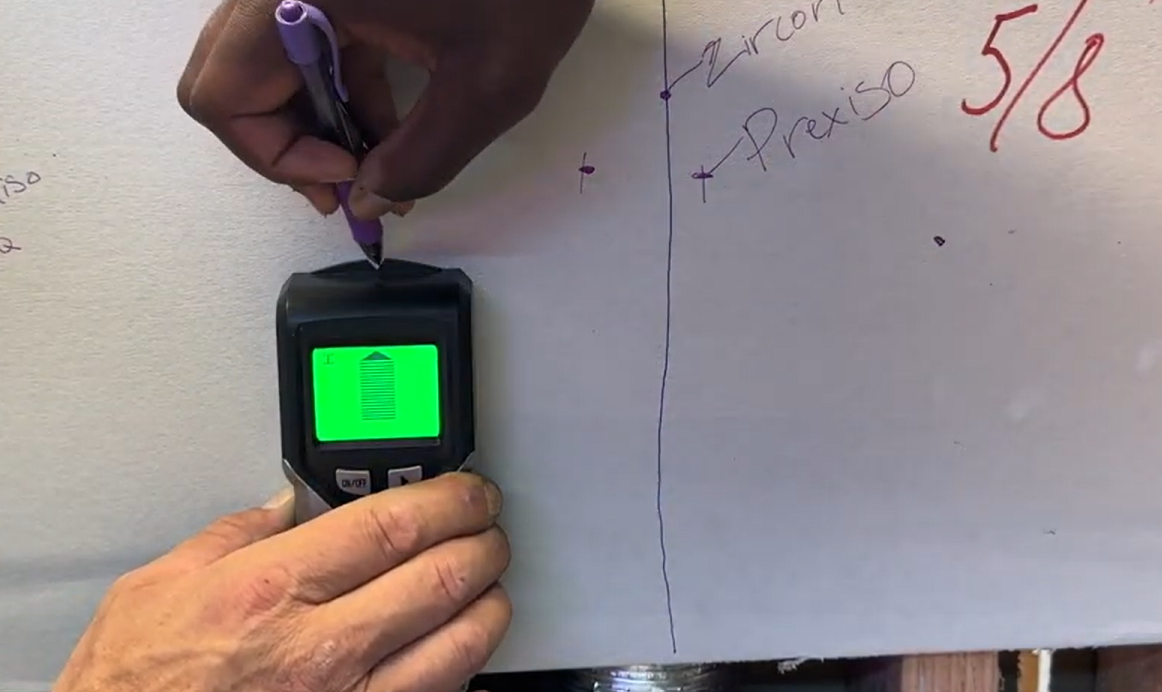
ducting hose detection

The JAXWQ detected the ducting hose by picking up both sides of it, producing a wide marking on the wall. While it didn’t pinpoint an exact center, the broad reading is still a useful signal which tells that something is behind that area and gives you a general zone to work around.

Safety Test — Live Power Cord
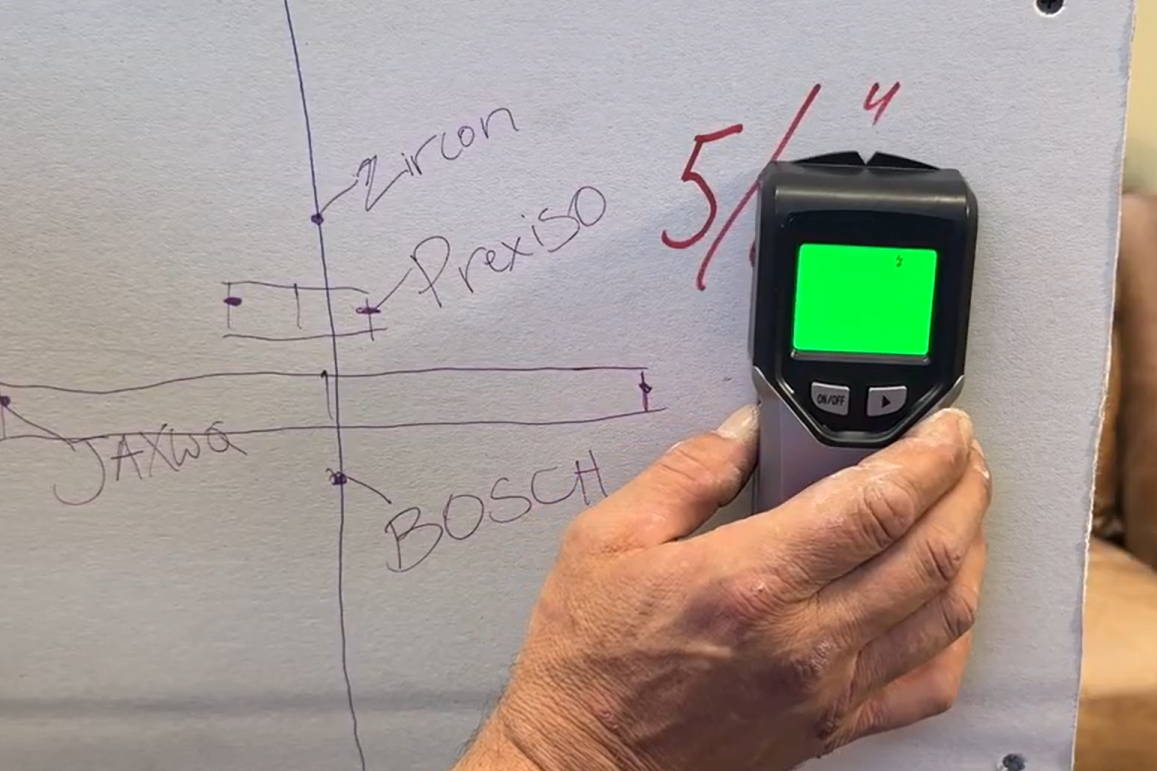
live power cord safety test using JAXWQ wall scanner

The JAXWQ failed to detect the live power cord during our safety test. This is worth taking seriously — if you’re drilling near areas where active wiring may be present, the JAXWQ alone shouldn’t be your only line of defense. Always turn off power at the circuit breaker and consider using a dedicated electrical tester for added safety before drilling into any wall.

Overall Results

Test What We Tested Result Rating
Accuracy — Wood Studs Center of wood studs Detected accurately and consistently ✅ Pass
Metal Detection Copper pipe Failed to detect entirely ❌ Fail
Gas Line Detection Gas pipe center Detected edges only — center calculable ⚠️ Partial
Electrical Wire (No Power) Dead electrical wire No reading returned ❌ Fail
Ducting Hose Ducting hose Detected both sides — wide zone reading ⚠️ Partial
Safety — Live Power Cord Live power cord Failed to detect ❌ Fail


JAXWQ Stud Finder Wall Scanner Pros and Cons

✅Pros

  • Accurately pinpoint stud centers on wood

  • Detects gas pipe edges for center calculation

  • Five specialized scanning modes in one tool

  • Combines microprocessor technology with deep scanning capabilities

  • Clear HD LCD display

  • Beginner-friendly out of the box

  • Lightweight and comfortable to hold

❌Cons

  • Missed the copper pipe entirely

  • Did not detect live power cord

  • Cannot detect non-powered wiring

  • Can be inconsistent on uneven or older walls

  • Audio alerts can be loud

JAXWQ Stud Finder Wall Scanner Vs Other Stud Finders

Feature JAXWQ Stud Finder Prexiso 2-in-1 Zircon MultiScanner A250 Bosch GMS120-27
Price Range Budget Mid-Range Mid-Range Premium
Scanning Modes 5 2 (Stud + Laser) 4 3
Stud Detection Depth Up to 1.5 in Standard drywall Up to 1.5 in Up to 1.5 in
Metal Detection Depth Up to 2.36 in ❌ Not specified Up to 3 in (ferrous) Up to 4.7 in
AC Wire Detection ✅ Up to 2 in ✅ Up to 2 in ✅ Up to 2 in
Display HD LCD LED indicators LCD + SpotLite Pointer Illuminated marking ring
Audio Alerts
Built-in Laser Level
Auto-Correcting Technology ✅ ACT
IP Rating ✅ IP54
Power Source 9V battery Rechargeable Li-ion 9V battery AA batteries or Li-ion
Best For Budget DIYers Hanging & leveling tasks DIYers & contractors Professionals & contractors


vs Prexiso 2-in-1 Stud Finder

The JAXWQ stud finder covers more ground with five scanning modes and deeper wall detection, while the Prexiso focuses on doing two things well — detecting studs and projecting a laser level line for precise alignment. If your main goal is locating what’s behind your walls before drilling, the JAXWQ is the more capable tool. But if you’re hanging frames, mounting shelves, or doing any work that requires leveling, the Prexiso’s built-in laser and rechargeable battery make it a smarter all-in-one pick. Read our full Prexiso 2-in-1 Stud Finder review to see how it performed in our hands-on tests.

vs Zircon MultiScanner A250

The Zircon A250 multiscanner is a step up in reliability. It offers similar stud detection depth but adds Auto-Correcting Technology to reduce calibration errors and a SpotLite pointer that projects the target location directly onto the wall. Most notably, it detected copper pipes in our tests — something the JAXWQ failed to do. For budget-conscious DIYers, the JAXWQ is a decent starting point. But if you want more consistent results across a wider range of materials, the Zircon A250 is worth the extra investment. See how it compares in our full Zircon MultiScanner A250 review.

vs Bosch GMS120-27 Stud Finder

These two tools are built for very different users. The JAXWQ is a capable, budget-friendly option for casual home projects, while the Bosch GMS120-27 is engineered for professionals who need deep, accurate scanning on demanding job sites. The Bosch detects metal up to 4.7 inches deep, carries an IP54 dust and water resistance rating, and offers flexible power options for all-day use. If you’re a homeowner doing occasional projects, the JAXWQ covers your needs at a much lower price. If you need a tool that can handle heavy-duty, professional-grade work, the Bosch is the clear upgrade. Check out our full Bosch GMS120-27 review for the complete breakdown.


Is the JAXWQ Stud Finder Wall Scanner Right for You?

Buy it if you:

  • Are a first-time homeowner or casual DIYer

  • Primarily need to locate wood studs for hanging shelves, mounting TVs, or basic wall projects

  • Want a lightweight, easy-to-use tool that works right out of the box

  • Are working with standard drywall in a newer home

  • Are on a budget but still want multiple scanning modes

Skip it if you:

    • Need reliable copper pipe or plumbing detection

    • Are working in older homes with plaster or uneven walls

    • Need a tool that can detect non-powered or dead electrical wiring

    • Require a stud finder for professional or heavy-duty use

    • Plan to rely on it as your sole safety check near electrical or plumbing areas


Frequently Asked Questions

1. How do I calibrate the JAXWQ Stud Finder before scanning?

For Stud Scan and Metal Scan modes, place the device flat against the wall in an area where you’re sure there are no studs or metal objects, then press and hold the side calibration button until you hear a beep. For AC Scan mode, hold the device in the air away from any surfaces before calibrating.

2. Does the JAXWQ Stud Finder work on plaster walls?

It can work on plaster walls, but results may vary. Plaster walls tend to have uneven density levels, which can cause inconsistent or false readings. For best results, scan slowly and do multiple passes to confirm your findings.

3. How deep can the JAXWQ Stud Finder scan?

It scans up to 1.5 inches deep for wood studs, up to 2.36 inches for metal objects, and up to 2 inches for live AC wiring.

4. Can the JAXWQ detect live electrical wires?

Yes, but only wires that have an active current running through them. The AC Wire detection mode stays active across all scanning modes and flashes a warning icon on the LCD display when live, unshielded wiring is detected within 2 inches of the surface.

5. What is the difference between Stud Scan Mode and Deep Scan Mode?

Stud Scan Mode is designed for standard single-layer drywall, detecting studs at shallower depths of 0.5 to 1 inch. Deep Scan Mode increases sensitivity to reach up to 1.5 inches, making it better suited for thicker walls or surfaces with double layers of drywall.

6. Why is my JAXWQ Stud Finder not detecting anything?

This is usually caused by improper calibration. Make sure you calibrate the tool on a flat, clear section of the wall before scanning. Also check that the battery is sufficiently charged, as a low battery can affect detection performance. If you’re scanning a textured, tiled, or concrete wall, the device may not produce reliable readings on those surfaces.

7. Can the JAXWQ detect non-powered or dead electrical wires?

No. The JAXWQ cannot detect electrical wires that have no current running through them. If you need to locate dead or disconnected wiring behind your walls, a dedicated electrical tester or professional inspection is recommended.


Final Verdict: Is the JAXWQ Stud Finder Worth It?

The JAXWQ Stud Finder and Wall Scanner is a solid, beginner-friendly tool that covers the basics well. If your primary need is locating wood studs before hanging shelves, mounting a TV, or tackling everyday DIY projects, it delivers reliable and accurate results without a steep learning curve.

That said, it has real limitations worth knowing before you buy. It missed the copper pipe entirely in our metal detection test, failed to pick up the live power cord during the safety test, and can’t detect non-powered wiring at all. These aren’t dealbreakers for most homeowners, but they do mean the JAXWQ stud finder shouldn’t be your only safety check when drilling into walls where plumbing or electrical work may be present.

For the price, the five scanning modes, clear HD LCD display, and lightweight ergonomic design make it a practical addition to any home toolkit. It’s best suited for standard drywall in newer homes rather than older plaster walls where it may struggle with consistency.


Want to see how the JAXWQ stacks up against other top-rated options? Check out our in-depth review of the best stud finders in 2026 where we tested 4 top picks on the same mock wall setup for a full side-by-side breakdown.


Tria Regina David

Tria David is a content writer, SEO specialist, and digital strategist dedicated to helping shoppers make informed, confident decisions. She creates research-driven buying guides, product comparisons, and practical resources that simplify complex information and provide real value to readers. With experience across diverse industries — including legal, technology, home improvement, health and more — Tria combines data-backed SEO strategy with a reader-first approach, so her content not only ranks well but truly helps consumers navigate their choices.