Advertising Disclosure
The Best Stud Finders in 2026: Real-World Testing of 4 Top Picks

The Best Stud Finders in 2026: Real-World Testing of 4 Top Picks
Writtten and Edited by: Benjamin White
January 29, 2025
Disclosure: We earn a small referral fee on qualifying Amazon purchases — you pay nothing extra, and it helps us keep testing products for you.


EUNOIA™ Cortisol Reduction Capsules
- Most Clinically Studied Ingredients
- Helps manages healthy weight levels
- Naturally improves energy levels





Hanging anything on a wall without a stud finder can turn into a guessing game really fast. You drill one hole, miss the stud, drill another — and suddenly you’ve got more holes than you planned, or worse, you hit a wire.
That’s exactly why stud finders exist. They’re supposed to take the guesswork out of drilling and help you avoid costly (and sometimes dangerous) mistakes.
I picked up four popular electronic stud finders from Amazon, some of the other stud finders commonly recommended by professionals, and partnered with a professional handyman to put them through real-world tests.
If you would like to see the video of me testing these stud finders watch at this link:
Quick Verdict
We tested four of the most popular stud finders on the market — the JAXWQ, Prexiso 2-in-1, Zircon MultiScanner A250, and Bosch GMS120-27 — on a real mock wall packed with studs, copper pipe, gas lines, live wiring, and more. Here’s the short version of what we found:
🏆 Best Overall: Bosch GMS120-27
- The only tool to detect live wiring and copper pipe; the strongest performer across all six tests
💰 Best Value: Zircon MultiScanner A250
- The most accurate on wood studs, packed with useful features, and priced for everyday use
👍 Best Budget Pick: JAXWQ
- Surprised us by matching the Zircon on stud accuracy at less than half the price
🎯 Best for Leveling: Prexiso 2-in-1
- The only tool with a built-in laser level, ideal for hanging and alignment tasks
The Stud Finders We Tested
We evaluated each of the best stud finders available for accuracy, ease of use, and extra features like laser levels. Each tool was tested on different wall types to locate studs and live wiring.
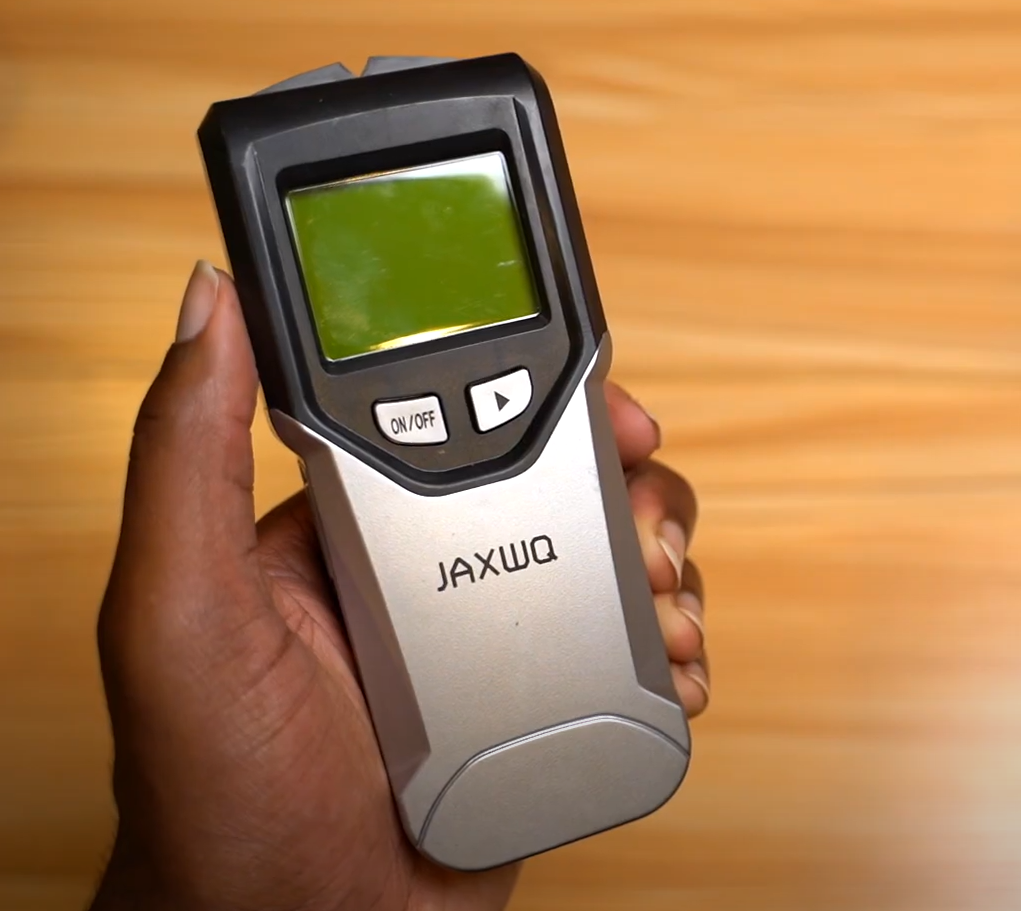
The JAXWQ wall stud finder is a budget-friendly, 5-in-1 stud finder wall scanner featuring an LCD display, auto-calibration, and an audio alarm. It can detect wood studs, metal studs, rebar, and live AC wiring, with multi-edge detection plus a center indicator so you know exactly where the stud is. It also has a small indentation at the top to mark your drill point directly on the wall. Basically, you get all the core stud-finding features you need, at a price that’s easy on your wallet.
On paper, it checks all the beginner-friendly boxes. But we wanted to see how it performed in reality. Check out our full JAXWQ Wall Stud Finder review for real results.
Key Features
- 5-in-1 scanning — wood studs, metal studs, joists, pipes, and live AC wiring
- Live wire detection active across all scanning modes
- HD LCD display shows center and edge detection clearly
- Deep Scan mode reaches up to 1.5 inches through two layers of drywall
- Most affordable option in this roundup
Pros
Accurate readings for its price
Detects live wires
Multi-mode scanning
Cons
Limited depth detection
No laser or advanced leveling
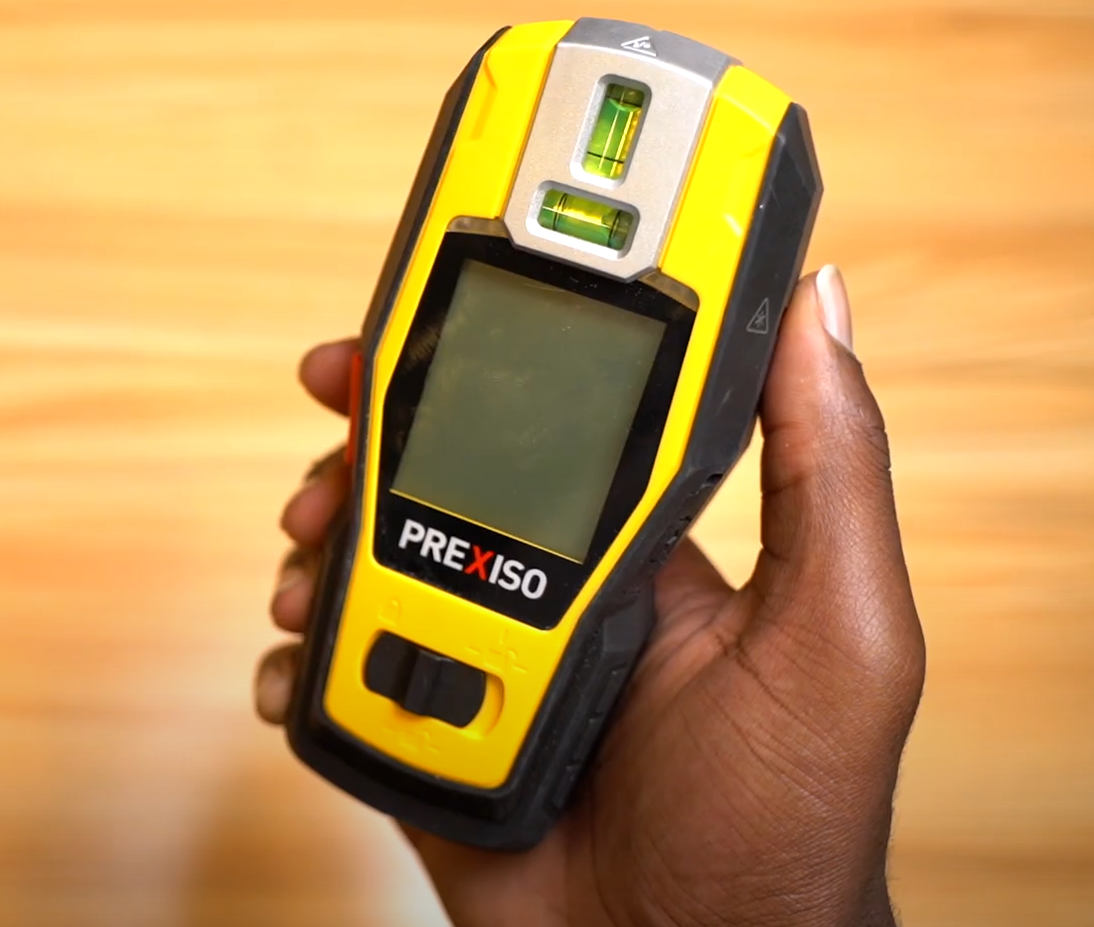
This 2-in-1 tool combines a stud finder with a built-in laser level, offering three scan modes for detecting wood studs, metal studs and live AC wiring. It also offers cross-line and horizontal laser modes — great for hanging shelves or picture frames evenly. It even includes a wall mount for hands-free leveling.
We tested both the stud-finding accuracy and whether that laser feature is actually useful in real projects. Read our full Prexiso 2-in-1 Laser & Stud Finder review.
Key Features
- 2-in-1 design — stud finder and laser level in one device
- Detects wood studs, metal studs, and live AC wiring
- Cross-line and horizontal laser modes for leveling
- Includes wall mount for hands-free use
- Mid-range price point with added functionality
Pros
Laser leveling included
Detects studs and live wires
Easy to use
Cons
Slightly heavier
Laser brightness could be stronger
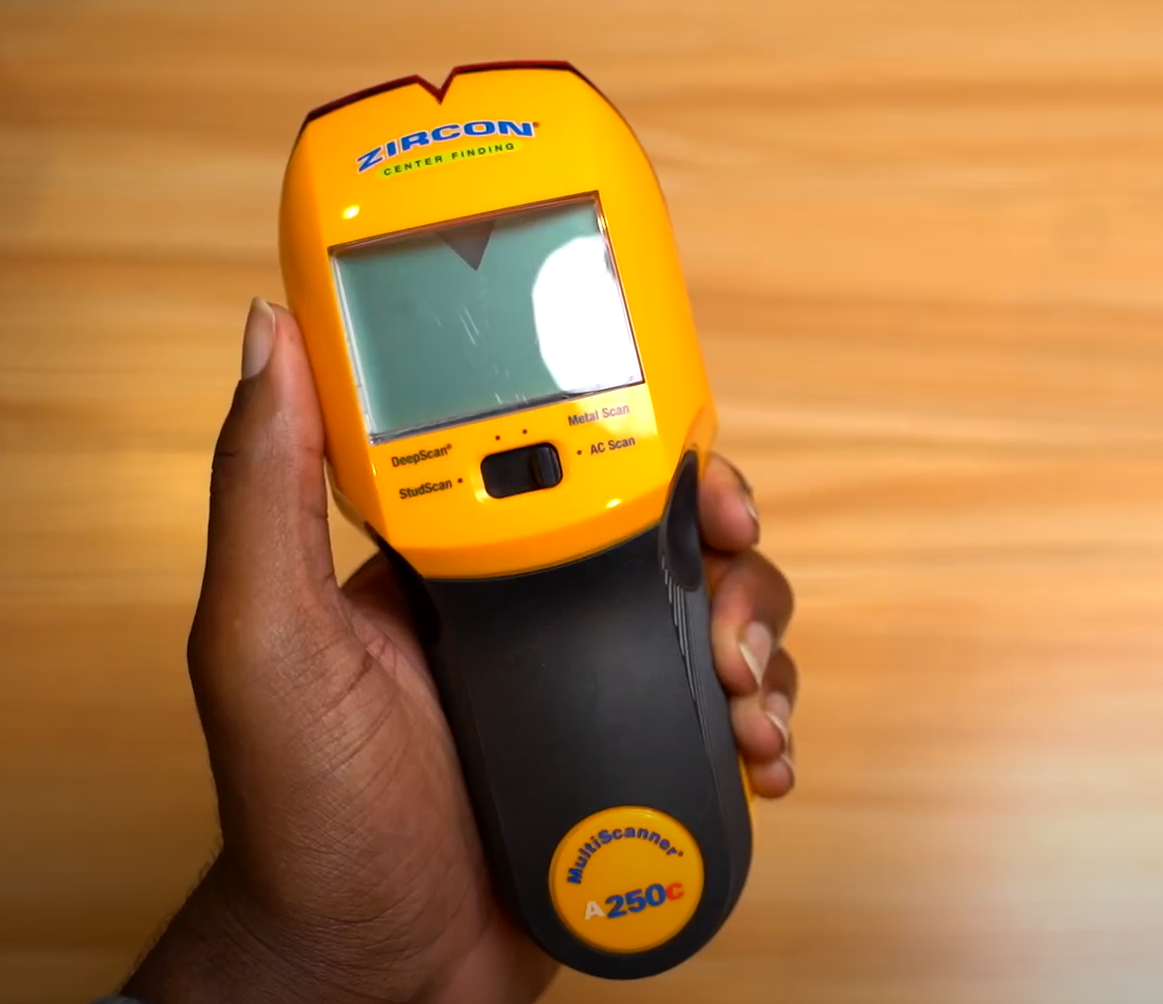
The Zircon came is a multi-purpose tool with four scan modes: Stud Scan, Deep Scan Mode, Metal Scan, and AC Scan. It also features Auto Correcting Technology, designed to reduce false readings and user error, making it an extremely accurate stud finder. A signal strength indicator helps distinguish shallow targets from deeper ones, and for thicker wall surfaces, Deep Scan Mode delivers more reliable, accurate readings than many other stud finders in its price range.
This brand has a solid reputation, so expectations were high. If you want to know more about its performance, read our full Zircon MultiScanner A250 review.
Key Features
- Four scanning modes — Stud Scan, Deep Scan, Metal Scan, and AC Scan
- Auto Correcting Technology to minimize false positives
- Established brand with a strong reputation for accuracy
- Mid-range price with professional-level features
- Detects wood studs, metal, and live AC wiring
Pros
Multiple scan modes
Auto-calibration reduces errors
Signal strength indicator
Cons
Doesn’t detect copper pipes
Slightly pricey for DIYers
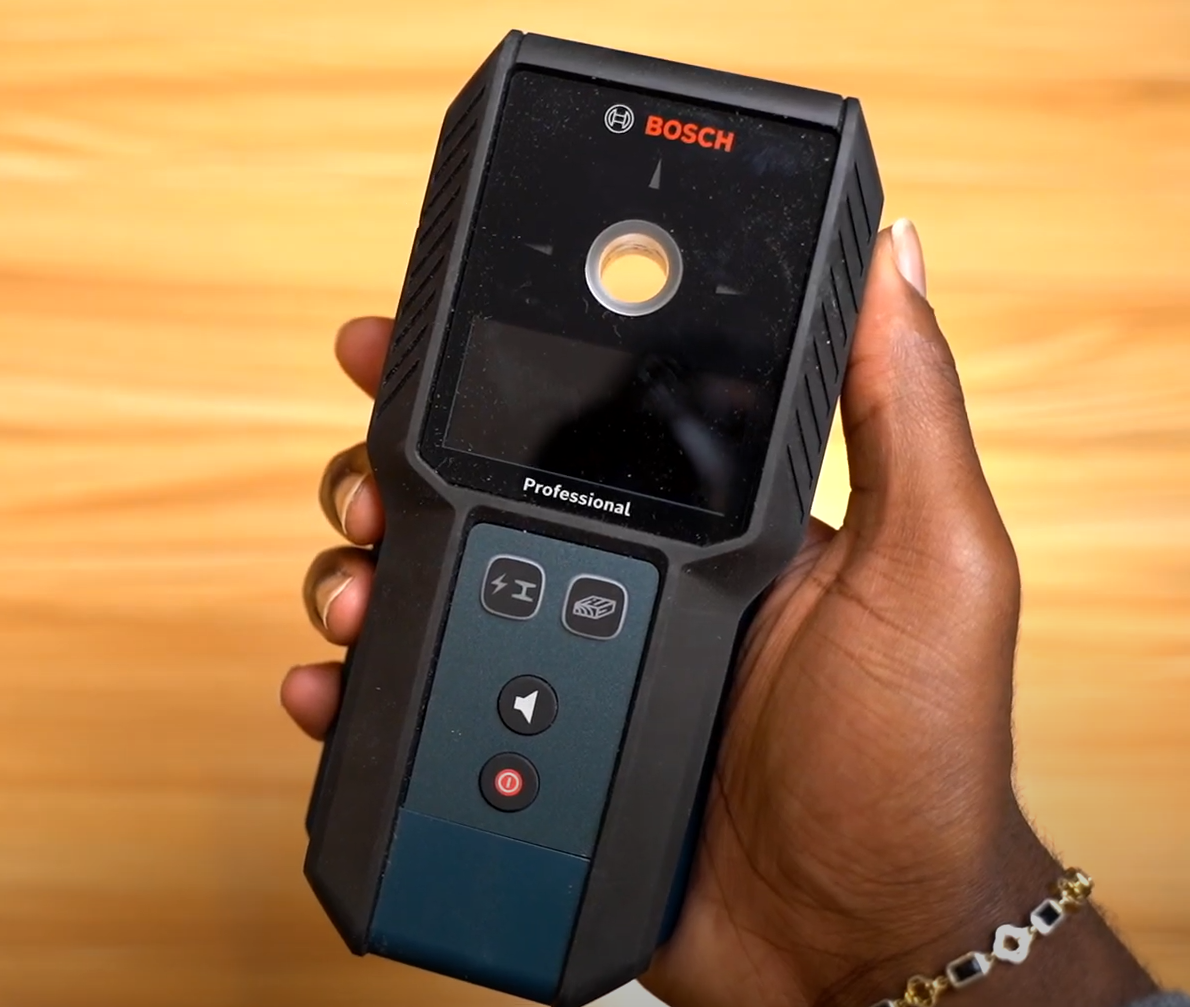
The most expensive tool in the lineup. Bosch wall scanner is known for being a professional-grade equipment. This scanner detects wood, metal studs, and live electrical wiring, and displays different icons to show what material is behind the wall. A red circle indicator helps pinpoint the center of a stud.
The question was: does the price actually translate to better performance? Read our Bosch GMS120-27 Wall Scanner review for the full performance.
Key Features
- Detects wood studs, metal studs, copper pipes, and live electrical wiring
- Color-coded LED ring identifies material type and center location
- Deep scan capability up to 4.7 inches
- IP54 rated — dust and water resistant for jobsite use
- Dual power — AA batteries or optional rechargeable Li-Ion battery
Pros
Detects copper and metal pipes
Accurate on thick drywall
Professional-grade display
Cons
Expensive
Slightly less accurate on thinner drywall
| Feature | JAXWQ | Prexiso 2-in-1 | Zircon A250 | Bosch GMS120-27 |
|---|---|---|---|---|
| Price | $22.99 | $49.99 | $59.99 | $90.94 |
| Price Range | Budget | Mid-Range | Mid-Range | Premium |
| Scanning Modes | 5 | 2 (Stud + Laser) | 4 | 3 |
| Stud Detection Depth | Up to 1.5 in | Standard drywall | Up to 1.5 in | Up to 1.5 in |
| Metal Detection Depth | Up to 2.36 in | ❌ Not specified | Up to 3 in (ferrous) | Up to 4.7 in |
| AC Wire Detection | ✅ Up to 2 in | ✅ | ✅ Up to 2 in | ✅ Up to 2 in |
| Display | HD LCD | LED indicators | LCD + SpotLite® Pointer | Illuminated marking ring |
| Audio Alerts | ✅ | ✅ | ✅ | ✅ |
| Built-in Laser Level | ❌ | ✅ | ❌ | ❌ |
| Auto-Correcting Technology | ❌ | ❌ | ✅ ACT™ | ❌ |
| IP Rating | ❌ | ❌ | ❌ | ✅ IP54 |
| Power Source | 9V battery | Rechargeable Li-ion | 9V battery | AA batteries or Li-ion |
| Best For | Budget DIYers | Hanging & leveling tasks | DIYers & contractors | Professionals & contractors |
Building a Real Test Wall
To make this test as realistic as possible, I brought in my handyman Jürheem, who literally builds and drills into walls for a living.

He constructed a mock drywall wall packed with:
• Wood studs
• Copper pipe
• Gas line
• Sewer pipe
• Ducting hose
• Electrical wire
• A live power cord

His expectation was simple: “When looking for a great stud finder, the number one feature should be ACCURACY.” So we started by putting each tool to the test to see how precise they really are.

How We Tested
We put the electronic stud finders through a series of practical tests to see how well they work in actual use. This included accuracy testing for wood studs, metal detection, gas line detection, electrical wiring, and ducting hoses, as well as overall safety. The goal was to find out which tools are truly reliable for home and DIY projects.
Test 1: Accuracy Test (Finding Wood Studs)
The most fundamental job of any stud finder. We tested how consistently each tool located stud edges and centers across three different drywall thicknesses to see which ones you can actually trust to mark the right spot.
Test 2: Metal Detection (Copper Pipe)
We hid a copper pipe behind the drywall to see which tools could detect non-ferrous metal. Missing a copper pipe mid-drill means a flooded wall and an expensive repair bill.
Test 3: Gas Line Detection
One of the most safety-critical tests. We ran each tool over a concealed gas line to see whether it registered any signal — because drilling into a gas line is not just costly, it’s dangerous.
Test 4: Electrical Wire (No Power)
We tested each scanner against an unpowered wire to see how it handles standard wiring with no active current. This reveals the limits of AC detection and what users should not assume when scanning.
Test 5: Ducting Hose
Duct work is common inside walls and ceilings. We tested whether each tool could pick up the presence of a ducting hose and how accurately it pinpointed the center location.
Test 6: Safety Test (Live Power Cord)
The most critical test of the entire review. We ran each tool over a live, active power cord to see whether the AC detection feature actually does its job when it counts most.
Performance Test Results
Test 1: Accuracy Test — Finding Wood Studs
To evaluate how effective each tool was at finding studs, we traced the actual stud positions directly onto the drywall and compared readings.
Zircon – As we dragged it across the wall, it beeped loudly and flashed red to indicate center — dead center and spot on.
Prexiso – It beeped and lit up at the stud edges. Left edge was accurate, right edge slightly off — but still usable.
JAXWQ – Marked the center correctly. Surprisingly accurate for the price.
Bosch – Beeps and displays a red center circle — but it was off to the left. We tested again on thinner drywall. Still off, even more than before.

| Product | Results |
|---|---|
| JAXWQ Wall Stud Finder | Hit the center accurately |
| Prexiso 2-in-1 Laser & Stud Finder | Beeped and lit up at the stud edges. The left edge was perfect, and the right edge was slightly off but still worked |
| Zircon MultiScanner A250 | Beeped and flashed red to show the center — perfectly on target. |
| Bosch GMS 120-27 Wall Scanner | Beeped and lit the center in red, slightly off to the left. Thinner drywall made it less precise |
Test 2: Metal Detection — Copper Pipe
We put the electronic stud finders through a series of practical tests to see how well they work in actual use. This included accuracy testing for wood studs, metal detection, gas line detection, electrical wiring, and ducting hoses, as well as overall safety. The goal was to find out which tools are truly reliable for home and DIY projects.
Zircon – Detected wall nails but missed the copper pipe.
Prexiso – Same result. Nails detected. No copper.
JAXWQ – Also detected nails only. No copper.
Bosch – Successfully detected the copper pipe, slightly off center, but clearly registered metal.

| Product | Results |
|---|---|
| JAXWQ Wall Stud Finder | Detected wall nails only; no copper |
| Prexiso 2-in-1 Laser & Stud Finder | Detected wall nails only; no copper |
| Zircon MultiScanner A250 | Detected wall nails only; no copper |
| Bosch GMS 120-27 Wall Scanner | Located the copper pipe. Slightly off-center, but metal was clearly detected. |
Test 3: Gas Line Detection
We checked how well each stud finder could detect hidden gas lines, a crucial safety feature. Tools were tested across the wall to see which models consistently warned of potential hazards before drilling.
Zircon – Detected the gas line with center slightly left, but overall accurate.
Prexiso – Inconsistent readings. Couldn’t find a reliable center.
JAXWQ – Detected the edges. If you calculate center from edges, it’s accurate.
Bosch – Accurate detection and center reading.

| Product | Results |
|---|---|
| JAXWQ Wall Stud Finder | Detected stud edges; calculating the center from the edges gave an accurate result |
| Prexiso 2-in-1 Laser & Stud Finder | Inconsistent readings. Couldn't find a reliable center |
| Zircon MultiScanner A250 | Detected the gas line; center slightly left but still generally accurate |
| Bosch GMS 120-27 Wall Scanner | Accurate detection and center reading |
Test 4: Electrical Wire (No Power)
We tested a standard electrical wire with no power running.
Result: None of the stud finders detected it.
So if you’re scanning for non-powered wiring, don’t rely on these tools alone.
| Product | Results |
|---|---|
| JAXWQ Wall Stud Finder | Failed to detect |
| Prexiso 2-in-1 Laser & Stud Finder | Failed to detect |
| Zircon MultiScanner A250 | Failed to detect |
| Bosch GMS 120-27 Wall Scanner | Failed to detect |
Test 5: Ducting Hose
This test measured each tool’s ability to detect hidden ducting hoses to prevent accidental damage during home projects.
Zircon – Detected ducting and nailed the center.
Prexiso – Detected edges; center slightly off.
JAXWQ – Recognized a wide area, showing something behind the wall.
Bosch – Detected and marked center accurately.

| Product | Results |
|---|---|
| JAXWQ Wall Stud Finder | Detected a wide area, indicating something was behind the wall |
| Prexiso 2-in-1 Laser & Stud Finder | Detected stud edges; center reading was a bit misaligned |
| Zircon MultiScanner A250 | Successfully detected the ducting and marked the center accurately |
| Bosch GMS 120-27 Wall Scanner | Successfully detected the ducting and identified the center correctly |
Test 6: Safety Test — Live Power Cord
This was the safety test — a live power cord behind the wall. Only Bosch detected it. It flashed a warning symbol and produced an alert sound — exactly what you want before drilling.

| Product | Results |
|---|---|
| JAXWQ Wall Stud Finder | Failed to detect |
| Prexiso 2-in-1 Laser & Stud Finder | Failed to detect |
| Zircon MultiScanner A250 | Failed to detect |
| Bosch GMS 120-27 Wall Scanner | Successfully detected it; warning symbol was displayed and produced an alert sound |
Overall Results
| Test | Zircon A250 | Prexiso 2-in-1 | JAXWQ | Bosch GMS120-27 |
|---|---|---|---|---|
| Accuracy — Wood Studs | ✅ Passed | ⚠️ Partial | ✅ Passed | ⚠️ Partial |
| Metal Detection — Copper Pipe | ❌ Failed | ❌ Failed | ❌ Failed | ⚠️ Partial |
| Gas Line Detection | ⚠️ Partial | ❌ Failed | ⚠️ Partial | ✅ Passed |
| Electrical Wire (No Power) | — Not Detected | — Not Detected | — Not Detected | — Not Detected |
| Ducting Hose Detection | ✅ Passed | ⚠️ Partial | ⚠️ Partial | ✅ Passed |
| Safety — Live Power Cord | ❌ Failed | ❌ Failed | ❌ Failed | ✅ Passed |
What to Look for in a Stud Finder
With so many stud finders available, it’s easy to focus on features and price. But based on our real-world testing, these are the factors that matter most when choosing the right one.
1. Detection Accuracy
Accuracy should be your top priority. A good stud finder consistently locates the center of a stud, helping you avoid mistakes and unnecessary wall damage. Our tests showed that a higher price doesn’t always mean better performance — the budget JAXWQ actually outperformed the more expensive Bosch in basic stud detection.
2. Scanning Depth
Most drywall is about ½ inch thick, but some walls are much thicker. Look for a tool with at least 1.5 inches of scanning depth. If you frequently work with plaster walls or double-layer drywall, a deep scan mode is worth having.
3. Scan Modes
For simple picture hanging, basic stud detection may be enough. However, if you’re installing shelves, running cables, or working near pipes, choose a tool that also detects metal and live AC wiring.
4. Live Wire Detection
Safety matters. In our tests, only the Bosch successfully detected a live power cord. If electrical safety is important, pay attention to real-world performance rather than marketing claims. Keep in mind that no stud finder can detect wires that aren’t carrying power.
5. Display and Alerts
A clear display makes scanning much easier. A backlit screen with visual indication and audio alerts helps you find studs more accurately, especially in low-light conditions.
6. Ease of Use
Proper calibration is essential for accurate readings. Features like auto-calibration can reduce user errors and make the tool easier to use, especially for beginners.
7. Build Quality
A comfortable grip helps you maintain steady contact with the wall for more accurate scans. If you’ll be using the tool frequently or on job sites, a durable design is worth the investment.
8. Price vs. Performance
Don’t assume the most expensive model is the best. Our testing showed that a $22.99 budget stud finder matched or even outperformed a $90.94 premium scanner in several areas. Focus on proven performance rather than price alone.
How to Use a Stud Finder Effectively
Using a stud finder correctly makes the difference between a clean, accurate result and a wall full of unnecessary holes. Here’s a simple step-by-step guide to get the most out of your tool every time.
Step 1: Install a Fresh Battery
Before anything else, make sure your stud finder has a new, fully charged battery. A weak battery is the most common cause of inaccurate or inconsistent readings. For tools that require a 9V battery like the Zircon A250, always use a brand-new alkaline battery with an extended expiration date.
Step 2: Choose the Right Scanning Mode
Most electronic stud finders come with multiple modes. Start with StudScan for standard drywall. Switch to DeepScan if you’re working on thicker or older walls. Use Metal Scan when you need to check for pipes or metal objects, and AC Scan when you want to trace or map live electrical wiring.
Step 3: Calibrate the Tool
For electric stud finders, place the tool flat against the wall and press and hold the power button until it calibrates — usually indicated by a beep or flash. Always calibrate on a clear section of wall away from any studs. Never start calibrating directly over a stud or the readings will be thrown off from the start. Keep in mind that electric stud finders can be affected by high humidity or moisture content in a wall, which can skew readings, so avoid scanning surfaces that are damp or recently painted.
Step 4: Scan Slowly Across the Wall
For electric stud finders, keep the tool flat against the wall and slide it slowly and steadily in one direction, maintaining consistent pressure throughout the scan. Moving too fast is one of the most common mistakes — it causes the tool to miss edges and produce incomplete readings. For magnetic stud finders, hold the tool against the wall and move it in a sweeping S-motion to quickly detect studs, or use a zig-zag motion until the magnets find a fastener like a nail or screw.
Step 5: Mark the Edges
When the tool beeps or lights up, you’ve hit the edge of a stud. Mark that spot lightly with a pencil. Continue sliding in the same direction until the tool signals again. That’s the other edge. The center of the stud sits exactly halfway between the two marked edges.
Step 6: Confirm the Center
On tools with a center-finding feature like the Zircon’s SpotLite® pointer, the tool will signal again when it reaches the stud’s center directly. Mark that spot. That’s your drilling point.
Step 7: Verify Before Drilling
Run the scan a second time to confirm your markings. If results are inconsistent, replace the battery, recalibrate on a clear section of wall, and scan again. Never drill based on a single uncertain reading especially near areas where wiring or plumbing may be present.
Frequently Asked Questions
How do stud finders work?
Most electronic stud finders detect changes in wall density as you slide them across the surface. When the density increases — typically where a stud, pipe, or wire is present — the tool signals a hit through a beep, light, or LCD display. For AC wire detection, the tool picks up the electrical field produced by live wiring rather than density changes. This is why unpowered wires cannot be detected — no current means no electrical field to pick up.
What’s the difference between magnetic and electronic stud finders, and which should I choose?
Magnetic stud finders locate nails or screws in studs and don’t require batteries, but they can’t see the whole stud or detect live wires. Electronic stud finders are battery-powered and use sensors to read density changes, find stud edges and centers, often add deep-scan modes for thicker drywall, and some can detect live electrical wires. If you want simple, battery-free spot checks, magnetic works; for accurate center/edge locating, thicker walls, and added safety features, choose an electronic model.
What are the different types of stud finders?
There are two main types of stud finders: magnetic and electronic. Magnetic stud finders detect metal fasteners like nails and screws that are driven into studs. They’re simple, affordable, and don’t require batteries.
Electronic stud finders are more advanced and work by detecting changes in wall density as you slide them across the surface. Most modern electronic models also include additional detection modes for metal objects and live AC wiring. For most home improvement and DIY projects, an electronic stud finder gives you more accurate and reliable results than a magnetic one.
What is the most accurate stud finder?
Based on our hands-on testing, the Zircon MultiScanner A250 delivered the most consistent results on wood stud detection. The Bosch GMS120-27 was the strongest overall performer across all six tests, particularly on metal detection and live wire detection. For budget accuracy, the JAXWQ surprised us by matching the Zircon on basic stud detection at a fraction of the price.
Can stud finders detect pipes and wires?
It depends on the tool and the type of pipe or wire. In our testing, only the Bosch successfully detected a copper pipe, and only the Bosch triggered an alert on the live power cord safety test. All four tools failed to detect an unpowered electrical wire — which is expected, since stud finders rely on live electrical fields to flag wiring.
Do stud finders work on plaster walls?
Yes, but with reduced reliability. Plaster walls are denser and thicker than standard drywall, which can interfere with readings. Use DeepScan mode if available, move slowly, and try Metal Scan mode to detect the nail or screw pattern holding the lath in place.
How deep can a stud finder detect?
It varies by tool and mode. Standard StudScan typically reaches ¾ in. (19 mm), while DeepScan doubles that to 1½ in. (38 mm). The Bosch GMS120-27 offers the deepest metal detection in this group at up to 4.7 inches.
Is a more expensive stud finder worth it?
Not always. Our testing showed the budget JAXWQ at $22.99 matched the $90.94 Bosch on wood stud accuracy. However, the Bosch was the only tool to detect live wiring and copper pipe — capabilities that justify the premium price if safety and metal detection are priorities for your work.
What are the different types of stud finders?
There are two main types of stud finders: magnetic and electronic. Magnetic stud finders detect metal fasteners like nails and screws that are driven into studs. They’re simple, affordable, and don’t require batteries.
Electronic stud finders are more advanced and work by detecting changes in wall density as you slide them across the surface. Most modern electronic models also include additional detection modes for metal objects and live AC wiring. For most home improvement and DIY projects, an electronic stud finder gives you more accurate and reliable results than a magnetic one.
What is the most accurate stud finder?
Based on our hands-on testing, the Zircon MultiScanner A250 delivered the most consistent results on wood stud detection. The Bosch GMS120-27 was the strongest overall performer across all six tests, particularly on metal detection and live wire detection. For budget accuracy, the JAXWQ surprised us by matching the Zircon on basic stud detection at a fraction of the price.
Can stud finders detect pipes and wires?
It depends on the tool and the type of pipe or wire. In our testing, only the Bosch successfully detected a copper pipe, and only the Bosch triggered an alert on the live power cord safety test. All four tools failed to detect an unpowered electrical wire — which is expected, since stud finders rely on live electrical fields to flag wiring.
Do stud finders work on plaster walls?
Yes, but with reduced reliability. Plaster walls are denser and thicker than standard drywall, which can interfere with readings. Use DeepScan mode if available, move slowly, and try Metal Scan mode to detect the nail or screw pattern holding the lath in place.
How deep can a stud finder detect?
It varies by tool and mode. Standard StudScan typically reaches ¾ in. (19 mm), while DeepScan doubles that to 1½ in. (38 mm). The Bosch GMS120-27 offers the deepest metal detection in this group at up to 4.7 inches.
Is a more expensive stud finder worth it?
Not always. Our testing showed the budget JAXWQ at $22.99 matched the $90.94 Bosch on wood stud accuracy. However, the Bosch was the only tool to detect live wiring and copper pipe — capabilities that justify the premium price if safety and metal detection are priorities for your work.
Final Verdict: Which is the best stud finder?
After putting all four stud finders through the same real-world conditions — wood studs, copper pipe, gas lines, live wiring, and more — both budget and premium options showed their strengths and weaknesses. We asked our professional handyman Jürheem for his top picks, and here’s what he recommends:
If money wasn’t an issue:
👉 Bosch GMS 120-27
The strongest all-around performer in our tests. This stud detector was the only tool to detect a live power cord and the only one to register the copper pipe — the two most safety-critical results in our entire test. If you’re a serious DIYer or professional contractor who needs a tool you can fully depend on before drilling, the Bosch is worth every penny.
If you’re on a budget:
👉 Zircon MultiScanner A250
It came closer to the Bosch than any other tool in this lineup. It nailed wood stud detection, delivered clean results on the ducting hose test, and comes loaded with useful features like ACT™ auto-correction and a SpotLite® pointer — all at a mid-range price. For most everyday home improvement tasks, it is a reliable stud finder that absolutely gets the job done.
Which stud finder would you choose for your next project? Drop a comment below and share your pick!
For more hands-on product reviews, comparisons, and expert recommendations, sign up for our weekly newsletter to stay updated on the latest tools and testing results.