Advertising Disclosure
Prexiso 2-in-1 Stud Finder Review: Two Tools in One — Worth It or Skip It?
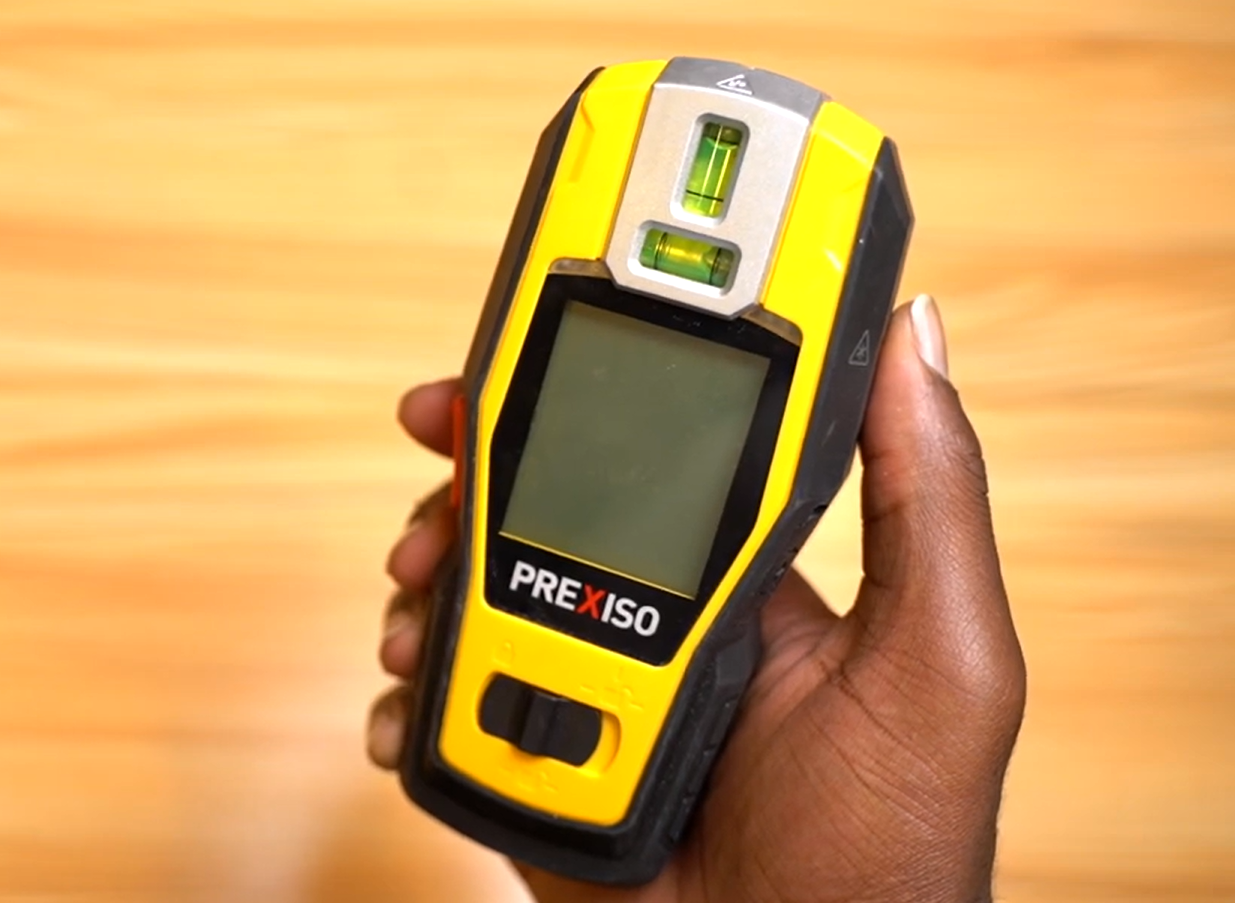
Most people already own a stud finder. Most people already own a level. The problem is they are never in the same hand at the same time when you actually need them.
That is exactly the problem this Prexiso 2-in-1 Stud Finder Review sets out to answer — a stud finder and laser level combined into one rechargeable device. Find the stud, project a level line, and mark your drill point without changing tools.
But does it actually work as well as it sounds? We built a dedicated mock wall loaded with wood and metal studs, copper pipes, gas lines, live electrical wiring, and more, and put the Prexiso laser stud finder through every scenario a real wall could throw at it.
Some results impressed us. Others raised concerns. And one finding is something every buyer should know before spending their money.
If you are also weighing the Prexiso against other top stud finders on the market, check out our complete stud finder roundup so you can find the best stud finder for your needs.
⭐ Quick Verdict
The Prexiso 2-in-1 is a convenient and practical combo tool for everyday hanging and mounting tasks but our live wall test revealed one critical limitation worth knowing before you buy.
What it does well:
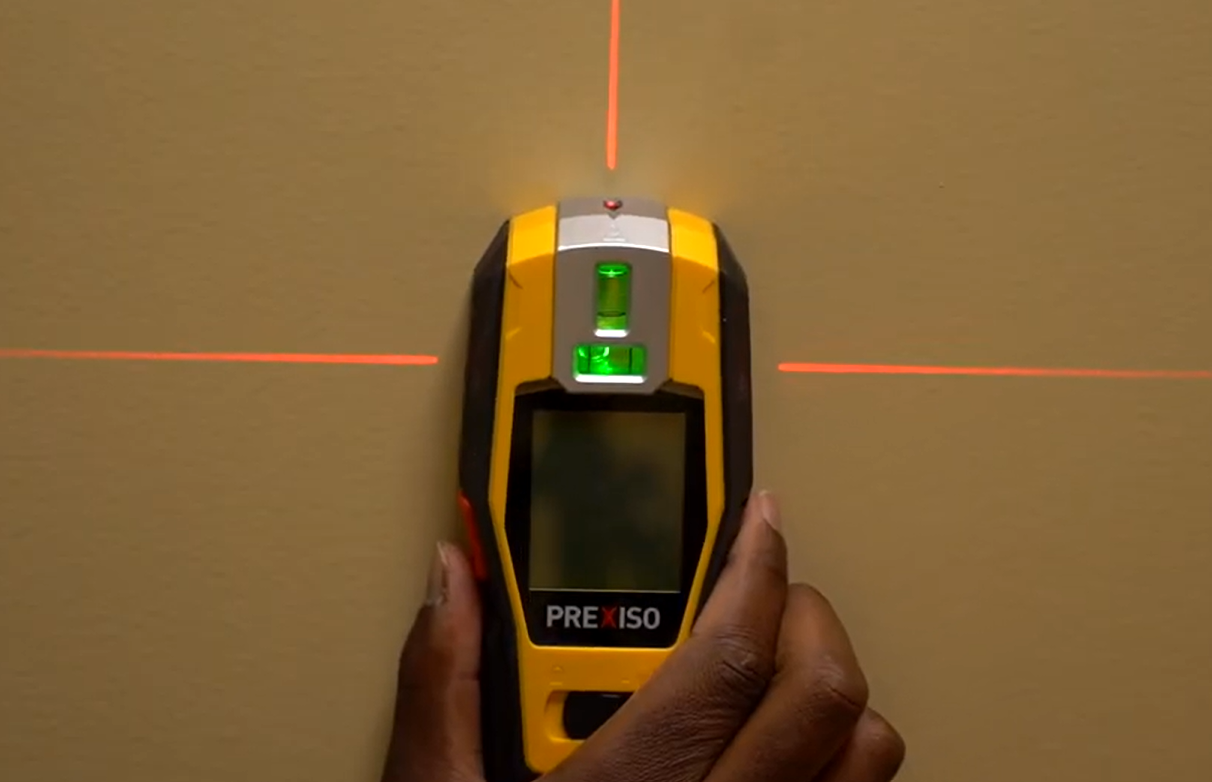
Automatically projects a laser line the moment a stud edge is detected
Wood stud detection is reliable enough for standard drywall and wood walls
Built-in laser level eliminates the need for a separate alignment tool
Stud detection works even without a charged battery
Where it falls short:
Failed to detect live electrical wiring through drywall under real test conditions
Accurately detects wood studs but delivers inconsistent edge-to-edge readings
Unable to detect copper pipes or gas lines reliably
Manual leveling only — not self-leveling
Prexiso 2-in-1 Stud Finder with Laser Level: Key Features & Specifications
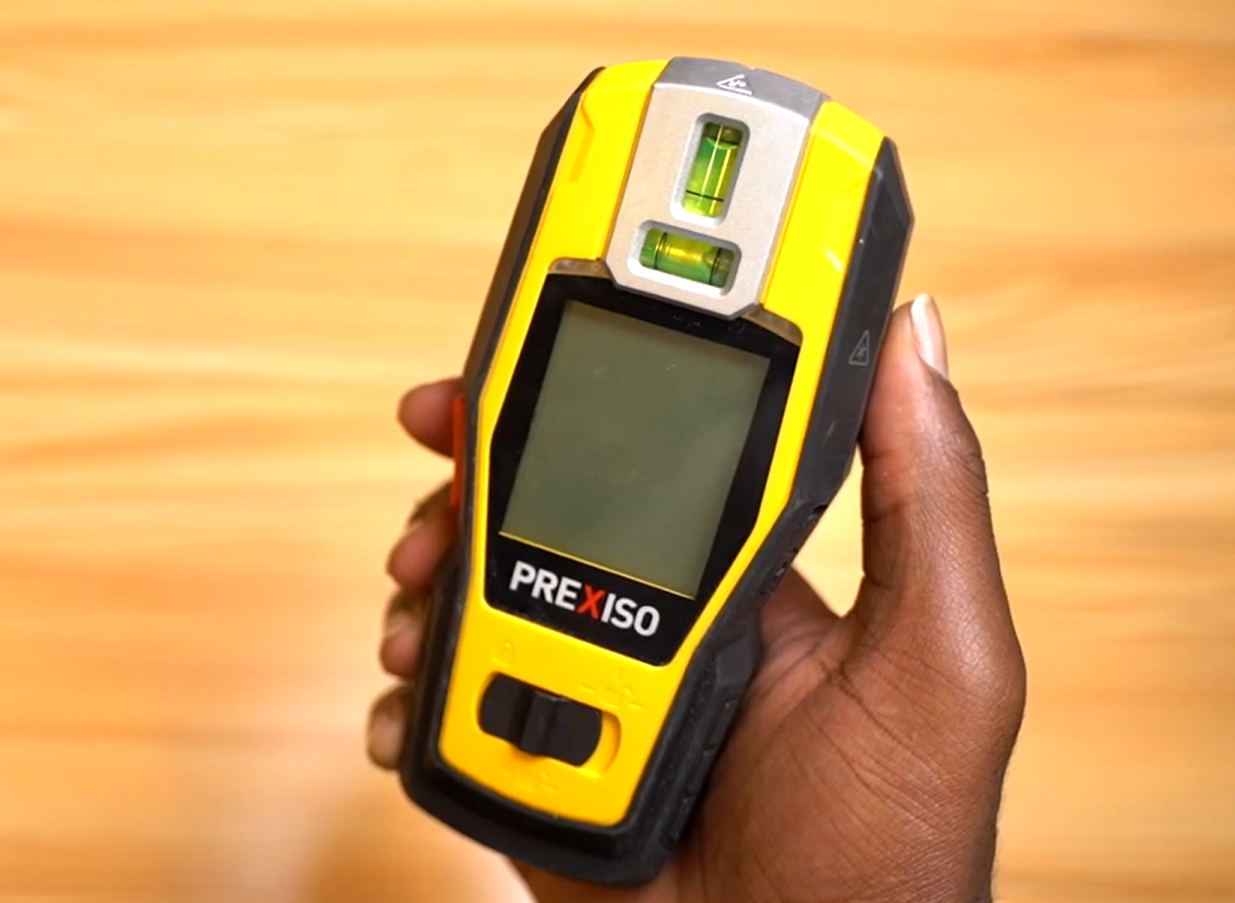
The Prexiso 2-in-1 is a stud finder and laser level combined into a single device — two tools that are almost always used together, finally built as one. Instead of putting down your stud finder to pick up a level, the Prexiso lets you locate the stud and confirm your installation is perfectly level in the same motion. It detects wood and metal studs, and live AC wiring while simultaneously projecting a laser line across the wall so everything you hang, mount, or install comes out straight the first time.
Key Features
Two Tools in One Device
Rather than juggling a separate stud finder and laser level on every project, this multifunctional tool combines both into a single compact tool — find the stud and line everything up perfectly without ever putting the device down.
Wood, Metal, and Live AC Wire Detection
Scans through drywall to locate wood and metal studs up to 3/4 inch deep and flags live electrical wiring up to 1-1/2 inches deep — giving you a clear picture of what is behind the wall before you commit to drilling.
Automatic Laser Projection on Stud Edge Detection
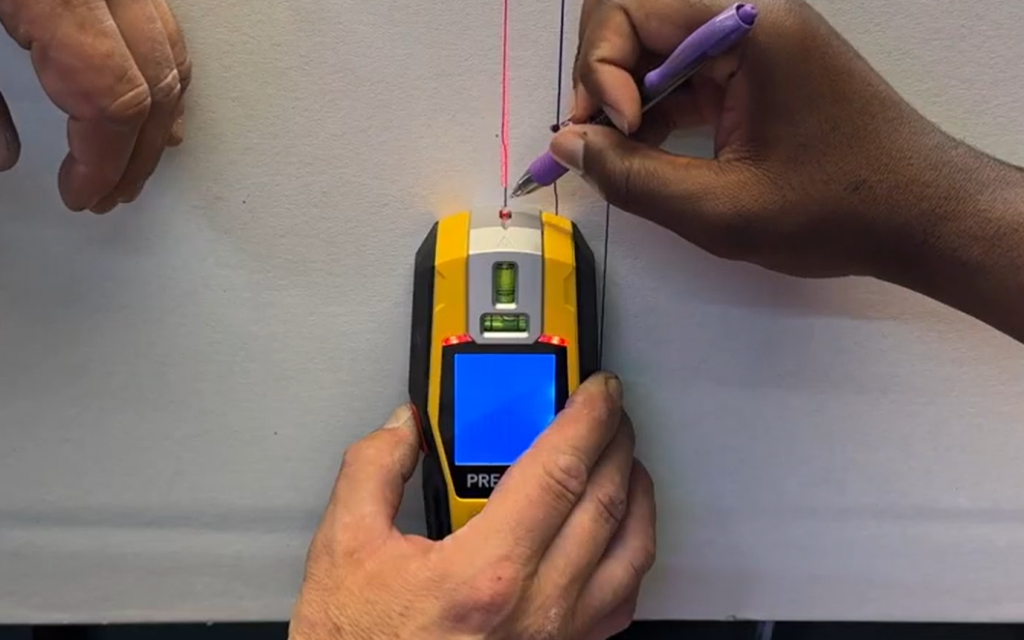
The moment the device picks up a stud edge, it does three things at once — fires the vertical laser line, turns the top LED indicators red, and sounds an audio alert. No manual switching needed — the tool tells you exactly where to mark.
Three Laser Line Modes
Switch between cross-line, horizontal, and vertical laser projections depending on what the job calls for. The laser working range typically reaches up to 30 feet across all three modes — enough coverage for virtually any indoor wall or ceiling task.
Rechargeable via USB-C With Up to 5 Hours of Use
A built-in Li-ion battery keeps the device running for up to 5 hours on a single charge and refuels through any standard USB-C cable — no hunting for replacement batteries mid-project.
LED Bubble Vials for Manual Leveling
Two built-in bubble vials illuminate during laser mode so you can visually confirm your alignment is true before committing to a mark — no separate level required.
360° Rotating Wall Mount for Hands-Free Use
The included wall mount rotates a full 360 degrees and attaches to both rough and smooth surfaces — freeing up both hands when you need the laser line to stay in place while you work.
Shock-Resistant Rubber Body
The outer casing is wrapped in TPE soft rubber that absorbs impact and provides a non-slip grip — practical for anyone who works quickly or in tight spaces where dropping a tool is a real possibility.
Stud Detection Works Without Charging
The electronic stud detection function operates independently of the rechargeable battery so even if the device runs out of charge, you can still locate wood and metal studs without needing to stop and recharge first. Only the laser level function requires the battery to be charged.
Specifications
| Specification | Details |
|---|---|
| Product Name | Prexiso 2-in-1 Stud Finder with Laser Level |
| Price | $49.99 |
| Dimensions | 6.61 x 3.54 x 1.69 inches |
| Wood & Metal Stud Detection Depth | Up to 3/4 inch (19mm) |
| AC Wire Detection Depth | Up to 1-1/2 inches (38mm) |
| Laser Range | Up to 30 feet |
| Laser Modes | 3 — Cross-line, Horizontal, Vertical |
| Laser Type | Class II — maximum output less than 1mW |
| Leveling Type | Manual leveling — not self-leveling |
| Bubble Vials | 2 — Horizontal and Vertical with LED illumination |
| Battery Type | Rechargeable Li-ion via USB-C |
| Battery Life | Up to 5 hours continuous use |
| Stud Detection Without Charge | ✅ Works without battery for stud detection |
| Auto Laser Projection on Stud Edge | ✅ |
| Audio Alert | ✅ |
| LED Indicators | ✅ |
| Wall Mount | ✅ 360° rotating wall mount included |
| Casing Material | TPE soft rubber — shock resistant |
| Target Materials | Wood studs, metal studs, joists, pipes, live AC wiring |
| Warranty | 2 years |
| What's in the Box | Device, Type-C charging cable, 360° wall mount with 2 pins, 6 self-adhesive strips, portable storage bag, user manual |
How We Tested the Prexiso 2-in-1 Stud Finder
Testing Setup
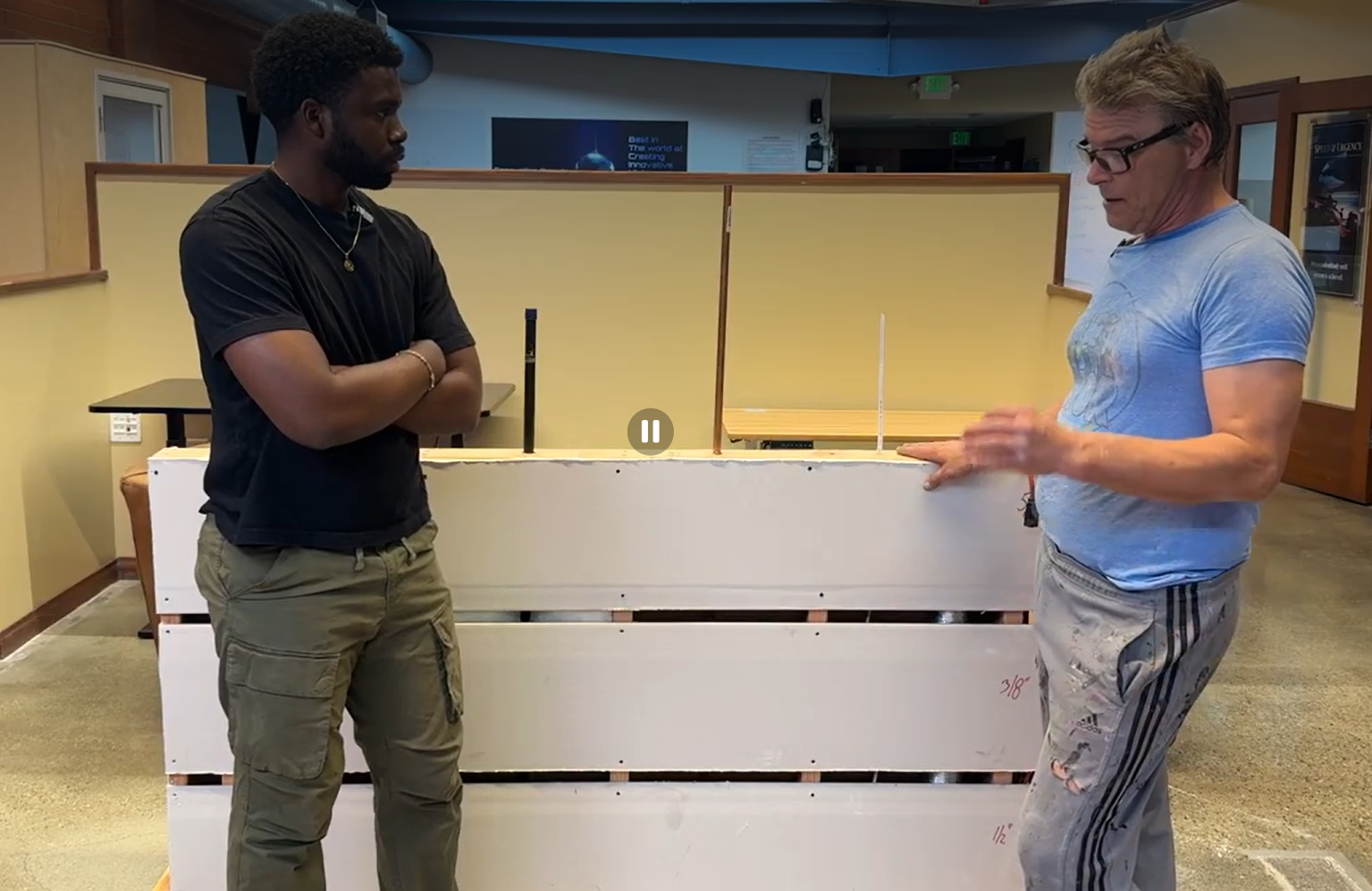
To test the Prexiso 2-in-1 Stud Finder under realistic conditions, we built a mock wall similar to what you would find in a typical home. We used three drywall thicknesses to see how well the scanner performs at different wall depths:
Bottom section — 1/2 inch drywall
Middle section — 3/8 inch drywall
Top section — 5/8 inch drywall
What Was Hidden Behind the Wall
To simulate real-world conditions, our handyman placed several common wall materials behind the drywall, including:
Live electrical wiring — an extension cord connected to a live outlet to replicate active wiring conditions
Standard wiring
Copper pipe
Gas line
Sewer pipe
Duct tape along the top section
What We Were Testing For
The most important thing in a stud finder is accuracy. As our handyman put it, “When looking for a great stud finder, the number one feature should be accuracy.” Whether you’re a professional contractor or a DIY homeowner, you need to know exactly what’s behind the wall before drilling or mounting anything.
Performance Test Results
Accuracy Test — Finding Wood Studs
Observation
The Prexiso detected the stud edges with visual and audible guidance — a red light indicator and audible alert firing as each edge was found. The left side delivered a precise edge marking but the right side landed slightly off the actual stud edge location.
Result
Mostly accurate but inconsistent between edges. Reliable enough for general stud location but not precise enough for anyone who needs exact edge-to-edge accuracy before drilling.
Metal Detection — Copper Pipe
Observation
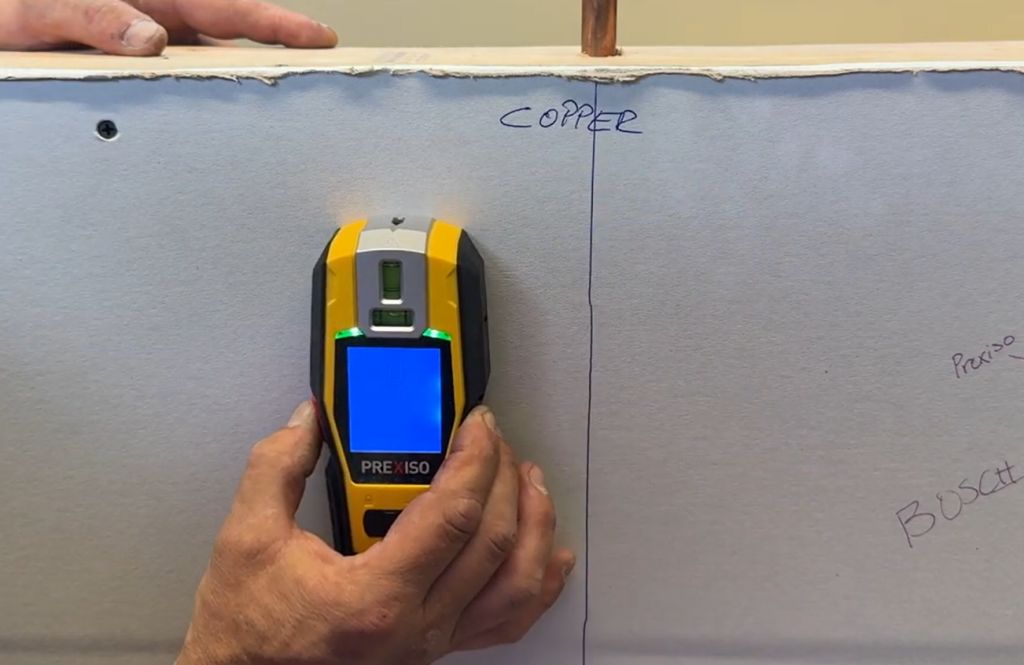
The Prexiso passed over the copper pipe without any response. However it did pick up the nail on the drywall quickly and without any issues.
Result
The Prexiso failed to detect the copper pipe entirely. It is not designed for copper pipe detection but its ability to pick up nails and metal fasteners in the drywall confirms its electronic stud detection is functioning as intended.
Gas Line Detection
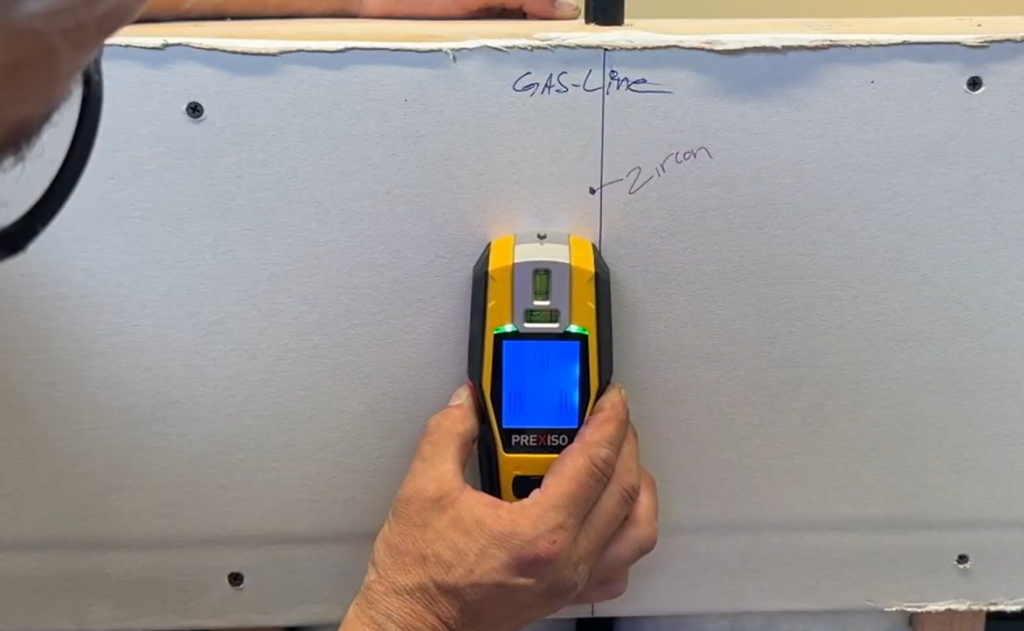
Observation
The Prexiso struggled significantly here. It initially showed no response at all as it moved over the gas line, then began beeping intermittently — but never once settled on a consistent or accurate center reading.
Result
The Prexiso failed this test. The erratic and inconsistent readings make it completely unreliable for gas line detection. It should not be used to locate gas lines before drilling or cutting into a wall.
Electrical Wire (No Power)
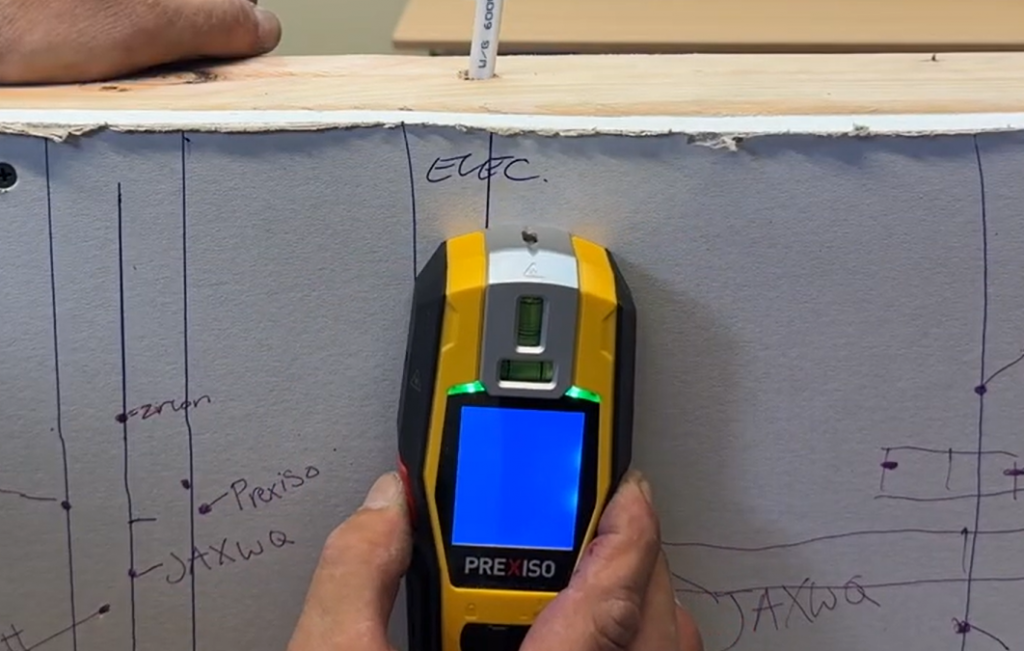
Observation
The Prexiso showed no response when passed over the electrical wire with no power running through it.
Result
No detection which is expected behavior. The Prexiso is designed to detect live AC wiring only. An unpowered wire carries no electrical current and therefore produces no signal for the device to pick up. This is not a flaw but it is how the tool is intended to work.
Ducting Hose Detection
Observation
The Prexiso picked up the edges of the duct as it moved across the wall. The detection was present and functional but the center reading came in slightly to the left of the actual duct location.
Result
A decent but imperfect result. The Prexiso detected the duct and gave a usable reading but the slight left-of-center shift means double-checking the exact location before drilling is recommended for anything requiring precision.
Safety Test — Live Power Cord
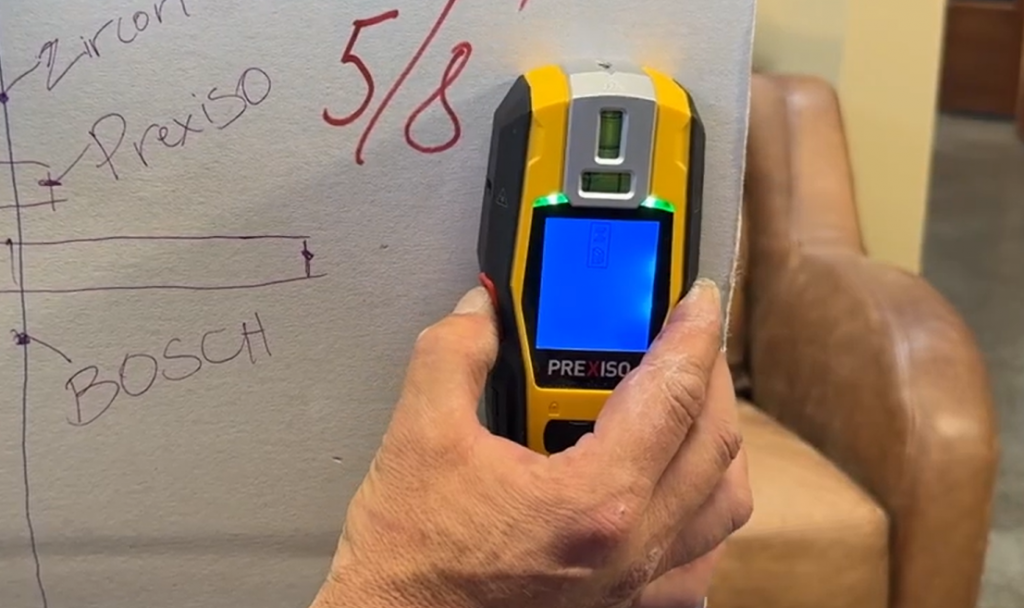
Observation
The Prexiso stud finder was tested against a power cord with live electricity running through it. Despite the active current, the device showed no response and failed to register the presence of the live wire at any point during the scan.
Result
The Prexiso failed this test and this is the most critical limitation to flag. Live wire detection is one of its advertised features, yet it could not detect an actively powered cord behind the wall under real test conditions. This is a significant safety concern for anyone relying on it to identify live electrical hazards before drilling.

Overall Results
| Test | Expected Outcome | Actual Result | Verdict |
|---|---|---|---|
| Wood Stud Detection | Accurately detects and locates stud edges behind drywall | Left edge accurate — right edge came in slightly off | ⚠️ PARTIAL |
| Copper Pipe Detection | Detects and locates copper pipe behind drywall | No response to copper pipe — only picked up nail on drywall | ❌ FAILED |
| Gas Line Detection | Accurately detects and locates gas line behind drywall | Erratic and inconsistent readings — never settled on a center | ❌ FAILED |
| Electrical Wire — No Power | N/A — unpowered wire not detectable by design | No response as expected — not a flaw | ✅ EXPECTED |
| Ducting Hose Detection | Accurately detects and locates ducting hose behind drywall | Detected duct edges but center reading came in slightly left | ⚠️ PARTIAL |
| Live Electrical Wire Detection | Detects and warns of live electrical cable through drywall | No response to live powered cord — complete detection failure | ❌ FAILED |
| Overall Result | ❌ FAILED |
Prexiso 2-in-1 Stud Finder Pros and Cons
✅ Pros
Combines a stud finder and laser level in one device — a versatile and reliable tool for a wide range of indoor projects
Automatically projects the laser line the moment a stud edge is detected
Three laser line modes — cross-line, horizontal, and vertical — up to 30 feet
Stud detection works even without a charged battery
Rechargeable stud finder via USB-C with up to 5 hours of use
360° rotating wall mount included for hands-free laser use
❌ Cons
Failed to detect live electrical wiring through drywall — a serious safety concern
Inconsistent edge-to-edge accuracy on wood stud detection
Unable to detect copper pipe or gas lines reliably
Manual leveling only — not self-leveling
Bubble vials only active in laser mode — not during stud finder mode
Requires calibration each time the device is turned on
Prexiso 2-in-1 Laser Stud Finder Vs Other Electronic Stud Finders
| Feature | Prexiso 2-in-1 | JAXWQ Stud Finder | Zircon MultiScanner A250 | Bosch GMS120-27 |
|---|---|---|---|---|
| Price Range | Mid-Range | Budget | Mid-Range | Premium |
| Scanning Modes | 2 (Stud + Laser) | 5 | 4 | 3 |
| Stud Detection Depth | Standard drywall | Up to 1.5 in | Up to 1.5 in | Up to 1.5 in |
| Metal Detection Depth | ❌ Not specified | Up to 2.36 in | Up to 3 in (ferrous) | Up to 4.7 in |
| AC Wire Detection | ✅ | ✅ Up to 2 in | ✅ Up to 2 in | ✅ Up to 2 in |
| Display | LED indicators | HD LCD | LCD + SpotLite Pointer | Illuminated marking ring |
| Audio Alerts | ✅ | ✅ | ✅ | ✅ |
| Built-in Laser Level | ✅ | ❌ | ❌ | ❌ |
| Auto-Correcting Technology | ❌ | ❌ | ✅ ACT | ❌ |
| IP Rating | ❌ | ❌ | ❌ | ✅ IP54 |
| Power Source | Rechargeable Li-ion | 9V battery | 9V battery | AA batteries or Li-ion |
| Best For | Hanging & leveling tasks | Budget DIYers | DIYers & contractors | Professionals & contractors |
vs JAXWQ Stud Finder
The JAXWQ is the most affordable option in this lineup and covers more scanning modes than the Prexiso — but what it gains in versatility it loses in added functionality. The Prexiso’s built-in laser level is the defining advantage here. If your project involves hanging pictures, mounting shelves, or anything that requires both stud detection and alignment, the Prexiso does both in one tool without needing a separate level. The JAXWQ finds studs — the Prexiso finds studs and lines everything up at the same time. Read our full JAXWQ Stud Finder review to see how it performed in our live wall test.
vs Zircon MultiScanner A250
The Zircon MultiScanner A250 is a strong mid-range competitor with four scanning modes and Auto-Correcting Technology designed to reduce false readings — something the Prexiso does not have. For pure stud detection accuracy, the Zircon has an edge. But the Prexiso brings something the Zircon cannot — a built-in rechargeable laser level that eliminates the need for a separate alignment tool entirely. If your work involves as much leveling as it does stud finding, the Prexiso is the more practical and complete package. Read our full Zircon MultiScanner A250 review to see how it performed in our live wall test.
vs Bosch GMS120-27
The Bosch GMS120-27 is the most capable scanner in this comparison — deeper detection, IP54 weather resistance, and professional-grade multi-material scanning that the Prexiso cannot match. But it also costs more than double the Prexiso’s price and is aimed squarely at trade professionals. For everyday DIY projects that involve hanging, mounting, and leveling, the Prexiso delivers everything most homeowners actually need at a fraction of the cost. The Bosch is the better tool for complex jobs — the Prexiso is the smarter choice for everyday use. Read our full Bosch GMS120-27 Wall Scanner review to see how it performed in our live wall test.
Is the Prexiso 2-in-1 Laser Stud Finder Right for You?
Who Should Buy:
DIY homeowners tackling hanging and mounting projects
Anyone who needs both stud detection and laser alignment in one tool
First-time stud finder users who want a simple and intuitive device
Anyone looking for a practical mid-range option between budget and premium
Who Should Skip:
Anyone who needs reliable live electrical wire detection before drilling
Those who need to locate copper pipes or gas lines behind walls
Anyone who needs a self-leveling laser rather than manual leveling
Professionals or contractors working on complex multi-material detection jobs
Frequently Asked Questions
1. Does the Prexiso 2-in-1 detect live electrical wiring?
It claims to — but our live wall test told a different story. The Prexiso failed to detect an actively powered cord behind the drywall under real test conditions. While the specification states it detects live AC wiring up to 1-1/2 inches deep, our test showed no response to a live power cord. If electrical safety is a priority on your project, using a dedicated wire detector alongside the Prexiso is strongly recommended.
2. Is the Prexiso laser level self-leveling?
No. The Prexiso uses manual leveling — meaning you have to use the two built-in bubble vials to align the laser line yourself before projecting it. It is not a self-leveling laser which automatically adjusts to find true horizontal or vertical on its own. For most everyday hanging and mounting tasks this is perfectly fine, but if you need a hands-free self-leveling experience you would need a more advanced laser level.
3. Can the Prexiso detect copper pipes or gas lines?
No for copper pipes — our test confirmed zero response. For gas lines, the readings were erratic and inconsistent throughout the test. The Prexiso is not designed for pipe or gas line detection and should not be relied upon for either material. A dedicated multi-material wall scanner like the Bosch GMS120-27 would be the more appropriate tool for those tasks.
4. How long does the Prexiso battery last?
The built-in Li-ion battery delivers up to 5 hours of continuous use on a single charge via USB-C. It is worth noting that stud detection can still function without the battery being charged — only the laser level function requires power. This makes it useful even on a low battery as long as you only need to locate studs.
5. What is the laser range of the Prexiso 2-in-1?
The Prexiso projects all three laser modes — cross-line, horizontal, and vertical — at a working range of up to 30 feet. This is more than enough coverage for virtually any standard indoor room, making it suitable for hanging frames, mounting shelves, and general alignment tasks across most home environments.
6. What is the difference between the Prexiso 2-in-1 and a standard stud finder?
A standard stud finder does one thing — it locates studs behind a wall. The Prexiso 2-in-1 goes a step further by combining that function with a built-in cross-line laser level, giving you both stud detection and alignment in a single device. Instead of putting down your stud finder and picking up a separate level every time you need to confirm something is straight, the Prexiso handles both tasks without switching tools.
It also automatically projects the upper vertical laser line the moment a stud edge is detected, making it easy to mark your drill point instantly without any guesswork alongside LED bubble vials for manual leveling and a 360° rotating wall mount for hands-free use. Features you simply would not find on a basic single-function stud finder.
7. What is the difference between an electronic stud finder and a magnetic stud finder?
A magnetic stud finder uses a passive magnet to locate metal fasteners like nails and screws driven into studs — no battery or calibration needed, but it can only find fasteners, not the stud itself. An electronic stud finder like the Prexiso uses sensors to actively scan for changes in wall density, giving you more precise stud location data along with the ability to detect live wiring and other materials behind the wall. For basic hanging tasks either works but for anything requiring more detail about what is behind the wall, electronic is the better choice.
Prexiso 2-in-1 Stud Finder Review: Is It Worth It?
The Prexiso 2-in-1 stud finder with laser level is a genuinely useful tool for the right person but our live wall test revealed some important limitations that are worth knowing before you buy.
On the positive side, the combination of a stud finder and laser level in a single rechargeable device is a practical and space-saving solution for everyday construction and decoration jobs. The automatic laser projection on stud edge detection is a genuinely clever feature, and the 360° wall mount, USB-C charging, and shock-resistant build all add real everyday value at a $49.99 price point.
But the test results were mixed. Wood stud detection was mostly accurate but inconsistent between edges. Ducting hose detection was decent but slightly off-center. And most critically — the live wire detection feature that is advertised on the box failed completely under real wall conditions. For a tool that markets electrical safety as a selling point, that is a significant concern that cannot be overlooked.
If you mainly hang frames, mount shelves, or need things to stay level, the Prexiso is worth it. The built-in laser level alone makes it a smart buy for anyone who would otherwise carry two separate tools. But if reliable live wire detection is a priority, you’ll be better served by another stud finder.
Want to see how the Prexiso stacks up against other top-rated options? Check out our in-depth review of the best stud finders in 2026 where we tested 4 top picks on the same mock wall setup for a full side-by-side breakdown.